A practical guide for procurement managers and resellers comparing PLA+ and standard PLA for bulk orders. Learn what PLA+ actually is, how it differs, when the premium is justified, and what to verify with suppliers before committing to large quantities.
BUYER GUIDE
You are comparing PLA+ and regular PLA for a bulk order. Maybe a reseller in Europe stocking filament for local makers, or a procurement manager in Southeast Asia sourcing for an OEM project. The question is the same: is PLA+ worth the extra cost, and what should you verify before committing to hundreds of spools?
This guide answers that directly. You will learn what PLA+ actually is, how it differs from standard PLA, when the premium makes sense for B2B orders, and what to check with any supplier before you sign a purchase order.
- PLA+ is a modified PLA formulation, not a separate material standard. Differences are qualitative: toughness, layer adhesion, reduced brittleness.
- No universal spec sheet exists for PLA+. Always request the supplier's own data and test sample spools before bulk ordering.
- For B2B, the premium is justified when your application needs impact resistance or fewer print failures, not for purely cosmetic parts.
- Verify diameter tolerance, roundness, packaging, and certifications with the supplier. Wanzhoutong, for example, offers ±0.02mm tolerance and CE & REACH compliance.
What is PLA+ Filament?
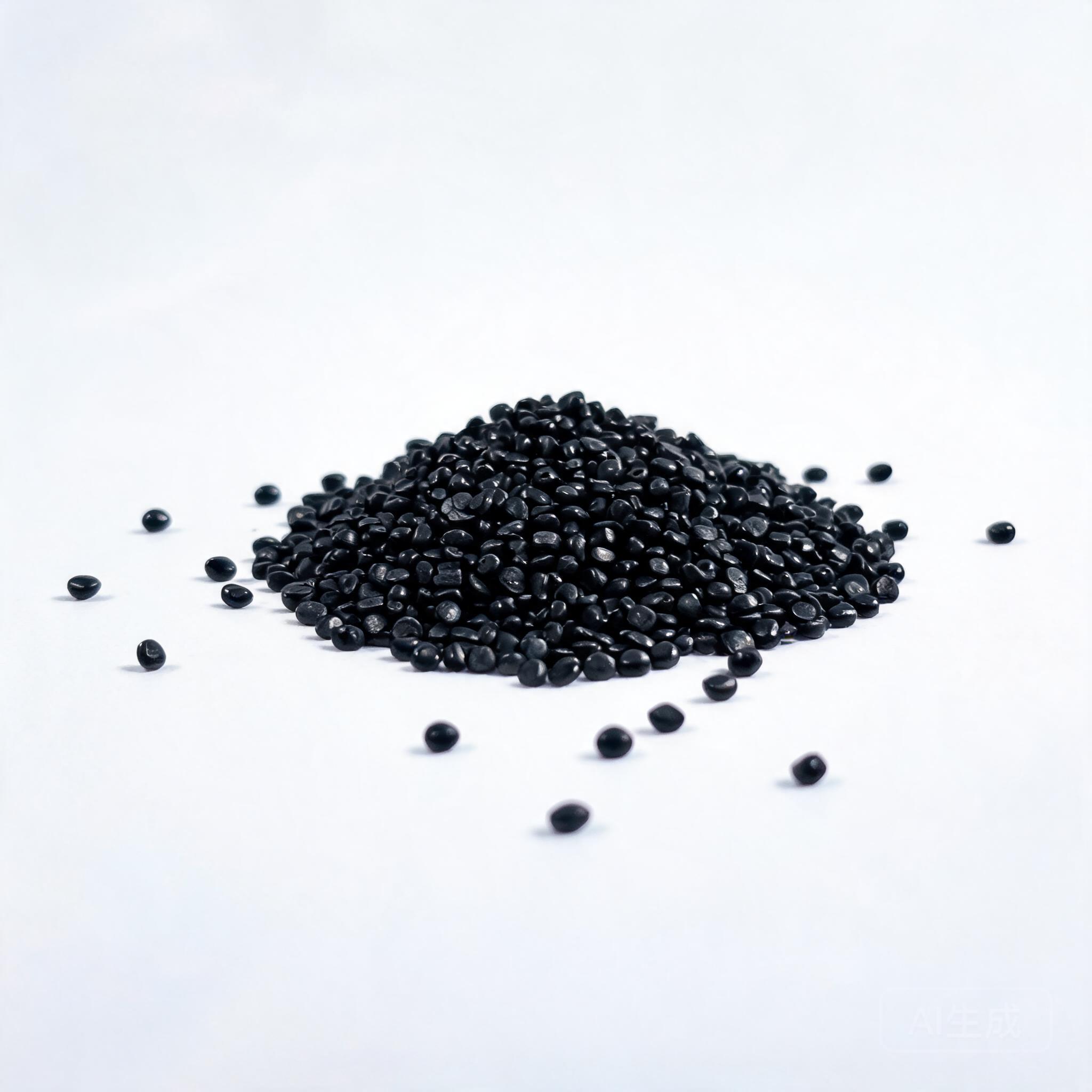
PLA+ (also written PLA Plus) is not an industry standard. It is a modified version of standard PLA. Manufacturers add various modifiers—copolymers, toughening agents, or nucleating agents—to improve specific properties. The result is a filament that aims to be less brittle, with better layer adhesion and higher impact resistance than regular PLA.
Because there is no universal recipe, PLA+ from one supplier can behave very differently from another. Some are nearly identical to standard PLA; others are significantly tougher. This is the first thing to understand: PLA+ is a marketing category, not a defined spec.
If you search for "what is pla plus" or "what's the difference between pla and pla plus," you will find hobbyist discussions and vague claims. As a B2B buyer, you need more than that. You need supplier-specific data.
PLA+ vs Regular PLA: The Real Differences
Standard PLA is known for being easy to print, dimensionally stable, and biodegradable under industrial conditions. Its main weakness is brittleness—parts can crack or snap under stress. PLA+ addresses this by modifying the formulation.
Here is what typically changes, though exact numbers vary by supplier:
| Property | Regular PLA | PLA+ (typical) |
|---|---|---|
| Brittleness | Higher—parts may crack or snap | Reduced—more flexible before break |
| Layer adhesion | Good for standard use | Improved—stronger interlayer bonding |
| Impact resistance | Lower | Higher (qualitative improvement) |
| Printability | Very easy, low warp | Still easy, similar settings |
| Surface finish | Glossy or matte depending on formulation | Can be matte or glossy, supplier-dependent |
| Cost | Lower | Higher per kg |
Notice we have not given you percentages for impact strength or layer adhesion. That is intentional. No reliable universal numbers exist, and any supplier who quotes generic "30% stronger" figures without test data should be treated with caution. Always ask for their specific test results.
For a deeper comparison of PLA against PETG and ABS, see our guide to choosing the right 3D printing filament.
Is PLA+ Stronger Than PLA? What "Stronger" Actually Means
Buyers often ask: "Is PLA+ stronger than PLA?" The answer depends on what you mean by strong.
In tensile strength (how much pull it can withstand before breaking), PLA+ may show modest gains. In impact resistance (how much energy it absorbs before cracking), the improvement is usually more noticeable. In stiffness, PLA+ is often similar to PLA. So "stronger" is not a single number—it is a combination of properties.
For a part that sits on a shelf, standard PLA is fine. For a clip that gets flexed repeatedly, PLA+ may be the better choice. For a gear that experiences sudden loads, PLA+ is worth testing. But you cannot assume PLA+ will solve every mechanical issue. Test it in your actual application.
When Is the PLA+ Premium Worth It for B2B Orders?
The price difference between PLA and PLA+ is usually small per spool, but it adds up over hundreds of spools. Here is a practical framework to decide:
- Worth it: Functional prototypes, snap-fit parts, components that undergo stress, or any application where print failures cost you time and money.
- Not worth it: Decorative models, display pieces, or parts that never bear load. Standard PLA will do the job at a lower cost.
- Test first: If your product has any mechanical requirement, order sample spools of both PLA and PLA+ from your supplier. Run your own tests. Do not rely on marketing claims.
For resellers, offering both gives your customers choice. Many makers are willing to pay a small premium for PLA+ because it reduces failed prints. That can be a selling point for your catalog.
What to Verify with a Supplier Before Bulk Ordering PLA+
Because PLA+ is not standardized, your supplier's quality control matters more than the label. Here is a checklist to use before you place a large order:
1. Request the Spec Sheet
Ask for a technical data sheet that includes density, melt flow index, tensile strength, and elongation at break. If they cannot provide one, that is a red flag. A reputable manufacturer will have this data, even if it is not published on the website.
2. Order Sample Spools First
Do not skip this step. Even a single spool can reveal a lot: print quality, layer adhesion, brittleness, and consistency. Wanzhoutong, for example, accepts trial orders of 50 spools, so you can test a small batch before committing to the full MOQ of 200 spools.
3. Check Diameter Tolerance and Roundness
Diameter consistency directly affects print reliability. A good supplier will have strict tolerance control. Wanzhoutong verifies diameter with a laser micrometer at 40 points per meter, achieving ±0.02mm tolerance. Roundness should also be high—Wanzhoutong guarantees ≥95%. Ask your supplier for their measurement method and numbers.
4. Evaluate Packaging
Moisture is the enemy of filament. Proper packaging should include vacuum sealing and desiccant. Wanzhoutong ships each spool vacuum-sealed with desiccant. For export, check the carton configuration—Wanzhoutong packs 12 spools per case, which is efficient for freight.
5. Confirm Certifications and Compliance
For EU and other regulated markets, CE and REACH compliance are essential. Wanzhoutong's PLA Matte Black Filament is CE and REACH compliant. Always verify that the specific product you order meets the regulations for your target market.
For more on material properties and printing parameters, read our complete guide to PLA printing parameters and material properties.
Case Example: Wanzhoutong's PLA Matte Black Filament
To give you a concrete reference, here is what a real PLA product looks like from a factory-direct supplier. Wanzhoutong, based in Shenzhen, operates 12 extrusion lines and supplies filament and color masterbatch to buyers in Southeast Asia, Europe, and the Americas.
Their PLA Matte Black Filament (1.75mm) is a standard PLA product with a non-reflective matte surface. It is not marketed as PLA+, but it demonstrates the level of quality data a B2B buyer should expect:
| Parameter | Value |
|---|---|
| Diameter | 1.75mm ±0.02mm (laser micrometer, 40 points/meter) |
| Roundness | ≥95% |
| Printing temperature | 195–220°C |
| Net weight per spool | 1.0 kg |
| MOQ | 200 spools (50-spool trial orders accepted) |
| Packaging | Vacuum-sealed with desiccant, 12 spools/case |
| Certifications | CE, REACH |
| Delivery terms | FOB Shanghai or CIF |
This is the level of transparency you should demand from any PLA+ supplier. If they cannot give you similar numbers, move on.
Common Questions from B2B Buyers
Can I use the same print settings for PLA and PLA+?
Often yes, but not always. PLA+ may require slightly higher nozzle temperature or a different bed temperature. Always check the supplier's recommended settings. Wanzhoutong's PLA prints at 195–220°C, which is typical.
Does PLA+ require a hardened nozzle?
No. PLA+ does not contain abrasive fillers like carbon fiber or metal, so a standard brass nozzle works fine.
Is PLA+ biodegradable like regular PLA?
Most PLA+ is still based on PLA, so it is biodegradable under industrial composting conditions. But the added modifiers may affect this. Check with your supplier if compostability is a requirement for your market.
What is the minimum order quantity for PLA+?
This varies by supplier. Wanzhoutong's MOQ for filament is 200 spools, but they accept 50-spool trial orders. That allows you to test before committing to a full container.
Final Recommendations for Procurement Managers and Resellers
PLA+ can be a smart upgrade for many applications, but only if you choose the right supplier and verify the actual properties. Do not buy on the label alone. Ask for spec sheets, order samples, and test them in your own environment.
If you are new to sourcing filament, our FAQ for B2B buyers on PLA, ABS, PETG, and TPU covers other common concerns.
When you are ready to compare suppliers, use this checklist:
- Request a spec sheet with mechanical properties.
- Order a trial batch (50 spools is a good size).
- Verify diameter tolerance and roundness data.
- Check packaging for moisture protection.
- Confirm CE/REACH compliance for EU markets.
- Ask about delivery terms (FOB, CIF) and lead times.
Wanzhoutong is one supplier that meets these criteria. Their factory-direct model and transparent data make them a solid option to evaluate. But whatever you decide, the principle is the same: test before you commit, and demand real numbers.
If you have specific questions about PLA+ formulations or want to request samples, contact Wanzhoutong directly. They can provide the data you need to make an informed decision.