
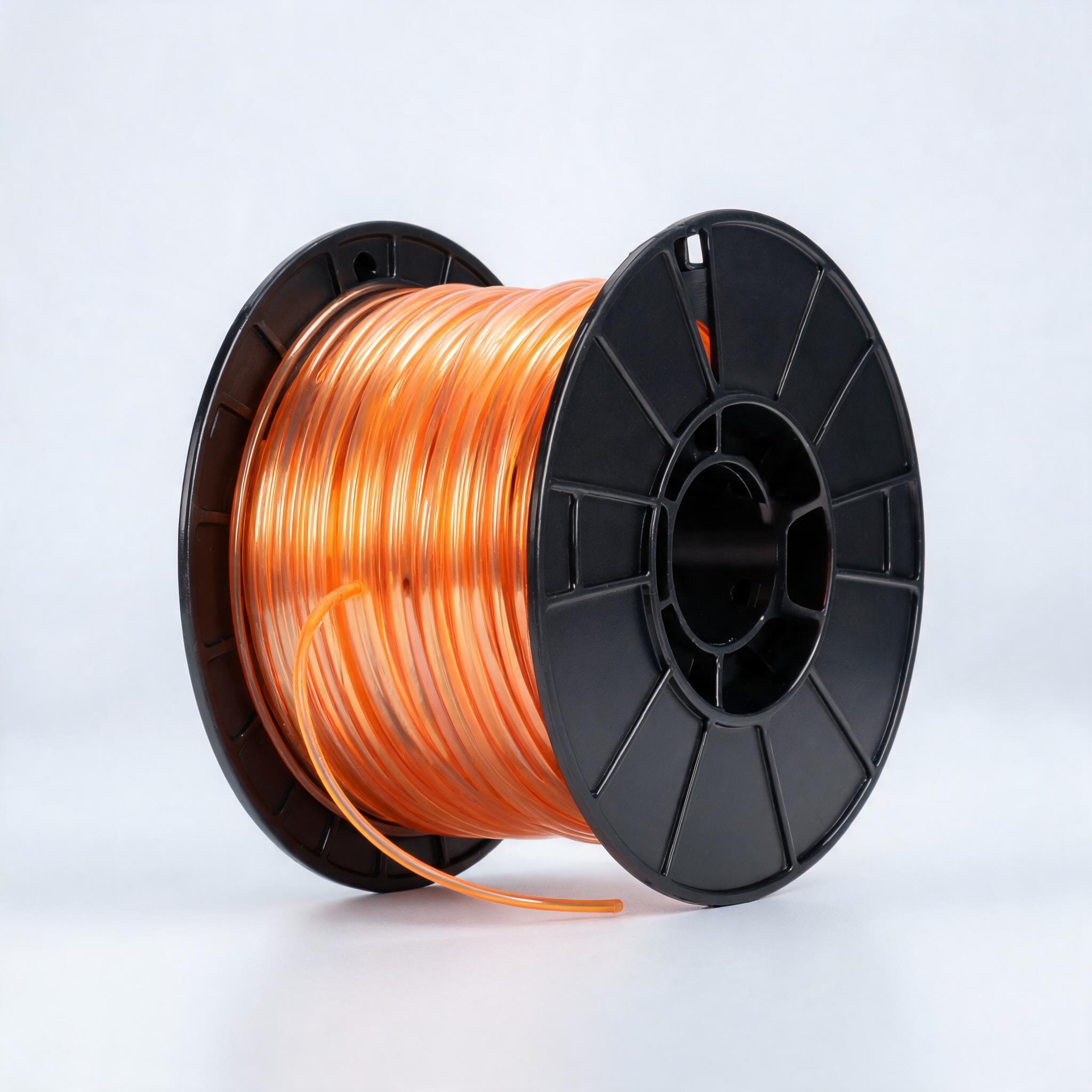
A practical FAQ covering what PLA, ABS, PETG, and TPU filament are, their typical applications, how to store and dry them, and how to choose the right material for your production needs.
BUYER GUIDE
If you are sourcing 3D printer filament for production, prototyping, or resale, you have probably asked: What is the difference between PLA, ABS, PETG, and TPU? Which one is right for my application? How should I store it so it prints reliably?
This guide answers the most common 3D printer filament questions from a B2B perspective. You will get clear definitions, typical applications, storage and drying guidelines, and a practical selection framework. No fluff — just the facts you need to make an informed purchasing decision.
- PLA is the easiest to print but has low heat resistance; ABS offers higher strength and heat tolerance but needs a heated chamber; PETG balances strength and printability; TPU is flexible and durable.
- All four filaments absorb moisture from the air. Proper storage and drying are essential to avoid print defects like bubbling, stringing, and weak layers.
- Choose filament based on your part's mechanical requirements, environmental exposure, and printer capabilities — not just on price.
What is 3D printer filament?
3D printer filament is a thermoplastic polymer supplied as a continuous spool of wire, typically 1.75 mm or 2.85 mm in diameter. It is melted and extruded through a heated nozzle to build parts layer by layer in FDM (fused deposition modeling) printers. The material choice directly affects the part's strength, flexibility, heat resistance, and surface finish.
For B2B buyers, filament is not a commodity. Different polymers have different mechanical properties, printing requirements, and cost structures. Selecting the wrong material can lead to failed prints, wasted production time, and end-use parts that do not meet specifications.
What is PLA filament?
PLA (polylactic acid) is a biodegradable thermoplastic derived from renewable resources like corn starch or sugarcane. It is the most common filament for desktop 3D printing because it prints easily at low temperatures (around 190–220°C) and does not require a heated bed. For detailed print settings and material data, see our PLA printing parameters and material properties guide.
Typical applications: prototyping, concept models, architectural models, jigs and fixtures for light duty, and parts that do not experience high heat or mechanical stress. PLA is also popular for consumer products and educational use.
Limitations: PLA has a low glass transition temperature (~60°C), so parts deform in hot environments (e.g., a car dashboard in summer). It is also brittle and not suitable for functional parts under load.
What is ABS filament?
ABS (acrylonitrile butadiene styrene) is a petroleum-based thermoplastic known for its toughness, impact resistance, and heat resistance (glass transition ~105°C). It is widely used in automotive, electronics, and consumer goods.
Typical applications: functional prototypes, end-use parts, enclosures, brackets, and any part that needs to withstand heat or impact. ABS is also easy to post-process — it can be sanded, machined, and glued with acetone.
Printing challenges: ABS requires a heated bed (around 100°C) and ideally an enclosed printer to prevent warping and cracking. It also emits fumes during printing, so good ventilation is necessary.
What is PETG filament?
PETG (polyethylene terephthalate glycol) is a modified version of PET, the plastic used in water bottles. The glycol modification reduces crystallization, making it easier to print than standard PET.
Typical applications: mechanical parts, gears, hinges, chemical-resistant containers, and outdoor applications. PETG offers a good balance of strength, toughness, and heat resistance (glass transition ~80°C). It is less brittle than PLA and easier to print than ABS.
Key advantage: PETG has excellent layer adhesion, producing water-resistant parts with low warping. It is a popular choice for functional parts that need durability without the complexity of ABS.
What is TPU filament?
TPU (thermoplastic polyurethane) is a flexible, rubber-like filament. Its shore hardness ranges from 60A to 95A, allowing you to choose from soft, stretchable parts to firmer, still-flexible components. For a deeper look at shore hardness and printing tips, see our TPU flexible filament buying guide.
Typical applications: gaskets, seals, vibration dampers, phone cases, wearable devices, and any part that requires flexibility, shock absorption, or abrasion resistance.
Printing considerations: TPU is more challenging to print because it is flexible and can jam in the extruder. Use a direct-drive extruder and slow print speeds (20–30 mm/s) for best results. It also absorbs moisture quickly, so drying is critical.
How to choose the right filament for your application
To choose the right filament, ask these questions:
- What mechanical loads will the part experience? For high stress or impact, ABS or PETG are better than PLA.
- Will the part be exposed to heat? If the environment exceeds 60°C, avoid PLA. ABS or PETG are more suitable.
- Does the part need to be flexible? If yes, TPU is the only option.
- What is your printer's capability? If you lack a heated bed or enclosure, PLA or PETG are safer choices than ABS.
- What is your post-processing requirement? ABS can be smoothed with acetone; PLA and PETG are harder to finish.
For a side-by-side comparison of the main materials, read our PLA vs PETG vs ABS vs TPU buyer's guide.
| Property | PLA | ABS | PETG | TPU |
|---|---|---|---|---|
| Heat resistance | Low (~60°C) | High (~105°C) | Medium (~80°C) | Medium (varies) |
| Flexibility | Low | Low | Medium | High |
| Impact strength | Low | High | Medium | High |
| Ease of printing | Easy | Challenging | Moderate | Challenging |
| Heated bed required | No | Yes (~100°C) | Recommended (~70°C) | Recommended (~50°C) |
| Enclosure needed | No | Yes | No | No |
| Common applications | Prototypes, models | Functional parts, enclosures | Mechanical parts, containers | Flexible parts, seals |
How to store 3D printer filament
All common filaments are hygroscopic, meaning they absorb moisture from the air. Moisture causes steam bubbles during printing, leading to poor surface quality, stringing, and reduced mechanical strength. For a full warehouse and inventory strategy, see our filament storage and moisture control guide.
Storage best practices:
- Keep filament in a dry, airtight container with desiccant (silica gel) when not in use.
- Store spools in a low-humidity environment (below 20% RH ideal).
- Use a filament dry box with a hygrometer for active monitoring.
- Never leave filament exposed on the printer overnight.
Drying guidelines:
- PLA: Dry at 45–50°C for 4–6 hours.
- ABS: Dry at 80–90°C for 4–6 hours.
- PETG: Dry at 65–70°C for 4–6 hours.
- TPU: Dry at 60–70°C for 4–8 hours.
If you do not have a filament dryer, you can use a food dehydrator or an oven with accurate temperature control. Always check the manufacturer's recommendations, as some materials have specific drying temperatures.
Common mistakes when buying filament
- Buying by price alone: Cheap filament may have inconsistent diameter, causing jams and poor layer adhesion.
- Ignoring diameter tolerance: A spool with ±0.05 mm variation can still cause issues; look for ±0.02 mm for critical applications.
- Not checking spool weight: Some suppliers list gross weight including spool; verify net filament weight.
- Overlooking packaging: Vacuum-sealed bags with desiccant are essential for moisture protection during shipping.
FAQ: 3D printer filament common questions
Can I use PLA for functional parts?
Only if the part is not exposed to heat or high stress. For anything that will bear a load or sit in a warm environment, choose PETG or ABS.
Is PETG stronger than ABS?
PETG has comparable tensile strength but is less heat-resistant than ABS. For impact resistance, ABS is generally tougher. The best choice depends on the specific stress and temperature conditions.
How do I know if my filament is wet?
Signs include popping sounds during printing, visible bubbles in the extruded plastic, stringing, and a rough surface finish. If you see these, dry the filament before continuing.
Can I dry filament in a regular oven?
Yes, but only if the oven can maintain a low, accurate temperature (within ±5°C). Many household ovens fluctuate too much, which can melt or deform the spool. A dedicated filament dryer is safer.
What is the shelf life of filament?
Unopened, vacuum-sealed filament can last 2–3 years if stored properly. Once opened, it should be used within 6–12 months, depending on humidity levels.
Final recommendations for B2B buyers
When sourcing filament for your business, always request a technical data sheet (TDS) and a material safety data sheet (MSDS) from the supplier. Verify the filament's diameter tolerance, net weight, and packaging. Ask about drying recommendations and batch consistency. A reliable supplier should be able to provide these documents and answer your questions directly.
If you are unsure which filament to choose, start with PETG — it offers a good balance of strength, printability, and heat resistance for most applications. For flexible parts, TPU is the go-to. And for high-heat or impact-resistant parts, ABS remains a solid choice, provided you have the right printer setup.
Still have questions? Contact our team for specific recommendations based on your application. We can provide samples and technical guidance to help you make the right decision.