
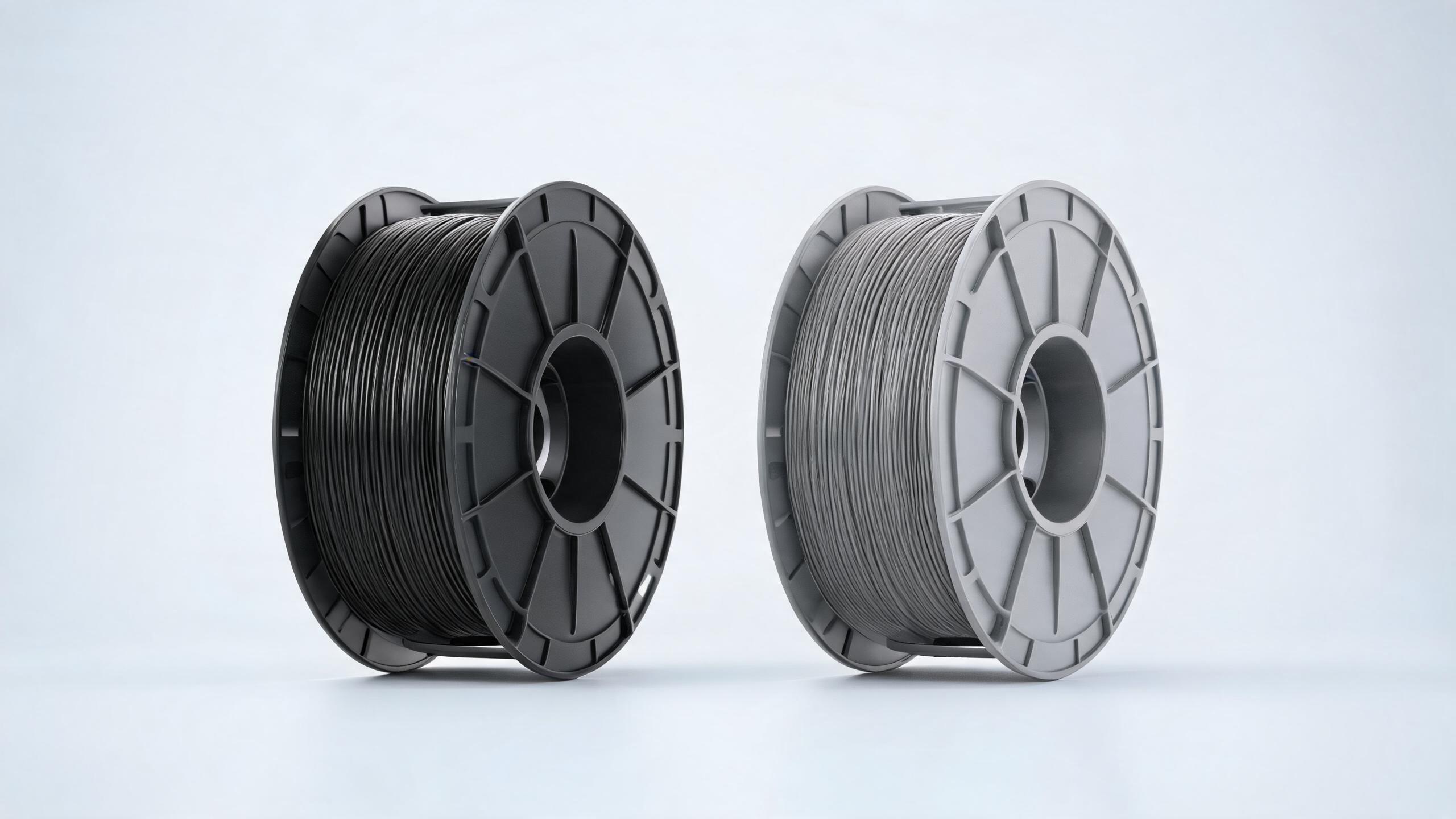
Moisture is the primary cause of brittle 3D printing filament. This guide explains how hygroscopic materials like PLA absorb water, how to identify moisture damage, and provides actionable storage and transit protocols for B2B buyers to protect filament quality and reduce waste.
BUYER GUIDE · MATERIAL HANDLING
If you buy or stock 3D printing filament in volume, you have probably run into this: a spool that printed perfectly last week now snaps mid-extrusion, or a part comes out rough and blistered. The usual suspect is not the printer, the slicer, or the brand — it is moisture. 3D printing filament becomes brittle primarily because it has absorbed water from the air. This is not a cosmetic issue. Moisture damage hits yield, print reliability, and your cost per successful part. For B2B buyers, understanding what makes PLA filament brittle — and how to stop it in storage and transit — is essential to protecting your material investment.
- Moisture is the leading cause of brittle filament — hygroscopic polymers pull humidity out of the air and lose mechanical strength.
- PLA is hygroscopic, though less than Nylon or PETG — even PLA goes brittle if stored badly long enough.
- Prevention beats drying — vacuum-sealed packaging with desiccant and climate-controlled storage are your first line of defense.
- Transit conditions matter — weeks of ocean freight or humid warehouse exposure can ruin filament before it reaches your facility.
- Verify supplier packaging — ask for moisture barrier specs and drying recommendations before you commit to a bulk order.
Why Does Moisture Make Filament Brittle?
Most 3D printing filaments are hygroscopic: they attract and hold water molecules from the air. PLA, ABS, PETG, Nylon, and TPU all absorb moisture, just at different rates. Once the polymer matrix takes on water, those molecules act as a plasticizer and weaken the intermolecular bonds. Over time the material turns brittle — it snaps easily, layer adhesion drops, and prints come out stringy or bubbled because trapped water flashes to steam during extrusion.
The chemistry is straightforward: water penetrates the polymer chain and drives hydrolysis, a breakdown of the polymer structure itself. That is why what makes PLA filament brittle is not just physical breakage but chemical degradation that drying cannot fully reverse (though it may restore some performance). The longer the exposure, the more permanent the damage.
How to Tell if Your Filament Has Moisture Damage
Before you blame the supplier or the printer, check for these signs of filament moisture damage:
- Snapping during feeding: filament breaks cleanly when bent instead of flexing.
- Popping or crackling sounds during extrusion — that is water turning to steam.
- Rough, blistered, or foamy print surfaces caused by steam bubbles.
- Stringing and oozing even at normal retraction settings.
- Weak layer adhesion — parts split along layer lines.
If you see these, the spool has likely been sitting in humidity. How bad it gets depends on the polymer type, exposure time, and ambient relative humidity (RH).
Moisture Absorption Rates by Material
Not all filaments take on water at the same pace. Knowing the absorption rates helps you prioritize storage and handling. The table below shows typical equilibrium moisture content for common filaments at 50% RH and 23°C — industry reference values; actual figures vary by manufacturer and additive package.
| Filament Type | Equilibrium Moisture Content (at 50% RH) | Relative Susceptibility |
|---|---|---|
| Nylon (PA) | ~8–10% | Very High |
| PETG | ~0.3–0.5% | Moderate |
| TPU | ~0.6–1.2% | High |
| ABS | ~0.2–0.4% | Moderate |
| PLA | ~0.2–0.4% | Low-to-Moderate |
PLA often gets labeled “easy” because it absorbs less than Nylon, but it is still hygroscopic. Leave a PLA spool on an open shelf in a humid room for a few weeks and it will go brittle. What makes PLA filament brittle is no mystery — it is the predictable result of moisture uptake.
Storage Best Practices for B2B Buyers
For buyers holding multiple spools, storage is where moisture damage either starts or gets stopped. Practical steps:
1. Use Moisture-Barrier Packaging
Unopened filament should arrive vacuum-sealed with desiccant. If you buy in bulk, confirm the packaging meets a specific moisture vapor transmission rate (MVTR) — ask for the value; lower is better. For long-term storage, reseal spools in vacuum bags with fresh desiccant after each use. For a full walkthrough of dry box options and drying parameters, see our guide to filament dry boxes for humid climates.
2. Control Ambient Humidity
Store filament where RH stays below 20–30%. Use a dehumidifier if needed, and skip basements, garages, or anywhere near water sources. Even a small room dehumidifier makes a real difference for a modest inventory.
3. Use Dry Boxes for Active Spools
For spools in use, a dry box with desiccant — or a heated dry box — keeps moisture out while you print. This matters most for Nylon and PETG.
4. Monitor with a Hygrometer
Put a digital hygrometer inside your storage cabinet. If RH climbs past 30%, act: replace desiccant, run the dehumidifier, or move spools somewhere drier.
Transit Considerations: Protecting Filament During Shipping
For international buyers, transit is the high-risk window. A spool may sit in a warehouse, on a ship, or in a truck for weeks, cycling through temperature and humidity swings. Check these with your supplier and logistics partner:
- Packaging integrity: insist on vacuum-sealed bags with desiccant and a moisture barrier; check for punctures on arrival.
- Climate-controlled shipping: for sensitive materials, request temperature-controlled containers or at least avoid extreme heat/cold transit periods.
- Inspection on arrival: inspect packaging and a sample spool as soon as the shipment lands. If the vacuum seal is broken, dry the filament before use.
- Lead time planning: if your shipment takes 4–6 weeks by sea, plan to dry filament on arrival if needed.
Drying Filament: When It Helps and When It Doesn’t
Drying can restore some performance, but it is not a cure-all. If the filament has been exposed for a long time, hydrolysis may have permanently degraded the polymer. For short-term exposure, drying at the manufacturer’s recommended temperature (typically 40–60°C for PLA, 65–80°C for PETG, 70–90°C for Nylon) in a filament dryer or food dehydrator removes moisture. Drying does not reverse chemical breakdown, though — prevention is still the best strategy.
Supplier Evaluation Checklist
To avoid receiving brittle filament, evaluate potential suppliers on these points:
- Packaging quality: do they vacuum-seal with desiccant? What is the MVTR of their bag material?
- Production environment: do they control humidity during manufacturing and packaging?
- Drying recommendations: do they publish clear drying guidelines per material?
- Transit experience: have they shipped to your region before? Can they advise on climate considerations?
These questions tell you quickly whether a supplier actually understands the problem and has processes in place to deliver usable filament.
Frequently Asked Questions
Can PLA filament become brittle even if the package is sealed?
Yes — if the seal is broken or the packaging has a high MVTR. Always check the vacuum seal and desiccant condition on receipt.
How long can PLA filament last if stored properly?
In a vacuum-sealed bag with desiccant at low RH, PLA can last several years without significant degradation. Once opened, use it within months or keep it in a dry box.
Is it worth drying filament that has been exposed for weeks?
It depends on the material and the exposure. For PLA, drying may restore flexibility after moderate exposure. For Nylon, drying is almost always recommended, but severe hydrolysis may not be reversible. Test a small sample before committing a full spool.
Conclusion: Protect Your Material Investment
Brittle filament is a preventable problem. The key is understanding that moisture is the root cause — not the filament’s age, not the brand, not your printer. With proper storage, verified supplier packaging, and transit planning, you can cut waste substantially and keep print quality consistent.
When sourcing filament, ask suppliers directly about their moisture control measures. A supplier who can state their packaging MVTR, drying recommendations, and storage protocols is far more likely to deliver product that performs as specified. If you have questions about specific materials or need help with your storage setup, contact us — we are happy to share what we know.