
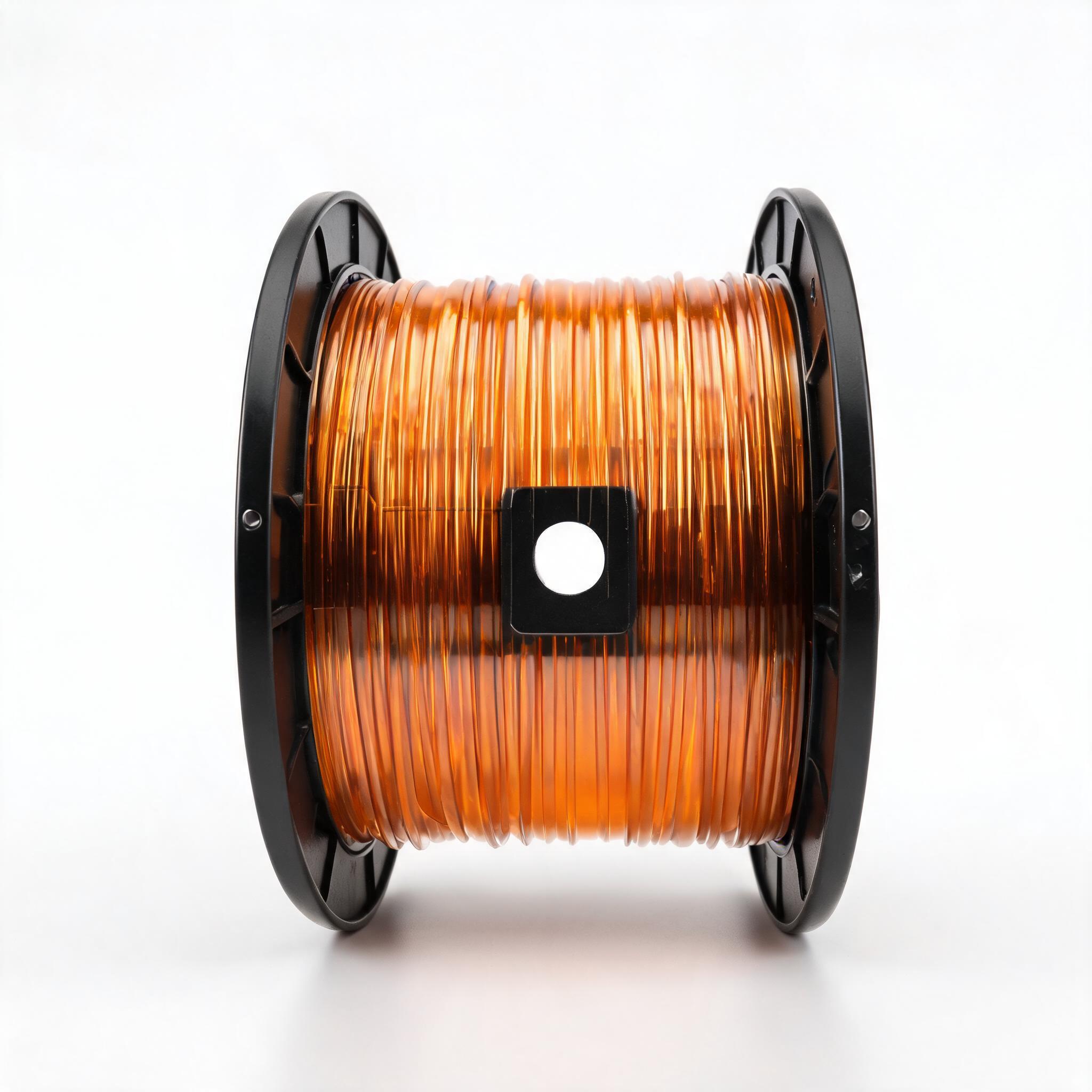
A practical guide for print shops and filament distributors: what a filament dry box does, how it differs from an active dryer, how to manage desiccant and humidity, and what to specify when sourcing for humid regions.
BUYER GUIDE · FILAMENT MANAGEMENT
If you run a print shop anywhere near the coast, or you distribute filament into a tropical market, you already know the drill. A roll of PLA that printed fine last week snaps clean in the extruder today. ABS comes off the bed warped and blistered. PETG strings like it's trying to knit. TPU bubbles and extrudes unevenly. Nine times out of ten, the culprit is moisture the filament picked up from the air. A filament dry box is the standard fix, and this guide walks through what actually matters when you're buying them in bulk, how a dry box differs from an active dryer, and how to set up storage that keeps your material—and your production schedule—out of trouble.
- A dry box holds humidity down while you store and print. It will not pull moisture out of a spool that's already wet—that's a dryer's job.
- Sealing and desiccant capacity beat brand names. Insist on a gasket and a humidity indicator.
- In humid regions, aim for 10–20% relative humidity inside the box. Push below 10% and some materials start to get brittle.
- Match capacity to your actual print volume. A single-spool box suits one printer; a print farm needs something bigger.
- Ask about desiccant type, how often it needs replacing, and whether the box lets you feed filament straight to the printer without opening it.
What a Filament Dry Box Actually Is
A filament dry box—sometimes called a filament storage box or filament dry storage box—is a sealed container that keeps spools in a low-humidity environment. The useful ones share a few parts: a gasketed lid or door that stops air getting in, desiccant (silica gel, molecular sieve, or clay) to soak up moisture, a humidity indicator such as a color-changing card or a small digital hygrometer, and ports that let filament run out to the printer while the box stays shut.
Here's the part people often get wrong. An active filament dryer heats the filament to drive moisture out. A dry box does none of that—it's passive. It keeps dry filament dry. If you store your spools properly from day one, you rarely need the dryer at all.
Dry Box or Active Dryer?
The two get confused constantly, but they handle different stages of a spool's life.
| Feature | Filament Dry Box | Active Filament Dryer |
|---|---|---|
| Primary function | Maintain low humidity during storage/printing | Remove moisture from already-wet filament |
| Heating element | No | Yes (typically 40–70°C depending on material) |
| Power source | None (passive) or low-power for hygrometer | Mains electricity |
| Effect on wet filament | None—will not dry it | Restores mechanical and print quality |
| Best for | Continuous protection of dry spools | Recovering spools exposed to humidity |
Most shops end up running both. A dryer for spools that arrive suspect or have sat out too long, and a dry box for everything currently in use or stored long-term. If you're weighing whether to invest in active drying, our guide to 3D printer filament dryers covers the drying process in more detail.
Why Humidity Wrecks PLA, ABS, PETG, and TPU
Every material absorbs moisture at its own pace, but none of the four common ones escapes the damage.
- PLA takes on moisture slowly, then turns brittle. Prints snap in the extruder or lose layer adhesion.
- ABS is highly hygroscopic. Expect hissing, bubbling, and surface blisters, plus more warping.
- PETG soaks up water fast. You'll see stringing, oozing, and a loss of clarity.
- TPU is flexible but sensitive. Moisture causes bubbling and uneven extrusion that ruins flexible parts.
For a shop, the real cost isn't the wasted spool. It's the downtime, the failed prints, and the rework. A dependable dry box trims all three.
What to Check When You're Sourcing
When you ask suppliers for quotes, push for these specifics. They're what separate a box that works from one that's just a plastic tub with a lid.
1. Sealing Quality
The box has to be genuinely airtight. Look for a silicone gasket on the lid or door, held down by a latch that actually compresses it. A lot of cheap boxes use a snap-fit lid that leaks around the edges. Ask how it seals, and if the supplier can send a photo or short video of the gasket, take them up on it.
2. Desiccant Type and Capacity
Desiccant capacity is measured in grams, and it matters. A single-spool box typically needs 100–200g of silica gel; multi-spool units need proportionally more. Silica gel changes color when it's saturated, while molecular sieve is more aggressive but needs higher temperatures to regenerate. Confirm what's included and how often it has to be replaced or recharged.
3. Humidity Monitoring
Without a hygrometer, you're flying blind. A built-in analog or digital unit tells you whether the desiccant is actually doing its job. Some boxes have a window for a color-changing card instead. Digital sensors read more accurately but run on batteries that need swapping.
4. Filament Passthrough
If you want to print straight from the box, you need a port or slot for the filament to exit while the lid stays closed. Check the port diameter—it should be a touch larger than the filament (1.75mm or 2.85mm) but not so wide that air flows in freely. Some boxes come with a PTFE tube guide.
5. Capacity and Spool Size
Spools aren't all the same size. A standard 1kg spool runs about 200mm across, but industrial spools get bigger. Measure your spools and compare them to the box's internal dimensions. A box advertised as "2kg capacity" won't necessarily hold two 1kg spools side by side.
6. Material and Build
Transparent polycarbonate or acrylic boxes let you see the spools and desiccant at a glance. Polypropylene is tougher but opaque. And think about where the box will sit—near a printer it may need to shrug off heat and the occasional spill.
Using a Dry Box the Right Way
Even a good dry box fails if you use it wrong. A few habits make the difference.
- Dry the filament first. If a spool has been sitting in humid air, run it through an active dryer before it goes in the box. The box won't fix wet filament.
- Pre-condition the box. Put fresh desiccant in and close the lid for an hour before adding spools, so the starting humidity drops.
- Seal it fast. Keep the lid open as little as possible. In a humid climate, every second counts.
- Watch the indicator. Check it daily. If humidity climbs past 30%, replace or regenerate the desiccant.
- Use passthrough for long jobs. On prints that run for hours, feed filament from the box so you're not opening it repeatedly.
Mistakes That Show Up in Humid Climates
- Leaving filament out in the open. Even a day of exposure adds moisture, especially in the tropics.
- Ignoring saturated desiccant. Silica gel shifts from blue to pink (or orange to green) when it's full. Skip the check and the box turns into a moisture trap.
- Buying a box with no gasket. Plenty of "dry boxes" are just plastic containers with lids. They're not airtight.
- Over-drying. Below 10% humidity, some filaments turn brittle. Keep it in the 10–20% range.
- Assuming all dry boxes are equal. Check the sealing, the desiccant, and the indicator before you order in bulk.
Bulk Buying for Print Shops
If you're stocking dry boxes for a print farm or reselling them, a few extra questions pay off.
- MOQ and lead time. Ask about minimum order quantities and how long production takes. Some suppliers will put your branding on the box or packaging.
- Spare parts. Confirm that desiccant refills, gaskets, and hygrometers are sold separately. That extends the life of the unit.
- Testing. Get a sample and run it for a week in your own environment before committing to a large order.
- Certifications. If you need CE, RoHS, or anything similar, ask for the certificates. Don't assume they're included.
FAQ
Can I dry filament in a dry box?
No. A dry box only maintains low humidity. For wet filament you need an active dryer, or an oven with precise temperature control—though that's not recommended for most materials unless you have a reliable thermometer.
What humidity level should I target?
10–20% relative humidity works for most materials. Once it climbs above 30%, moisture absorption becomes a real problem.
How often should I replace desiccant?
It depends on the humidity and how often you open the box. In a humid climate, check weekly. Silica gel can be regenerated by heating it at 120°C for a couple of hours, but follow the manufacturer's instructions.
Can I store multiple spools in one box?
Yes, if the box is big enough and you have enough desiccant. Every spool adds to the moisture load—a 3-spool box needs roughly 300g of desiccant.
Is a dry box worth it for a small shop?
Usually, yes. One failed print can cost more than a basic dry box, and in humid regions it's cheap insurance.
Next Steps for Buyers
When you're ready to source, put together a short spec sheet: spool size, how many spools, the humidity range you need, and whether you want passthrough printing. Send it to a few suppliers and ask for their sealing details, desiccant capacity, and a sample to test. If a supplier can't give you those specifics, treat that as a warning sign. For the wider picture on warehousing and anti-moisture strategy, see our filament storage and moisture control guide.
For shops in humid climates, the right filament dry box stops being an accessory and becomes core equipment. It protects your material, your print quality, and your delivery dates.
Not sure which dry box fits your operation? Send us your spool sizes and local humidity conditions, and we'll point you to a configuration that works for your workflow.