
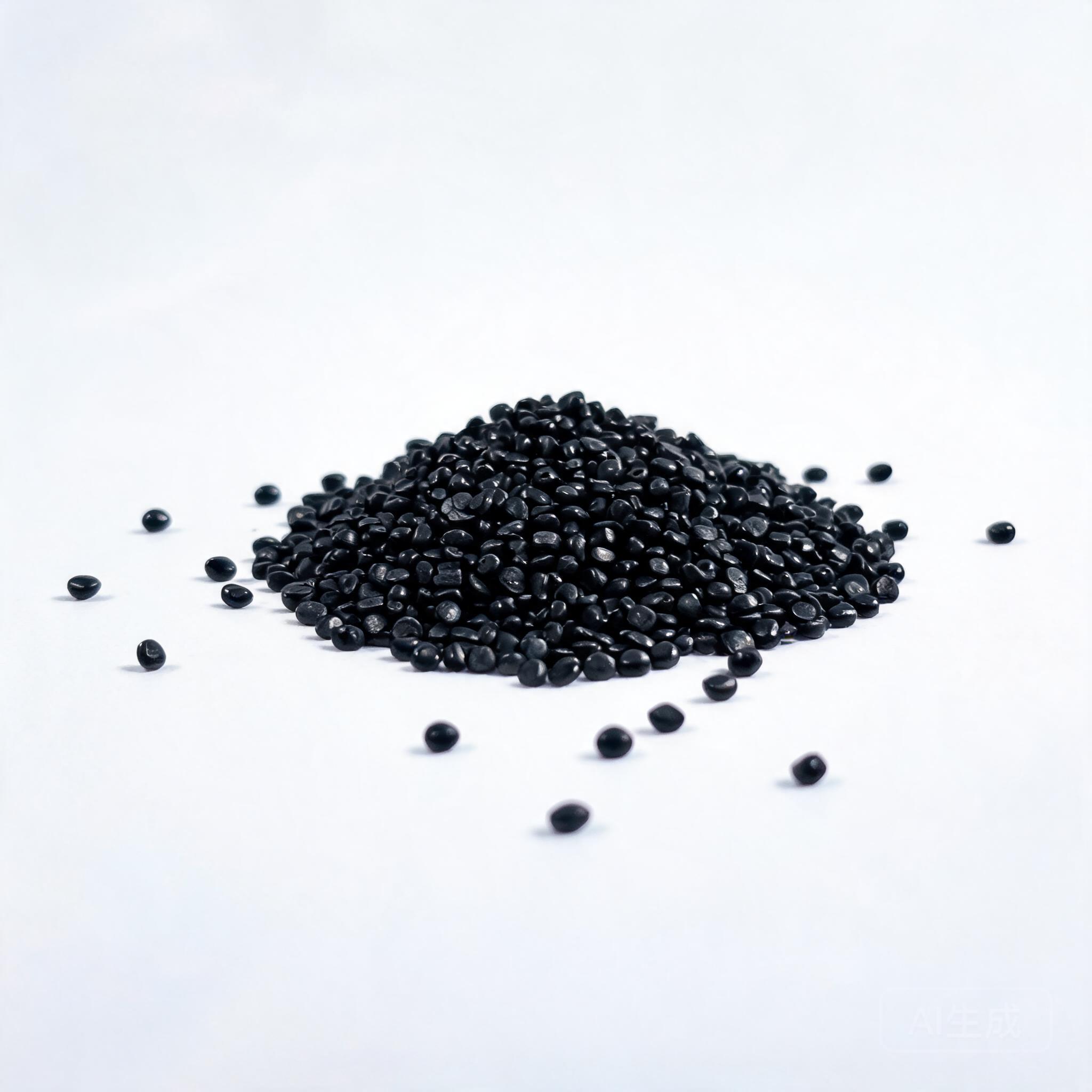
PLA is the most widely used biodegradable 3D printing filament, but sourcing it well requires understanding its base chemistry, how it breaks down, and which supplier checks actually protect your order. This guide explains what PLA is made of, how biodegradation works in practice, and gives buyers a practical sourcing checklist covering diameter tolerance, packaging, documentation, and MOQ.
Sourcing Guide
PLA is the filament most buyers start with and the one most likely to be mis-specified in a purchase order. Understanding what it is made of, how it biodegrades, and which supplier checks matter will keep your order consistent from sample to container.
What PLA Filament Is Actually Made Of
PLA stands for polylactic acid. It is a polyester built from lactic acid monomers, and those monomers come from fermented plant starch, most commonly corn. The production chain runs from starch to sugar, sugar to lactic acid through fermentation, then polymerization into resin pellets. Those pellets are what a filament factory melts and extrudes into 1.75 mm or 2.85 mm strand.
Because the carbon in the polymer originates from a plant rather than a petrochemical feedstock, PLA is described as bio-based. That is a separate property from biodegradability, and buyers should keep the two apart when comparing suppliers. A material can be bio-based and not readily biodegradable, or fossil-based and biodegradable. PLA happens to be both bio-based and compostable under industrial conditions, which is why it dominates the "biodegradable 3D printing filament" category.
What is in the spool is not only PLA resin. Commercial filament typically contains:
- PLA resin pellets as the base polymer.
- Colorants or masterbatch for opaque, matte, or silk finishes.
- Processing aids that improve melt flow and surface finish during extrusion.
- Additives in some grades, for example impact modifiers or matting agents for a matte look.
This is why two suppliers can both sell "PLA" and still deliver different printing behavior. The base polymer may be the same, but the masterbatch and additive package determine color consistency, layer adhesion, and how the filament behaves at the nozzle. If you are sourcing a matte or silk effect, ask what the color carrier is and whether the same masterbatch batch will be used across your production run.
For a wider view of how PLA sits against the other common filaments, our comparison of PLA vs PETG vs ABS covers the trade-offs in mechanical and thermal behavior.
How PLA Biodegrades, and What That Means for a Purchase Order
Biodegradation of PLA is a two-stage process. First, water attacks the ester bonds in the polymer chain and breaks the long molecules into shorter fragments, a step called hydrolysis. Second, microorganisms consume those fragments and convert them into carbon dioxide, water, and biomass. The rate depends on temperature, moisture, oxygen, and the microbial environment.
The practical point for buyers is that "biodegradable" does not mean a printed part disappears on a shelf or in a landfill at ambient temperature. It means the material is designed to break down under controlled conditions, typically industrial composting. If your customer base or your own sustainability claims depend on end-of-life behavior, you need documented evidence for the specific grade you are buying, not a generic statement about PLA as a category.
What to confirm with your supplier
- Which standard the compostability claim references, and for which specific grade.
- The conditions the claim assumes, since ambient landfill and industrial composting are not the same environment.
- Whether the certification covers the finished colored filament or only the base resin.
- The validity date and scope of any certificate you are shown.
These are questions a factory should be able to answer with documents, not adjectives. If a supplier cannot name the standard behind a biodegradability claim, treat the claim as marketing rather than a specification.
What PLA Filament Is Good For
PLA prints at lower nozzle temperatures than engineering filaments, warps less, and holds fine detail well. That combination makes it the default choice for visual and dimensional work: display models, prototypes, architectural mockups, packaging mockups, educational kits, and consumer products that will not see sustained heat or structural load.
It is a poor fit where parts must survive a hot car interior, continuous UV exposure, or repeated mechanical stress. Buyers sourcing for functional parts should look at the trade-offs in our guide to why PETG is often chosen for functional parts, because specifying PLA for a load-bearing application is one of the more common sourcing mistakes.
Where PLA does carry extra requirements is in contact with food. "Food safe" is a claim about the finished printed object, not about the filament alone, and it depends on the colorant, the printing process, and the end use. Our article on how buyers verify food-safe filament explains what documentation to request.
Sourcing Checklist for Biodegradable PLA Filament
Most quality problems in a filament order trace back to four variables: diameter consistency, moisture, color consistency, and paperwork. Each can be checked before you commit to a container.
| Check | What to ask | Why it matters |
|---|---|---|
| Diameter tolerance | Stated tolerance across the spool, and whether it is measured continuously or by sampling | Inconsistent diameter causes under-extrusion, jams, and failed prints; it is the most common complaint in B2B filament orders |
| Moisture control | Whether spools are vacuum-sealed with desiccant, and the packing method | PLA absorbs moisture, which leads to bubbling and weak layer bonding; packaging is part of the product |
| Color consistency | Whether the same masterbatch batch is used across the run, and how color is verified | Batch-to-batch color drift is expensive to correct after the goods ship |
| Documentation | CE and RoHS documents for the specific grade, plus any biodegradability evidence | Your own customers and customs may request these; retrofitting paperwork after shipment is slow |
| Commercial terms | MOQ per SKU, carton configuration, and lead time | Determines whether the order fits your warehouse and cash flow |
| Sample vs production | Whether the sample comes from the same line and batch as production | A sample that passes does not guarantee the container matches it |
For reference, a factory-direct supplier such as Wanzhoutong, based in Shenzhen and founded in 2020, runs 12 extrusion lines and supplies both 3D printing filament and color masterbatch, with Southeast Asia and Europe as its target markets. Its PLA range includes PLA Matte Black and PLA Silk Rainbow in 1.75 mm with a diameter tolerance of ±0.03 mm, vacuum-sealed with desiccant, CE and RoHS documentation available on request, MOQ 200 spools per SKU (or 50 kg per SKU), packed 12 spools per carton. Use these figures as a benchmark when you compare quotes, and confirm the same details in writing for the grade you actually order.
How to Compare Suppliers Without Wasting a Container
Start with a sample order from two or three suppliers using the same print file and the same printer settings. Measure the filament at several points along the spool rather than trusting the label, and log the results. Then check the packaging: a vacuum seal that has lost its vacuum by the time it reaches you tells you something about transit handling.
Ask for the documents before the sample arrives, not after. CE and RoHS paperwork, and any biodegradability evidence, should be available for the specific grade. A supplier that can produce them quickly is usually a supplier that has its quality system in order.
Finally, test color consistency across two separate batches if color is part of your product specification. This is the failure mode that shows up latest and costs the most, because it is often only visible after your own customers receive the goods.
Frequently Asked Questions
Is PLA filament really biodegradable?
PLA is designed to biodegrade under controlled conditions, typically industrial composting, where heat, moisture, and microbial activity are present. It does not break down quickly at ambient temperature in a landfill. Ask your supplier which standard and which grade the claim refers to.
What is PLA filament made of?
Polylactic acid, polymerized from lactic acid that is produced by fermenting plant starch, usually corn. Finished filament also contains colorants or masterbatch and small amounts of processing aids.
Can I use PLA for functional parts?
Only where heat and load are limited. PLA is strong and stiff but softens at relatively low temperatures and is brittle under impact. For functional parts, compare it against PETG and ABS before specifying.
What should I check first when choosing a PLA supplier?
Diameter tolerance, moisture-proof packaging, color consistency across batches, and documentation for the specific grade. Commercial terms such as MOQ and carton configuration come next.
Next Step
If you are evaluating biodegradable 3D printing filament for a distribution or OEM program, send your target specifications: diameter, finish, color range, spool weight, and annual volume. A supplier should be able to respond with the matching grade, documentation, and MOQ per SKU, so you can compare like for like before committing to production.