
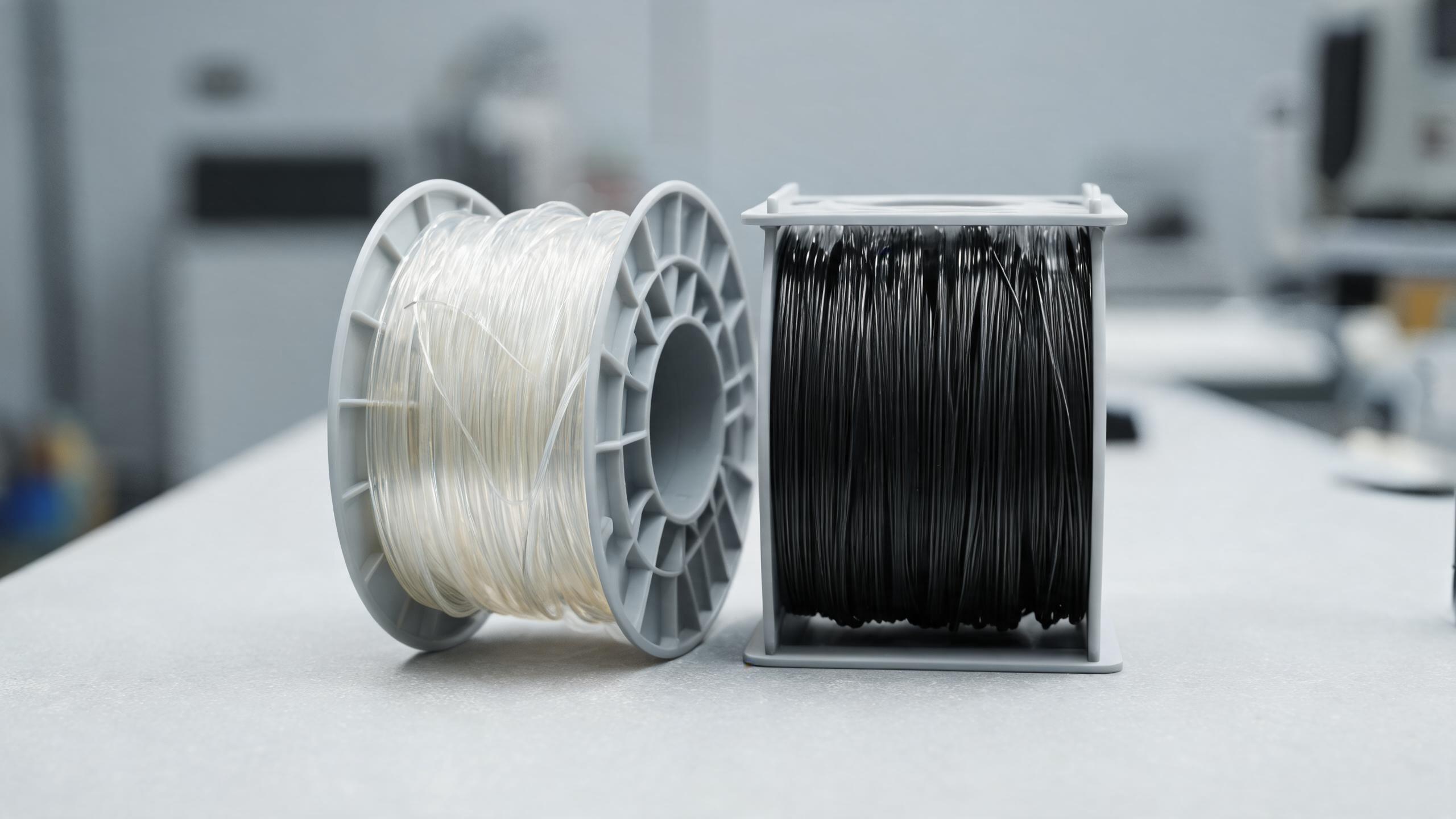
A practical comparison for procurement managers deciding between flexible TPU and rigid PLA filament. Covers application fit, printability, durability, supplier verification points, and bulk ordering considerations.
BUYER GUIDE
When you are comparing tpu filament vs pla for a bulk order, the decision is rarely about which material is "better." It is about which one fits the end-use part, your print farm's capabilities, and your cost model. This guide walks through the technical and commercial factors that matter when you source either material at volume. We will look at where flexible TPU earns its higher price, where rigid PLA is the sensible default, and what to confirm with a supplier before you commit to a container order.
Start with the Part, Not the Material
The fastest way to choose between TPU and PLA is to ask what the printed part must do. If the part bends, absorbs impact, or seals against a surface, you need an elastomer. If the part holds a shape, locates a component, or acts as a rigid fixture, a stiff thermoplastic is the better fit.
Consider two common production scenarios. A phone-case prototype that snaps around a device needs flexibility to survive repeated installation and removal. A CNC jig or a go/no-go gauge needs dimensional stability so it does not flex under clamping pressure. The first part points to TPU. The second points to PLA.
- TPU 95A suits wearable parts, gaskets, and protective cases where flexibility and abrasion resistance are required.
- PLA suits rigid prototypes, jigs, and visual models where stiffness and surface finish matter more than impact strength.
- TPU is harder to print; PLA is more forgiving. Factor in your operators' skill level and printer calibration.
- Confirm diameter tolerance, moisture protection, and compliance documentation with the supplier before bulk ordering.
When TPU Is the Right Call
Thermoplastic polyurethane (TPU) is a flexible filament with a Shore hardness rating. A common grade is 95A, which means it is firm enough to hold a shape but soft enough to bend and compress. That combination makes it the default choice for parts that experience repeated stress or contact.
Typical applications include gaskets, seals, phone-case prototypes, and wearable components like watch bands or protective covers. TPU's abrasion resistance is a key advantage here. A part that rubs against fabric, skin, or another surface will wear down PLA quickly but hold up far longer in TPU.
When you source TPU in bulk, look for a supplier that can hold a consistent diameter. A flexible filament that varies in thickness will cause inconsistent extrusion and failed prints. A factory using laser measurement for diameter control, with a standard tolerance claim of ±0.02mm, is a signal that they treat this as a precision process. For a specific TPU 95A product, verify the stated diameter tolerance of 1.75mm ± 0.03mm and the recommended print temperature range of 210–230°C.
If your buyers need custom colors for brand-matched parts, confirm the minimum quantity for color matching. Some suppliers offer custom color matching from 50 kg per color, which is a practical threshold for a production run rather than a sample batch.
For a deeper look at Shore hardness, printing tips, and wholesale sourcing, see our TPU flexible filament buying guide.
When PLA Is the Smarter Choice
PLA (polylactic acid) is the workhorse of rigid 3D printing. It is stiff, prints at lower temperatures, and is generally easier to dial in than flexible materials. For a print farm running many machines, PLA's predictability reduces waste and rework.
Choose PLA for visual prototypes, form-fit checks, and non-functional models where the part does not bear load or flex. It is also a strong candidate for tooling like assembly jigs and fixtures that hold a part in place during a manual process. The rigidity that disqualifies PLA for a gasket is exactly what makes it right for a locating pin.
Cost is another factor. PLA is typically less expensive per kilogram than TPU. When you are ordering hundreds of spools, that difference compounds quickly. For a part that does not need flexibility, paying for TPU is wasted budget.
If you are sourcing PLA in volume, a matte black finish is a popular choice for professional-looking prototypes and display models. Confirm the supplier's catalog includes a rigid PLA option that matches your surface finish requirements. Our PLA filament wholesale guide covers sourcing tips for B2B buyers in more detail.
tpu vs pla filament: Side-by-Side Comparison
| Decision Factor | TPU (Flexible) | PLA (Rigid) |
|---|---|---|
| Primary property | Flexibility, abrasion resistance | Stiffness, dimensional stability |
| Typical parts | Gaskets, seals, phone cases, wearables | Prototypes, jigs, fixtures, display models |
| Print difficulty | Higher; requires tuned retraction and speed | Lower; forgiving and reliable |
| Cost per kg | Higher | Lower |
| Key spec to verify | Shore hardness, diameter tolerance | Diameter consistency, color uniformity |
The table above summarizes the core trade-offs. The right material is the one that matches the part's mechanical requirements without overpaying for properties you do not need.
What to Confirm with a Supplier Before Bulk Ordering
Once you have decided between tpu vs pla filament, the next step is qualifying the supplier. Here is a checklist of what to verify before placing a large order.
1. Diameter Tolerance and Consistency
A filament that varies in diameter causes under-extrusion, jams, or weak parts. Ask the supplier how they measure diameter. A factory using laser measurement with a standard tolerance of ±0.02mm demonstrates a commitment to consistency. For TPU specifically, confirm the 1.75mm ± 0.03mm diameter spec is met on every spool, not just the first batch.
2. Moisture Protection During Shipping
TPU is hygroscopic, meaning it absorbs moisture from the air. Wet filament prints with bubbles, poor layer adhesion, and surface defects. Confirm the supplier uses vacuum-sealed packaging with desiccant. This is a simple but critical detail for ocean freight, where containers can sit in humid conditions for weeks.
3. Compliance Documentation
If your end customers require material declarations, REACH or RoHS compliance, ask for the documentation before you order. A supplier that can provide these on request is easier to work with than one that promises compliance but cannot produce the paperwork. For TPU 95A, material declarations should be included, and REACH and RoHS documentation should be available on request.
4. MOQ and Volume Discounts
Know the minimum order quantity and where the price breaks are. A typical MOQ for custom programs might be 50 kg, with a volume discount tier at 500+ spools. Confirm these numbers with the supplier so you can calculate your landed cost per spool accurately.
5. Custom Color and OEM Capabilities
If you need brand-matched colors, ask about custom color matching. Some suppliers can match a specific color from a 50 kg minimum per color. For custom programs like private labeling or bespoke packaging, confirm the OEM minimum and what the program includes. A factory-direct supplier like Wanzhoutong's OEM page can outline the scope of what is possible.
Production Capacity and Quality Control
For bulk orders, your supplier's production capacity matters as much as the material spec. A factory with 12 extrusion lines can handle larger orders and shorter lead times than a small workshop. Ask about their quality control process. Laser-based diameter measurement is a good sign, but also ask how often they test mechanical properties and how they handle defective batches.
Wanzhoutong, for example, is a factory-direct supplier of 3D printing filaments and color masterbatch based in Shenzhen, China. Their 12 extrusion lines and strict diameter tolerance control are points to verify in your initial conversation. A supplier that is transparent about these details is more likely to be a reliable long-term partner.
Conclusion: Match the Material to the Application
The tpu vs pla decision comes down to application requirements and total cost. Choose TPU when you need flexibility, abrasion resistance, and durability for parts like gaskets and wearables. Choose PLA when stiffness, printability, and cost are the priority for rigid prototypes and fixtures.
Before you order, verify the supplier's diameter tolerance, moisture protection, compliance documentation, and MOQ terms. A factory-direct partner with transparent specs and volume pricing will make your sourcing decision easier to execute. If you are still deciding, start with a small test order of each material, print your actual part, and compare the results. That empirical data will tell you more than any spec sheet.