A practical B2B guide for procurement and sourcing managers: how to vet 3D printing filament manufacturers, evaluate OEM capabilities, check compliance documentation, and negotiate MOQs without guesswork.
BUYER GUIDE
When you are sourcing 3D printing filament for resale, for a printer brand, or for a production line, the factory you pick determines your product quality, your delivery reliability, and your legal exposure. A bad filament supplier can mean inconsistent diameter, clogged nozzles, failed compliance audits, or a brand damaged by one bad batch.
This guide gives you a practical, step-by-step framework for vetting a 3D printing filament manufacturer before you commit to a purchase order. You will learn what documents to request, what factory capabilities to verify, how to evaluate OEM filament programs, and how to negotiate realistic MOQs.
- Always verify the factory's actual production equipment and in-house testing capability, not just their brochure claims.
- For OEM filament, confirm which customization steps the factory owns (color matching, spooling, labeling, packaging) and which are outsourced.
- Request material datasheets, test reports, and compliance certificates before sampling, and verify them with independent testing if your application is critical.
- Use a structured audit checklist to compare multiple filament factories on equal terms.
- Negotiate MOQs based on your real demand forecast, and ask about trial orders and split shipments.
Why the filament manufacturer matters more than the filament
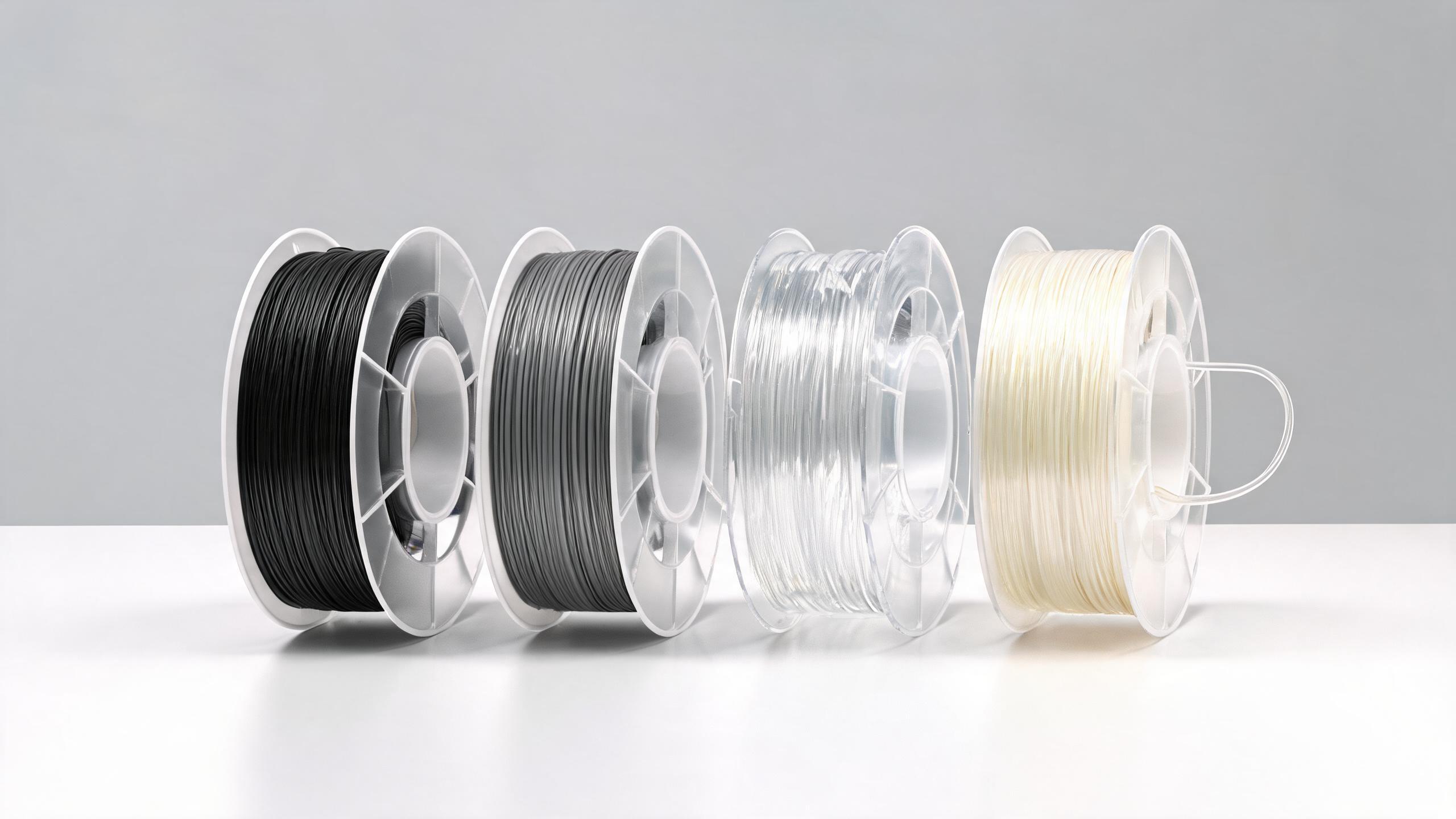
Filament is the consumable that directly affects print quality, printer reliability, and end-part performance. A 1.75 mm filament that varies by ±0.05 mm may still print, but it can cause inconsistent extrusion, jams, and weak layer adhesion. For a B2B buyer, these issues translate into customer complaints, returns, and lost contracts.
When you buy from a factory, you are not just buying spools. You are buying the factory's compounding know-how, extrusion process control, drying and packaging discipline, and quality assurance. That is why a reliable filament supplier is worth more than a low price per kilogram.
Step 1: Define your sourcing requirements before you contact factories
Before you start emailing suppliers, write down your technical and commercial requirements. This helps you filter factories quickly and gives you a basis for comparison.
At minimum, specify:
- Material type: PLA, ABS, PETG, TPU, ASA, nylon, polycarbonate, or a blend.
- Diameter: 1.75 mm, 2.85 mm, or custom.
- Color: standard colors, custom color matching, or a specific Pantone reference.
- Spool size and packaging: 1 kg, 2 kg, 5 kg, or bulk spools; cardboard spools, plastic spools, or refill options.
- Quantity: your estimated annual volume, order frequency, and target MOQ.
- Compliance: RoHS, REACH, CE, FDA food-contact, or other standards relevant to your market.
- OEM needs: private labeling, custom spool design, custom box printing, or unique color matching.
Having this list written down also helps you communicate clearly with the factory and avoid misunderstandings later.
Step 2: Check the factory's credentials and production capabilities
Not every company that sells filament is a true manufacturer. Some are traders or resellers who buy from other factories. For a B2B buyer, working directly with a 3D printing filament manufacturer can give you better pricing, more control over quality, and clearer communication on customizations.
Ask these questions to verify that the factory actually produces filament:
- Do you have your own extrusion lines? How many, and what throughput per line?
- Do you compound your own materials, or do you buy pre-compounded pellets?
- What is your monthly production capacity in tons?
- Do you have in-house testing equipment (diameter gauge, tensile tester, moisture meter)?
- Can you provide a factory tour (physical or video)?
If a supplier cannot answer these questions with specifics, treat that as a red flag. A genuine manufacturer will usually share production photos, machine specifications, or even a live video call.
Step 3: Evaluate quality control and testing procedures
Filament quality is not just about the raw material. It is about consistency across the entire spool and from batch to batch. A reliable filament supplier will have documented quality control procedures.
Ask for:
- Diameter tolerance: Typically ±0.02 mm for premium filament, ±0.05 mm for standard. Ask for the factory's actual tolerance and how they measure it.
- Roundness: Ovality can cause feeding issues. Ask if they measure roundness, not just diameter.
- Drying and packaging: Filament absorbs moisture, which causes bubbles and weak prints. Ask about drying time before packaging, vacuum sealing, and desiccant use.
- Batch traceability: Can they trace a spool back to its production batch and raw material lot?
- Test reports: Request a typical test report showing diameter, tensile strength, elongation, and melt flow index.
| Quality Parameter | What to Ask | Why It Matters |
|---|---|---|
| Diameter tolerance | ±0.02 mm or ±0.05 mm? | Affects extrusion consistency and print reliability. |
| Roundness | Do you measure ovality? | Oval filament can cause jams and uneven flow. |
| Moisture content | What is the max moisture before packaging? | Moisture leads to bubbles, weak parts, and stringing. |
| Drying process | How long and at what temperature? | Proper drying prevents quality issues. |
| Packaging | Vacuum sealed? Desiccant included? | Protects filament during shipping and storage. |
| Batch traceability | Can you trace a spool to its batch? | Essential for quality claims and recalls. |
Step 4: Verify compliance and certifications
Depending on your target market, your filament may need to meet specific regulations. For example, the EU requires RoHS and REACH compliance for many products. If you sell to schools or food-related applications, you may need additional certifications like EN71 (toy safety) or FDA food-contact approval.
Do not just accept a supplier's word that they are compliant. Ask for actual test reports from recognized laboratories, such as SGS, TÜV, or Intertek. Check that the certificate covers the specific material and color you are buying, because additives in different colors can affect compliance.
Also ask about the factory's quality management system. Many reliable filament factories are ISO 9001 certified, which indicates they have documented processes for quality control. Some may also have ISO 14001 for environmental management.
If a factory cannot provide certificates, ask for a timeline and a written commitment. If they are vague or avoid the question, consider that a risk.
Step 5: Assess OEM filament capabilities
If you are planning to sell filament under your own brand, you need a factory that can handle OEM filament production. This involves more than just putting your label on a spool.
Ask about the following OEM services:
- Color matching: Can they match a specific color using a Pantone code or a physical sample? What is the turnaround time?
- Custom spool design: Do they offer their own spool designs, or can they use your spool mold? What are the mold costs?
- Private labeling: Can they print your logo on the spool and the box? What printing methods do they use?
- Packaging: Can they design custom boxes, inserts, or retail-ready packaging?
- Material customization: Can they adjust the formula (e.g., add carbon fiber, change flexibility) for your product line?
Also ask about minimum order quantities for OEM work. Some factories have a separate, higher MOQ for custom colors or custom spools. Make sure you understand the cost structure for each customization step.
Step 6: Understand MOQs and negotiate realistically
MOQ (minimum order quantity) is a key commercial term in filament sourcing. It varies widely depending on the factory, the material, and the customization level.
Typical MOQ ranges for filament:
- Standard colors, standard spools: 50–200 kg per SKU.
- Custom color matching: 200–500 kg per color.
- Custom spool or packaging: 1,000+ units, plus mold costs.
When negotiating MOQs, be honest about your demand forecast. Factories are more willing to lower MOQs for repeat orders or for a long-term commitment. You can also ask for a trial order (e.g., 20–50 kg) to test quality before committing to a large quantity.
Also clarify the following:
- Are MOQs per SKU or per order?
- Can you mix colors and materials to reach the MOQ?
- What is the lead time for production and for reorders?
- What are the payment terms (e.g., 30% deposit, 70% before shipment)?
- What is the incoterm (FOB, CIF, EXW)?
Step 7: Request samples and run your own tests
Never skip sampling. A reliable filament supplier will provide samples, sometimes for free, sometimes at a cost. For a B2B buyer, paying for samples is a reasonable investment.
When you receive samples, do not just look at the spool. Print with them. Test:
- First-layer adhesion and bed adhesion.
- Dimensional accuracy of printed parts.
- Layer adhesion and strength (try breaking a printed test piece).
- Consistency across the spool (measure diameter at several points).
- Color consistency between samples.
If you have the equipment, measure the filament diameter yourself with a caliper or a laser micrometer. Compare the readings with the factory's stated tolerance.
Also, keep a sample from the production batch for future reference. If you later receive a batch that is different, you can compare and raise a complaint with evidence.
Step 8: Check communication and responsiveness
In B2B sourcing, communication is as important as product quality. A factory that responds slowly or vaguely during the inquiry phase will likely be the same during production.
Evaluate:
- How quickly do they respond to your emails?
- Do they answer your questions directly, or do they give generic replies?
- Are they proactive in suggesting alternatives or flagging potential issues?
- Do they have English-speaking staff who understand technical terms?
A good test is to ask a technical question about your specific application. If the factory gives a thoughtful, specific answer, that is a positive sign. If they just say "our filament is high quality," keep looking.
Step 9: Visit the factory or request a virtual tour
If your order volume is significant, a factory visit is worth the cost. Seeing the production line, the testing lab, and the warehouse in person gives you confidence that the factory is real and capable.
If you cannot visit, ask for a video call with a walkthrough of the facility. Many factories are happy to do this for serious buyers. During the tour, pay attention to:
- Cleanliness of the production area.
- Whether the extrusion lines are running.
- How filament is handled and packaged.
- Whether the testing equipment is actually in use.
If a factory refuses a visit or a video tour, that is a red flag, unless they have a valid reason (e.g., confidentiality agreements with other clients).
Step 10: Compare multiple suppliers with a scorecard
Do not put all your eggs in one basket. Shortlist at least three filament factories and compare them using a scorecard. This helps you make an objective decision based on facts, not just on the sales pitch.
| Criteria | Weight | Factory A | Factory B | Factory C |
|---|---|---|---|---|
| Production capability (own extrusion lines) | 20% | |||
| Quality control (testing equipment, tolerance) | 25% | |||
| Compliance (certificates, test reports) | 20% | |||
| OEM services (color matching, labeling) | 15% | |||
| MOQ and pricing flexibility | 10% | |||
| Communication and responsiveness | 10% |
Fill in the scorecard after you have gathered all information. Be honest about what you do not know yet. If a factory has not provided a test report, score them low on that criterion.
Common mistakes to avoid when choosing a filament factory
- Choosing solely on price: The cheapest filament often has hidden costs: more failed prints, more customer complaints, and more rework.
- Skipping samples: Even if the factory has good reviews, always test samples for your own application.
- Ignoring compliance: A non-compliant filament can get your product banned from a market or cause legal liability.
- Not clarifying MOQs: An unclear MOQ can lead to surprise costs or delays when you try to reorder.
- Not checking batch consistency: A factory may send a great sample but then ship a lower-quality batch. Ask about their batch-to-batch quality control.
FAQ
What is the typical MOQ for custom filament colors?
Custom color matching usually requires a higher MOQ than standard colors, often 200–500 kg per color, depending on the factory. Some factories may accept a smaller trial order for a custom color at a higher price.
How do I verify a filament factory's compliance certificates?
Ask for copies of certificates and test reports from recognized laboratories. Verify the certificate number with the issuing body if possible. Also check that the certificate covers the specific material and color you are buying.
Can I get OEM filament with my own brand?
Yes, most filament manufacturers offer OEM services, including private labeling, custom spool design, and custom packaging. You will need to discuss your requirements and MOQs with the factory.
What is the best way to test filament samples?
Print with the sample using the same settings you would use for production. Measure the diameter, test the strength, and check color consistency. Also, run a full spool to see if there are any variations.
Conclusion
Choosing a reliable 3D printing filament manufacturer is a systematic process. It requires you to verify production capabilities, quality control, compliance, and OEM services. It also requires you to negotiate MOQs and test samples before committing.
Use the steps in this guide as a checklist. Start with your requirements, then shortlist factories, request documents, run tests, and compare them on a scorecard. This approach will help you find a filament factory that can support your business for the long term.
If you are currently evaluating filament suppliers and need more details on OEM capabilities, MOQs, or compliance documentation, contact us for a conversation about your project.