
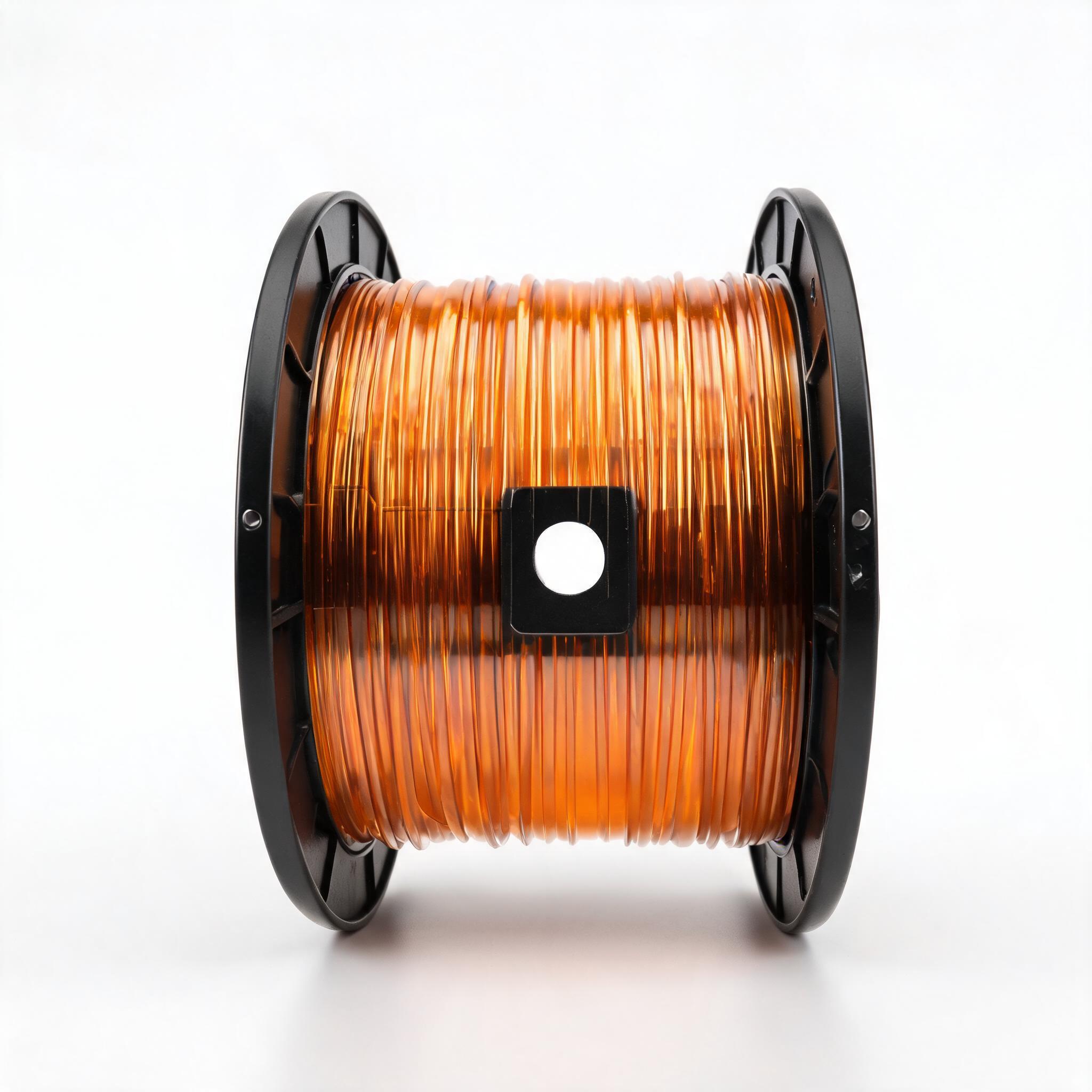
A procurement-focused guide to selecting 3D printing filament. We compare PLA, PETG, ABS, and TPU across mechanical properties, printability, and application fit, then walk through the quality checks that matter for B2B sourcing — diameter tolerance, moisture, spooling, and supplier verification.
BUYER GUIDE · MATERIAL SELECTION
If you are sourcing 3D printing filament for production, prototyping, or resale, the first decision is not price. It is material. Choose the wrong polymer and you will burn time on print failures, rework, and customer complaints — long before you ever argue about a per-kilogram rate.
This guide compares the four most common engineering filaments — PLA, PETG, ABS, and TPU — from a procurement perspective. We cover what each material actually does, where it fails, and the quality parameters you should put in your RFQ before you commit to a supplier.
- Match material to end-use environment first: heat, chemicals, and mechanical load rule out most "default" choices.
- PETG is the practical middle ground for functional parts; ABS is for heat resistance; TPU is for flexibility — not for dimensional precision.
- Diameter tolerance (±0.03 mm is the industry standard) and moisture content are the two specs that separate consistent filament from scrap.
- Ask for a batch CoA and a spooling sample before you scale up. Cheap filament costs more in failed prints.
Why Material Selection Is a Procurement Decision
For a hobbyist, a failed print is a nuisance. For a B2B buyer, it is a cost line. Rework, machine downtime, and rejected parts hit your margin far harder than the difference between a $12 and $18 spool. That is why material selection should be treated as a specification exercise, not a shopping exercise.
Before you compare polymers, write down three things about your application:
- Operating temperature — Will the part sit near a motor, in a car cabin, or under a hot lamp?
- Mechanical load — Is it structural, or purely cosmetic?
- Environment — Moisture, UV, chemicals, or food contact?
These three answers will eliminate at least two of the four materials immediately.
The Four Workhorse Filaments: What Each Actually Does
PLA — The Baseline, Not the Default
PLA (polylactic acid) is the easiest filament to print. It prints at low temperatures (190–220 °C), needs no heated bed, and produces crisp details with minimal warping. For visual prototypes, fit-check models, and low-stress enclosures, it is hard to beat on cost and speed.
But PLA is a thermoplastic polyester derived from corn starch. It softens around 50–60 °C. Leave a PLA part in a parked car in summer and it will deform. It is also brittle and degrades under UV exposure over time. For any functional or outdoor application, PLA is the wrong choice.
Buy PLA when: visual prototypes, jigs with no heat exposure, architectural models, or resale to education and hobby markets.
PETG — The Functional Workhorse
PETG (glycol-modified polyethylene terephthalate) is the material most B2B buyers should start with. It combines PLA's ease of printing with significantly better mechanical properties. It resists impact, handles moderate heat (up to ~70 °C), and is chemically resistant to many solvents and acids.
PETG is also the go-to for food-contact and medical-adjacent applications in many cases, though you must verify specific certifications with your supplier. It prints at 230–250 °C and benefits from a heated bed.
Buy PETG when: functional prototypes, end-use parts, enclosures, brackets, and any part that might get dropped or stressed.
ABS — Heat Resistance with a Catch
ABS (acrylonitrile butadiene styrene) is the classic engineering plastic. It withstands higher temperatures (~85–100 °C), is tough, and is the material used in injection-molded parts like LEGO bricks and automotive trim. It is also paintable and can be vapor-smoothed with acetone for a professional finish.
The catch is printability. ABS warps badly without an enclosed, heated build chamber. It shrinks as it cools, which causes corners to lift off the bed. It also emits fumes during printing that require ventilation. For a production environment, this means your printers need enclosures and air handling.
Buy ABS when: parts exposed to heat, automotive components, or parts that need post-processing like sanding and acetone smoothing.
TPU — Flexibility on Purpose
TPU (thermoplastic polyurethane) is an elastomer. It stretches, compresses, and returns to shape. It is the filament for gaskets, seals, bumpers, phone cases, and vibration dampers. Shore hardness ratings (typically 85A to 95A) tell you how soft or stiff the material is.
TPU is the hardest of the four to print consistently. It is flexible, which means it can jam in Bowden extruders, and it requires slow print speeds. Drying TPU before printing is mandatory — moisture causes bubbling and stringing.
Buy TPU when: the part must flex, absorb impact, or seal against a surface. Do not buy TPU for dimensional precision — it is not that material.
| Property | PLA | PETG | ABS | TPU |
|---|---|---|---|---|
| Print temperature | 190–220 °C | 230–250 °C | 220–250 °C | 220–250 °C |
| Heat resistance | ~50–60 °C | ~70 °C | ~85–100 °C | ~80 °C (varies) |
| Impact resistance | Low (brittle) | High | High | Very high (flexible) |
| Warping risk | Low | Low–Moderate | High (needs enclosure) | Low |
| Flexibility | None | Minimal | Minimal | High |
| Chemical resistance | Poor | Good | Good | Good |
| Ease of printing | Excellent | Good | Poor–Fair | Fair (slow speeds) |
| Typical use | Prototypes, models | Functional parts, enclosures | Heat-exposed parts | Gaskets, seals, bumpers |
The Spec That Matters Most: Filament Diameter Tolerance
You can argue about brand, color, and price, but the single most important quality parameter in 3D printing filament is diameter tolerance. The filament feeds through a nozzle that is typically 0.4 mm. If the filament diameter varies beyond tolerance, extrusion rate changes, and you get under-extrusion, over-extrusion, or clogs.
The industry standard for good filament is ±0.03 mm on a nominal 1.75 mm diameter. Budget filament often speculates ±0.05 mm or worse. That difference is invisible on a spec sheet but obvious in print quality and failure rate.
When you request a quote, ask for the diameter tolerance in writing. A supplier that cannot state a tolerance cannot control their process.
| Tolerance | Quality Level | Risk |
|---|---|---|
| ±0.02 mm | Premium / industrial | Lowest failure rate, consistent flow |
| ±0.03 mm | Standard / professional | Acceptable for most production |
| ±0.05 mm or worse | Budget | Clogs, jams, inconsistent walls |
Moisture: The Hidden Variable
All four filaments absorb moisture from the air. PLA and PETG are hygroscopic; ABS and TPU are worse. When filament absorbs water, it turns to steam inside the hot nozzle, causing popping, bubbling, and weak, brittle parts.
For B2B sourcing, moisture matters in two ways:
- Packaging: Filament should arrive vacuum-sealed with a desiccant pack. If it does not, the supplier is cutting corners.
- Drying: Even good filament needs drying before use if it has been stored for weeks. Ask your supplier for recommended drying parameters (temperature and time) for each material.
If a supplier cannot tell you the drying temperature for their PETG or TPU, that is a red flag.
Spooling and Winding Quality
A spool that is wound poorly will cause tangles and snags, which translate directly into print failures. This is a quality issue that is invisible in photos and only appears on your printer.
When evaluating a supplier, request a sample spool and run it. Look for:
- Consistent winding — no loose loops or crossovers.
- Clean start — the filament should be secured in the spool hole, not tangled.
- Uniform color — color variation indicates inconsistent compounding.
A sample spool costs a supplier almost nothing. If they hesitate to send one, treat that as a signal.
B2B Sourcing Checklist: What to Ask a Filament Supplier
Before you commit to a volume order, put these questions in your RFQ:
- What is the diameter tolerance on your 1.75 mm filament?
- What is the roundness tolerance (ovality)?
- How is the filament packaged? Vacuum-sealed with desiccant?
- What are the recommended drying parameters for your PETG and TPU?
- Can you provide a batch Certificate of Analysis (CoA) with each shipment?
- What is the spool weight and the net filament weight (not including spool)?
- Do you offer custom colors, and what is the MOQ for custom batches?
- What is your lead time for standard and custom orders?
These questions separate a filament supplier from a filament trader. A trader resells reels; a supplier knows their process and can answer every one of these without checking with "the factory."
Common Sourcing Mistakes to Avoid
1. Buying on price per kilogram alone
A spool that is $3 cheaper but fails 10% more often is the more expensive option. Calculate cost per successful print, not cost per kilogram.
2. Ignoring batch consistency
If you order 100 spools, they should all behave the same. Ask if the supplier tests each batch and whether they can guarantee consistency across production runs.
3. Assuming "PLA+" or "PETG+" means anything standardized
Manufacturers add modifiers and call it "plus." There is no universal standard. Ask what was added and what property it improves.
4. Not testing before scaling
Always run a pilot order. Print the same test part on the same printer with the new filament and compare it against your current material. Document the results.
Making the Final Decision
Here is a practical decision path for most B2B applications:
- Does the part flex or seal? → TPU
- Does the part face heat above 70 °C? → ABS (with enclosure)
- Is the part functional or load-bearing? → PETG
- Is it purely visual? → PLA
When in doubt, start with PETG. It is the most forgiving functional material and covers the widest range of use cases. Then validate with a sample spool before you commit to volume.
FAQ: Quick Answers for Buyers
Q: What is the most common filament diameter for industrial use?
1.75 mm is dominant in desktop and small-format industrial printers. 2.85 mm exists but is less common. Confirm your printer's requirement before ordering.
Q: Can I mix brands of filament on the same printer?
Yes, if the diameter tolerance is consistent. But changing materials or brands mid-production requires recalibration and a purge cycle. For volume runs, stick to one supplier per material.
Q: What is the typical MOQ for custom color filament?
This varies by supplier. Custom colors usually require a minimum batch per production run. Ask your supplier directly — do not assume a standard number.
Q: How should I store filament between production runs?
In a dry box with desiccant, or in the original vacuum-sealed packaging. Humidity is the enemy of all four materials, especially TPU and ABS.
Q: Do you offer sample spools before a volume order?
Samples are the standard way to qualify a new supplier. We recommend requesting one spool of each material you plan to order, printing a standard test part, and measuring the results before scaling up.
Next Steps
Material selection is the first gate in filament procurement. Once you have chosen PLA, PETG, ABS, or TPU for your application, the next gate is supplier qualification — diameter tolerance, moisture control, and batch consistency.
If you are sourcing filament in volume and need a supplier who can answer the questions above with real data, contact us with your application details and target volume. We will help you match the right material to your use case and provide samples for testing before you commit.