
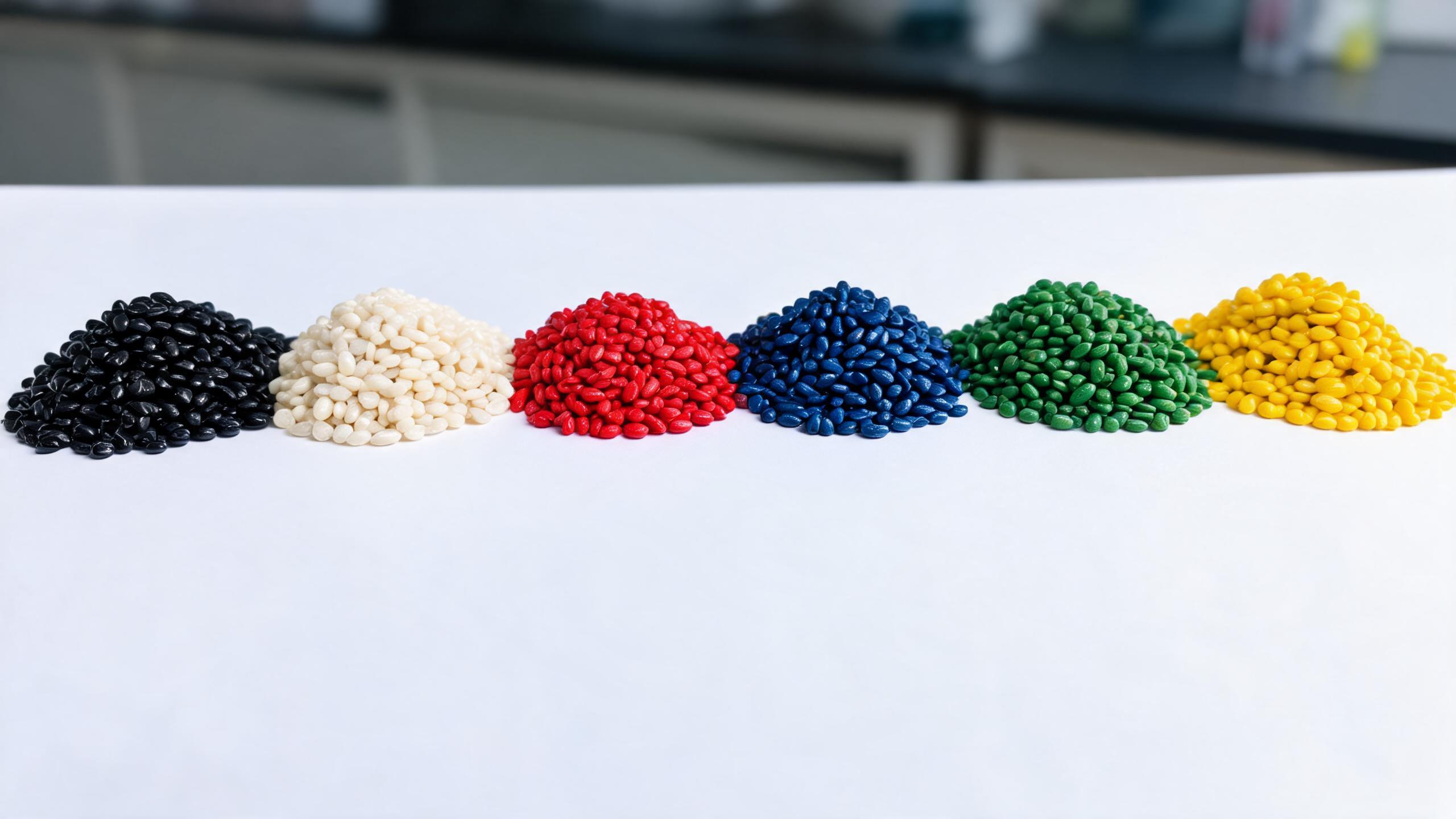
A practical guide for procurement and technical buyers covering what colour masterbatch is, how to specify it, key quality indicators, supplier evaluation criteria, application considerations, and common pitfalls — with actionable checklists and FAQs.
BUYER GUIDE
If you source plastic parts, packaging, or finished goods, colour masterbatch is likely a line item on your BOM — but it is often the least understood one. Getting it wrong means colour mismatch, production downtime, or rejected batches. This guide walks through what colour masterbatch is, how to specify it, how to judge a colour masterbatch manufacturer or supplier, and what to confirm before you commit to an order.
- Specify carrier resin, pigment type, dosage, and processing temperature — not just a colour code.
- Ask for a colour matching service and a signed colour standard before mass production.
- Verify dispersion quality, consistency across batches, and regulatory compliance for your target market.
- Evaluate the supplier's technical support, lead time, and MOQ — not only price per kilo.
- Always run a trial under your real processing conditions before committing to bulk.
What Is Colour Masterbatch?
Colour masterbatch (also written as color masterbatch) is a concentrated mixture of pigments or additives encapsulated in a carrier resin. It is manufactured in pellet form and added to virgin or recycled plastic during processing. The carrier resin melts together with the base polymer, releasing the pigment evenly into the melt. This is why masterbatch for plastics is often called a "solid liquid" — it is a concentrated way to deliver colour without handling loose pigment powder.
Compared to using raw pigment, masterbatch offers three practical advantages for a production line:
- Cleaner handling — no airborne pigment dust, easier dosing, less waste.
- Better dispersion — the pigment is pre-dispersed in the carrier, reducing the risk of specks or streaks in the final part.
- Consistency — a well-made masterbatch gives repeatable colour from batch to batch, which is critical for brand colours or multi-cavity moulds.
Masterbatch is used across virtually every plastic processing method: injection moulding, blow moulding, extrusion, film blowing, and rotational moulding. Each method places different demands on the masterbatch — for example, film applications require very fine pigment dispersion to avoid pinholes, while thick-walled injection parts may tolerate a coarser grind.
Types of Masterbatch for Plastics
Before contacting a colour masterbatch supplier, it helps to know which category your application falls into. The main types are:
| Type | Purpose | Typical Applications |
|---|---|---|
| Colour masterbatch | Imparts a specific colour to the plastic | Packaging, household goods, automotive parts, toys |
| Additive masterbatch | Adds functional properties (UV stabiliser, antioxidant, antistatic, flame retardant) | Outdoor products, electronics, food packaging |
| Filler masterbatch | Reduces cost or modifies mechanical properties (calcium carbonate, talc) | Bags, crates, pipes, low-cost moulded parts |
| Black & white masterbatch | High-concentration carbon black or titanium dioxide for opaque shades | Cables, pipes, films, agricultural products |
| Special-effect masterbatch | Metallic, pearlescent, fluorescent, or marbled effects | Cosmetic packaging, consumer electronics, decorative parts |
Most buyers need a colour masterbatch, but you may also require additive functionality in the same pellet. Many manufacturers offer combined masterbatches that deliver colour plus UV protection or antistatic properties, which can simplify your supply chain.
How to Specify Colour Masterbatch Correctly
A colour code alone (e.g., Pantone 19-4052) is not enough to produce a usable masterbatch. A professional colour masterbatch manufacturer will ask for a set of technical parameters. The more accurate your specification, the fewer rounds of colour matching you will need.
1. Carrier Resin
The carrier must be compatible with your base polymer. Common carriers are PE, PP, PS, ABS, PET, and PA. If you use recycled resin, tell the supplier — the carrier may need to be adjusted for better compatibility.
2. Pigment Type and Loading
Pigments are classified as organic or inorganic. Organic pigments give brighter colours but may have lower heat stability and lightfastness. Inorganic pigments (like titanium dioxide, iron oxides) are more stable but can be duller. The required pigment loading depends on the target colour strength and the opacity of the final part. Typical dosages range from 1% to 5% by weight, but this varies.
3. Processing Temperature
Every resin has a processing temperature window. Pigments and carriers must withstand the highest temperature your process reaches. For engineering plastics like PC or PA, you need a masterbatch rated for 250°C or higher. Confirm the maximum continuous temperature with the supplier.
4. Regulatory Compliance
If your product goes into food contact, toys, cosmetics packaging, or medical devices, you must verify that the masterbatch complies with relevant regulations — for example, EU 10/2011, FDA 21 CFR, or RoHS/REACH. Ask for a declaration of compliance or test reports. Do not assume that a "food-grade" label on a general-purpose masterbatch is sufficient.
5. Special Requirements
Note any special needs: UV resistance for outdoor use, high opacity for thin films, low odour for automotive interiors, or compatibility with a specific additive package. The more context you give, the better the supplier can formulate.
Quality Indicators: What to Look For in a Colour Masterbatch Manufacturer
Not all colour masterbatch suppliers are equal. Here are the concrete quality checks a buyer should apply:
| Checkpoint | What to Ask | Why It Matters |
|---|---|---|
| Dispersion | Can they provide a film or plaque sample showing no specks? | Poor dispersion causes colour streaks, weak spots, and surface defects. |
| Batch-to-batch consistency | What is their ΔE tolerance between batches? | A ΔE of ≤ 1.0 is commonly considered acceptable, but confirm your own limit. |
| Heat stability | What is the maximum processing temperature? | Exceeding it causes pigment degradation and colour shift. |
| Moisture content | What is the guaranteed max moisture? (usually < 0.2%) | Moisture causes splay, bubbles, and poor mechanical properties. |
| Regulatory documents | Do they provide test reports or certificates? | Needed for your own compliance and for your customers' audits. |
| Production capacity | What is their monthly output? Can they handle your peak volume? | Prevents supply shortages during your production spikes. |
Ask for a sample of the actual masterbatch, not just a colour chip. Run it through your own equipment under your normal conditions. This is the only way to verify that the masterbatch performs in your process.
Colour Matching: The Process and What to Expect
Colour matching is a standard service offered by most colour masterbatch manufacturers. The typical workflow is:
- Submit a reference — a physical sample, a Pantone code, or a digital colour value (L*a*b*).
- Supplier formulates — they create a trial masterbatch and produce a moulded or film sample.
- You evaluate — check the sample under your lighting conditions (e.g., D65 daylight, TL84 store light).
- Adjustment rounds — if the colour is off, the supplier adjusts the formula. Expect 1–3 rounds for a good match.
- Approval — once approved, the supplier keeps a standard sample (the "master standard") for future production.
For a smooth process, provide a physical sample whenever possible. Digital colour values are helpful but do not capture effects like metallic flake or pearlescence. Also, remember that colour perception depends on lighting and surface texture — always evaluate samples under the same conditions as your final product.
Cost Considerations: Not Just Price per Kilo
When comparing quotes, look beyond the unit price. The total cost of using a masterbatch includes:
- Dosage rate — a higher-quality masterbatch may allow a lower dosage, reducing your cost per part.
- Waste and rejects — poor dispersion or inconsistent colour leads to scrap, which costs more than the material itself.
- Logistics — shipping costs, lead time, and minimum order quantity (MOQ) affect your working capital.
- Technical support — a supplier that helps you solve processing issues can save you days of downtime.
A cheap masterbatch that causes a 2% reject rate is far more expensive than a premium one that runs clean. Ask for a cost-per-part calculation, not just a price per kilogram.
Common Mistakes Buyers Make
Based on common sourcing errors, here are the pitfalls to avoid:
- Choosing the wrong carrier resin — using a PE carrier in a PP part can cause poor dispersion or delamination.
- Ignoring processing temperature — a masterbatch that works for PP may fail in PC.
- Skipping the trial — assuming that a colour chip will behave identically in your mould is risky.
- Not checking regulatory compliance — a masterbatch that is fine for general use may not be allowed in food contact.
- Changing suppliers without re-qualification — even a similar-looking masterbatch from a different manufacturer may have different dispersion or heat stability.
How to Evaluate a Colour Masterbatch Supplier
Use this checklist when you shortlist suppliers. It covers the practical questions a procurement team should ask:
- Experience in your industry — do they have references in packaging, automotive, or consumer goods?
- Technical capability — do they have in-house colour matching and testing equipment?
- Quality system — are they certified to ISO 9001 or similar? (Confirm the certificate number.)
- Production capacity — can they scale with your demand?
- Lead time — what is their standard lead time for custom colours? For stock colours?
- MOQ — is it compatible with your order sizes?
- Communication — do they respond quickly and clearly in your working language?
Ask for a factory audit or a video tour if you cannot visit. A reputable manufacturer should be willing to share production and testing processes.
Working with a Colour Masterbatch Manufacturer: Best Practices
Once you select a supplier, set up a clear working relationship:
- Sign a colour standard — a physical sample or a measured L*a*b* value that both parties agree on.
- Define acceptance criteria — agree on ΔE tolerance, moisture content, and any other key specs.
- Document the formulation — keep a record of the pigment types and carrier resin used, in case you need to change suppliers.
- Maintain a safety stock — for critical colours, keep a buffer to avoid production stoppage.
- Review performance regularly — track rejects and colour consistency over time.
FAQ: Quick Answers for Buyers
What is the difference between colour masterbatch and compound?
Masterbatch is a concentrate that is let down (diluted) in the base resin at a typical ratio of 1–5%. A compound already contains the full amount of colour and additives and is ready to mould or extrude directly.
Can I use the same masterbatch for different resins?
Not usually. The carrier resin must be compatible with the base polymer. Using a PE masterbatch in a PP part is possible in some cases, but it is safer to use a carrier that matches the base resin.
How do I know the right dosage?
The supplier will recommend a dosage based on your resin, target colour, and part thickness. Start with their recommendation and adjust after a trial.
What is a reasonable lead time for a custom colour?
Typical lead times range from 7 to 20 days for colour matching, plus production time. Confirm with the supplier, as it varies with workload and complexity.
Do I need to test the masterbatch in my own factory?
Yes. A lab sample is a good starting point, but only a trial under your real conditions (temperature, mould, cycle time) can confirm performance.
Next Steps: What to Prepare Before Contacting a Supplier
To get accurate quotes and fast colour matching, prepare the following information before you reach out:
- Base polymer and its grade (e.g., PP homopolymer, HDPE film grade).
- Processing method (injection, blow moulding, film extrusion, etc.).
- Target colour reference (Pantone, RAL, physical sample, or L*a*b* values).
- Required dosage or let-down ratio, if known.
- Processing temperature range.
- Regulatory requirements (food contact, RoHS, etc.).
- Annual volume and order frequency.
With this information, a colour masterbatch manufacturer can give you a meaningful specification and a realistic quote. If you are still in the early stage, many suppliers offer a colour matching service to help you finalise the formulation.