
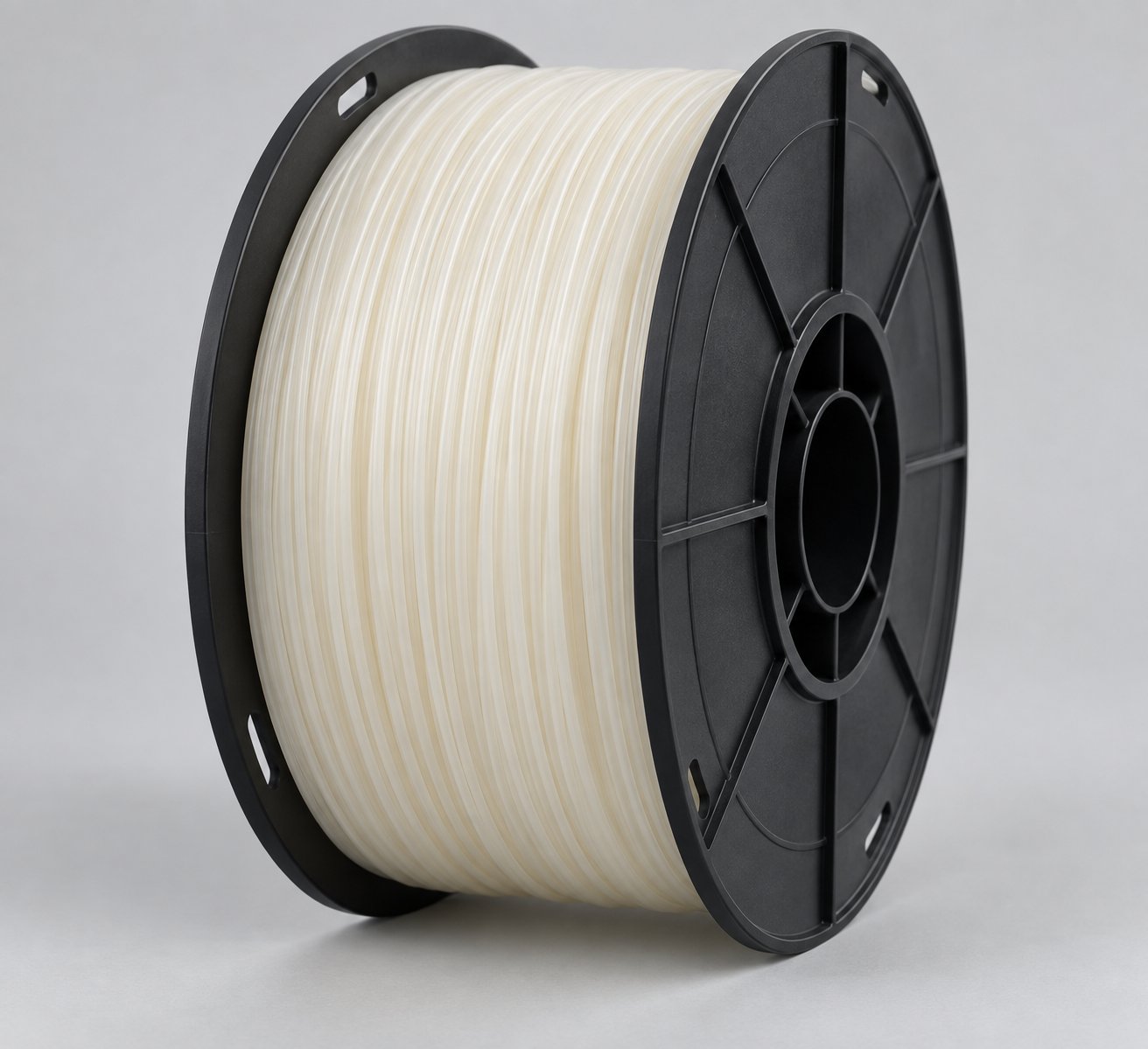
Compare ASA and ABS filament for outdoor, UV-exposed parts. Learn why ASA resists sunlight better, where ABS still makes sense, printability trade-offs, and what to verify when sourcing from a factory supplier.
When a part sits outside for months, the sun does more than heat it up. UV radiation breaks down polymer chains, and the visible result is color fading, surface chalking, and eventually cracking. For buyers sourcing 3D printed parts that will live outdoors, the material choice usually comes down to two options: ASA and ABS. Both are styrene-based thermoplastics with similar printing behavior, but they are not interchangeable when sunlight is part of the picture.
Key takeaways
- ASA is the better default for outdoor, UV-exposed parts because its acrylic-styrene-acrylonitrile chemistry resists UV degradation and yellowing far better than ABS.
- ABS still makes sense for indoor impact-resistant parts where UV is not a factor and budget is tighter.
- Both materials need an enclosed printer and similar temperature settings; ASA typically costs more per kg.
- When sourcing, verify diameter tolerance, batch consistency, moisture control, and supplier QC—these affect print reliability more than brand name.
Why ASA is the go-to for outdoor parts
ASA stands for acrylonitrile styrene acrylate. The key difference from ABS is the rubber phase: ABS uses butadiene, while ASA uses a saturated acrylate rubber. That saturated rubber is far less reactive to UV radiation. In practical terms, ASA keeps its color and mechanical properties much longer in direct sunlight. It is the material commonly chosen for exterior automotive parts, outdoor enclosures, and signage—applications where the part must survive real weather.
For a wholesale buyer, this means fewer field failures and fewer warranty returns. If your customer is printing housings for outdoor sensors, garden equipment, or marine accessories, ASA is the safer specification. It is also the answer to the common search question “what is ASA filament good for”—the short answer is outdoor, UV-exposed parts.
Where ABS still makes sense
ABS is not a bad material. It is tough, impact-resistant, and well understood. Its weakness is UV stability. Under prolonged sunlight, ABS tends to yellow and become brittle faster than ASA. That is why ABS is still a strong choice for indoor parts: brackets, housings, jigs, and fixtures that do not face direct sun.
Cost is another factor. ABS filament is generally less expensive than ASA, and it is widely available. For high-volume production of indoor parts, ABS can keep unit cost down. But if there is any chance the part will be used outdoors, the small price premium for ASA is usually worth it.
Printability trade-offs between ASA and ABS
Both ASA and ABS are prone to warping and shrinkage because they are amorphous thermoplastics. Both require an enclosed printer to maintain a stable chamber temperature. The recommended nozzle and bed temperatures are similar, though ASA can sometimes tolerate slightly lower bed temperatures. Exact values vary by brand, so confirm with your filament supplier.
ASA is a bit more forgiving than ABS in terms of layer adhesion and odor—ASA has a lower tendency to warp than ABS in some formulations, but still needs an enclosure. It is also hygroscopic, meaning it absorbs moisture from the air. Wet filament prints with bubbles, stringing, and poor surface quality. This is true for both materials, but ASA is particularly sensitive.
What to verify when sourcing ASA or ABS
For a B2B buyer, the filament brand is less important than the supplier's ability to deliver consistent quality. Here is what to check before placing a large order:
- Diameter tolerance: Ask for the nominal diameter and the tolerance range. A tight tolerance, such as ±0.02 mm, is common for quality filament. Wider tolerance can cause inconsistent extrusion.
- Batch consistency: Color and mechanical properties should be stable from batch to batch. Request a test spool from the same batch you will order.
- Moisture control: Ask how the filament is packaged and whether it includes desiccant. Vacuum-sealed packaging with desiccant is standard for quality filament.
- Supplier QC: Does the supplier test each batch for diameter, roundness, and mechanical properties? Ask for their QC process and any test reports they can share.
ASA vs ABS at a glance
| Property | ASA | ABS |
|---|---|---|
| UV resistance | High; resists yellowing and degradation | Low to moderate; yellows and becomes brittle in sunlight |
| Outdoor suitability | Excellent | Poor unless coated or painted |
| Impact resistance | Good | Good |
| Printability | Requires enclosure; similar settings to ABS | Requires enclosure; prone to warping |
| Cost | Higher | Lower |
| Typical applications | Outdoor housings, automotive parts, signage | Indoor brackets, prototypes, consumer goods |
Frequently asked questions
What is ASA filament?
ASA is a thermoplastic filament made from acrylonitrile styrene acrylate. It is known for its UV resistance and is often used for outdoor parts.
What is ABS filament?
ABS is a thermoplastic filament made from acrylonitrile butadiene styrene. It is tough and impact-resistant but has poor UV stability.
What is the most durable 3D printing filament?
Durability depends on the environment. For outdoor UV exposure, ASA is a strong choice. For high impact and heat, polycarbonate (PC) or nylon may be better, but they are harder to print. Confirm the specific requirements with your supplier.
What 3D printing filament is good for outdoor use?
ASA is the go-to for outdoor use because of its UV resistance. PETG is also an option for some outdoor applications, but it can be more prone to UV degradation over time compared to ASA.
Choosing between ASA and ABS comes down to where the part will live. For outdoor, UV-exposed parts, ASA is the reliable choice. For indoor parts where cost matters, ABS remains a practical option. When sourcing either material, focus on the supplier's quality control and consistency—the material name alone does not guarantee performance.