A practical guide for B2B buyers evaluating ABS filament for industrial use. Covers impact resistance, key mechanical properties, sourcing criteria, common pitfalls, and supplier evaluation checklist. Based on real-world engineering requirements, not marketing claims.
INDUSTRIAL MATERIALS
• ABS 3D printing filament offers a balance of impact resistance, heat deflection, and machinability unmatched by PLA or PETG for functional prototypes and end-use parts.
• Not all ABS filament is equal—batch consistency, dimensional tolerance (±0.05 mm or better), and moisture packaging are critical for industrial repeatability.
• Sourcing directly from a manufacturer with documented material data sheets (MDS) and ISO 9001 quality management reduces supply chain risk.
• Common failure modes (warping, layer adhesion loss, inconsistent diameter) can be mitigated by proper filament specification and supplier qualification.
• For high-volume procurement, consider MOQ, lead time, and custom color/certification options as part of the total cost of ownership.
Why ABS 3D Printing Filament Remains an Industrial Standard
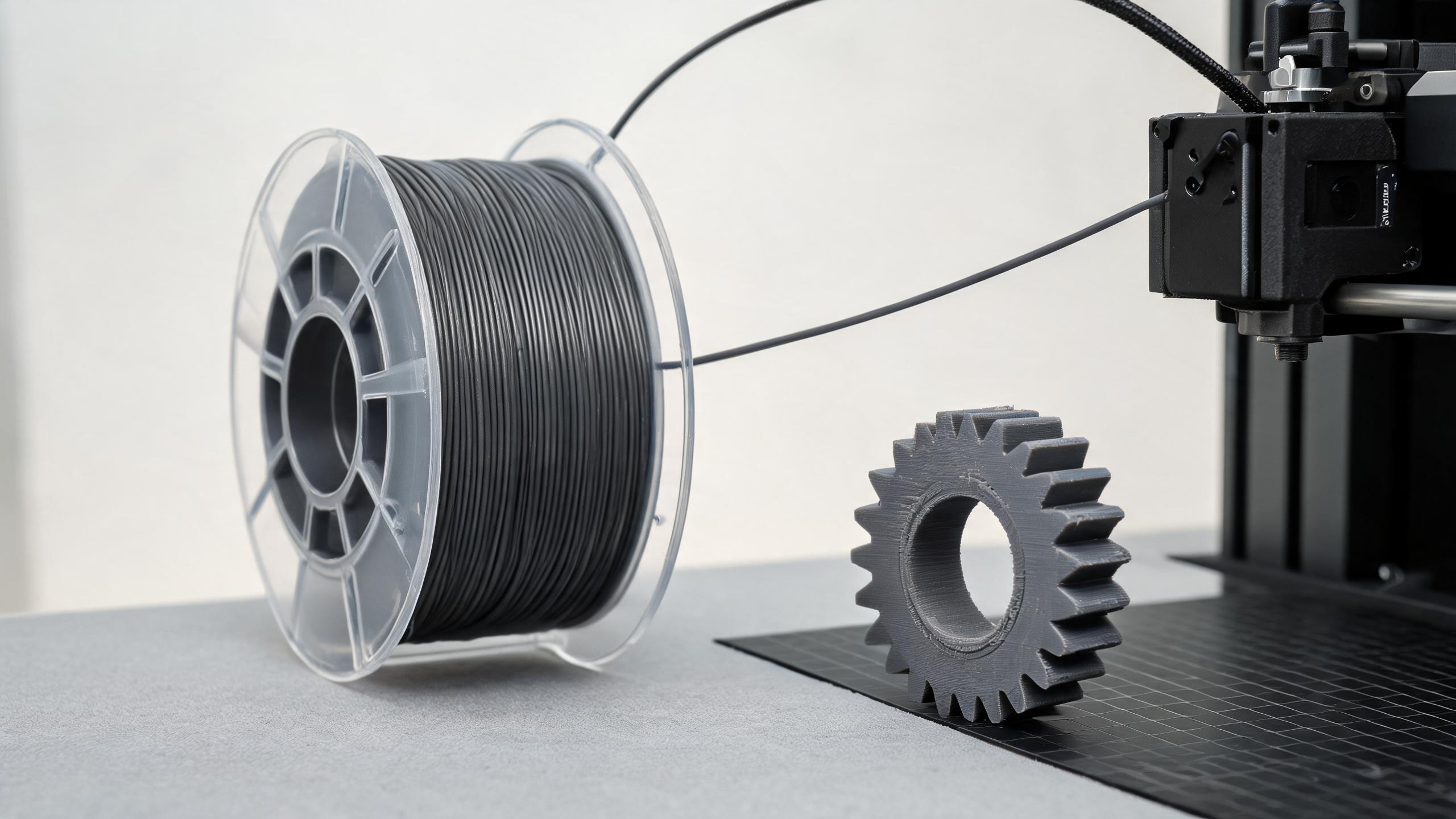
When an engineering team needs a 3D-printed part that can withstand mechanical stress, moderate heat, and repeated handling, ABS 3D printing filament is often the first material they specify. Acrylonitrile Butadiene Styrene (ABS) has been used in injection molding for decades—its transition to additive manufacturing was driven by the same properties that made it a staple in automotive dashboards, power tool housings, and consumer electronics enclosures.
For B2B buyers, the question is not whether ABS works—it is which ABS filament to source, from which supplier, and at what quality level to ensure repeatable results across production runs. This guide covers the material science, sourcing criteria, and common pitfalls to help you make an informed procurement decision.
Understanding Impact Resistance in ABS Filament
Impact resistance is the ability of a material to absorb energy during a sudden force without fracturing. For ABS, this property comes from the rubbery butadiene component dispersed within the styrene-acrylonitrile matrix. The result is a material that can deform plastically before breaking—unlike PLA, which tends to snap under sudden load.
Key Mechanical Properties to Evaluate
When reviewing ABS 3D printing filament specifications, focus on these metrics:
| Property | Typical Range (ABS) | Why It Matters for Industrial Use |
|---|---|---|
| Izod Impact Strength (notched) | 100 – 200 J/m | Measures resistance to sudden impact; higher values mean less brittle parts. |
| Tensile Strength | 35 – 50 MPa | Indicates how much pulling force the part can handle before breaking. |
| Elongation at Break | 5% – 20% | Higher elongation means the part can stretch before failure; important for snap-fit or press-fit applications. |
| Heat Deflection Temperature (HDT) @ 1.82 MPa | 85°C – 105°C | Maximum service temperature under load; critical for under-hood or near-motor components. |
| Flexural Modulus | 2.0 – 2.5 GPa | Stiffness; higher values reduce deflection under load. |
Note: These values are typical for injection-molded ABS. 3D-printed parts may show 10–30% lower mechanical properties due to layer orientation and interlayer adhesion. Always request printed test specimens from the supplier if possible.
How Print Orientation Affects Impact Performance
In FDM/FFF printing, the Z-axis (layer adhesion) is the weakest direction. A part printed flat on the build plate will have higher impact resistance in the XY plane than in the Z direction. For critical load-bearing applications, consider:
- Orientation optimization: Design parts so that the major load direction aligns with the XY plane.
- Post-processing: Annealing or vapor smoothing can improve interlayer adhesion by up to 40%.
- Material selection: Some suppliers offer ABS blends with enhanced layer adhesion for demanding applications.
ABS vs. Other Industrial 3D Printing Filaments
Buyers often compare ABS with PLA, PETG, and nylon. Here is a practical comparison based on industrial requirements:
| Criteria | ABS 3D Printing Filament | PLA | PETG | Nylon (PA6/PA12) |
|---|---|---|---|---|
| Impact Resistance | High | Low | Medium | High |
| Heat Resistance (HDT) | 85–105°C | 50–65°C | 70–80°C | 80–120°C |
| Ease of Printing | Moderate (requires heated bed, enclosure) | Easy | Easy | Moderate (requires drying, high temp) |
| Post-Processing | Excellent (sand, machine, glue, paint) | Good | Moderate | Moderate |
| Chemical Resistance | Good (oils, greases, dilute acids) | Poor | Good | Excellent |
| Cost per kg (B2B bulk) | $8–15 | $6–12 | $10–18 | $15–30 |
| Typical Applications | Functional prototypes, jigs, fixtures, enclosures, ducting | Concept models, low-stress parts | Transparent parts, outdoor use, food contact (some grades) | Gears, bearings, high-wear parts |
For applications requiring impact resistance plus easy machinability (drilling, tapping, sanding), ABS remains the most cost-effective choice. PETG is easier to print but less impact-resistant. Nylon offers higher toughness but requires careful drying and is more expensive.
Sourcing Guide: How to Evaluate ABS 3D Printing Filament Suppliers
For B2B procurement, the filament itself is only half the equation. The supplier's consistency, documentation, and logistics matter equally. Below is a checklist for evaluating potential suppliers.
1. Dimensional Tolerance
Industrial printers require filament diameter within ±0.05 mm (or better) to maintain consistent extrusion. Ask for a tolerance report from the supplier's production line. A supplier that cannot provide this data likely lacks process control.
2. Batch-to-Batch Consistency
Color, melt flow index (MFI), and mechanical properties should remain stable across production batches. Request a Certificate of Analysis (CoA) for each batch, including MFI and tensile strength. Suppliers with ISO 9001 certification are more likely to maintain documented quality standards.
3. Moisture Packaging
ABS is hygroscopic. Even a small amount of absorbed moisture can cause bubbling, stringing, and reduced mechanical properties during printing. Look for filament that is vacuum-sealed with desiccant and a moisture indicator card. Some suppliers offer nitrogen-flushed packaging for extended shelf life.
4. Material Data Sheet (MDS) and Safety Data Sheet (SDS)
A reputable supplier will provide a technical data sheet with the following minimum information:
- Density (g/cm³)
- Melt Flow Index (g/10 min at 230°C/3.8 kg)
- Tensile strength at yield (MPa)
- Elongation at break (%)
- Flexural modulus (MPa)
- Izod impact strength (J/m)
- Heat Deflection Temperature (°C)
- Printing temperature range (°C)
- Bed temperature range (°C)
If the supplier cannot provide an MDS, consider it a red flag.
5. MOQ and Lead Time
Industrial buyers often need 50–500 kg per month, sometimes more. Ask about:
- Minimum order quantity (MOQ) per color and per SKU
- Standard lead time (typically 7–21 days for stock items)
- Custom color or additive options (e.g., UV stabilizer, flame retardant)
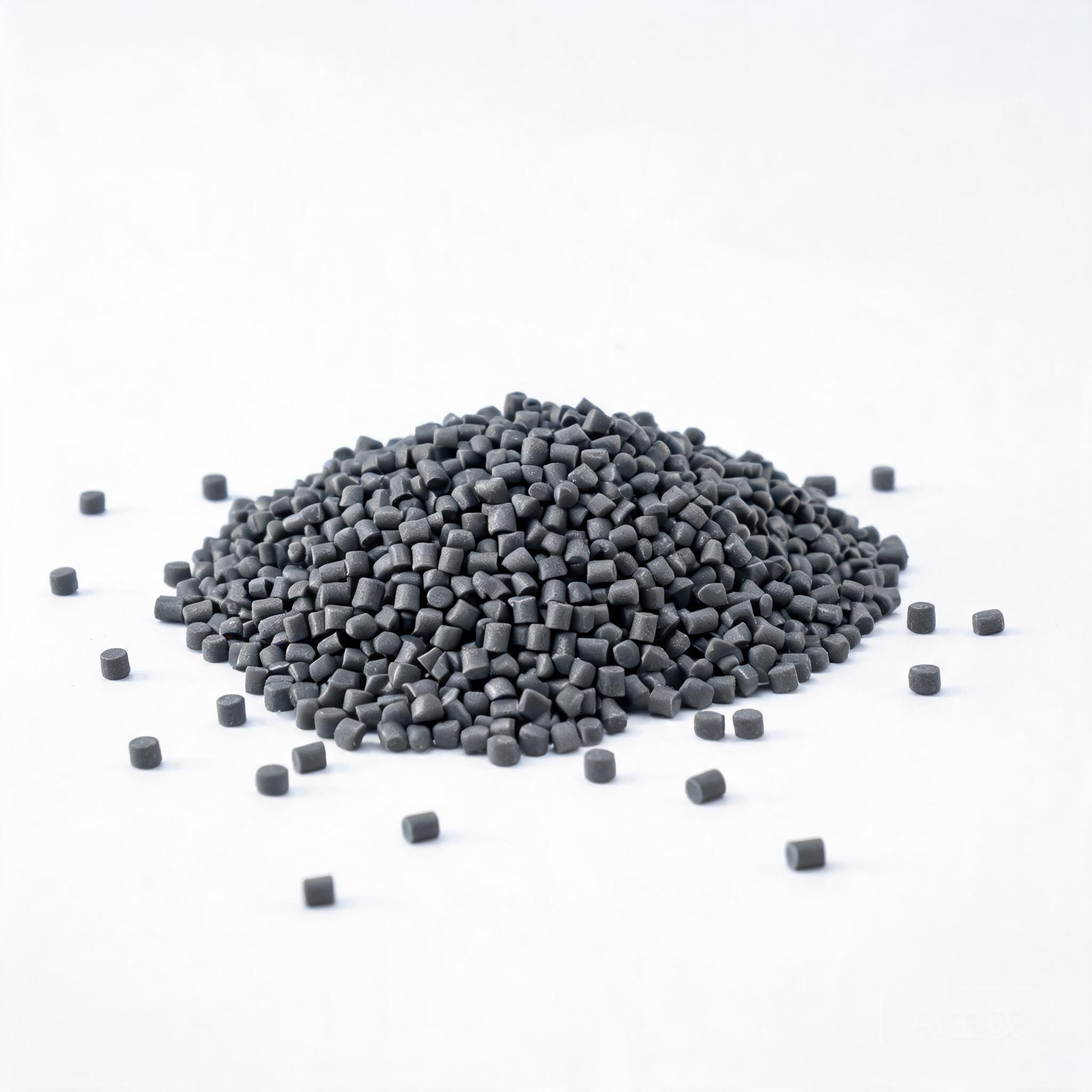
- Packaging options (spools, bulk spools, pellet form for extrusion)
6. Certifications
Depending on your end-use application, you may need:
- RoHS, REACH: For electronics and consumer goods sold in the EU
- UL 94: Flammability rating for enclosures and electrical components
- ISO 9001: Quality management system certification
- Food contact (FDA, EU 10/2011): Only for specific ABS grades
Confirm with the supplier which certifications are available for the specific product you are sourcing. Certifications cannot be assumed from a supplier's general company profile.
Common Pitfalls When Sourcing ABS Filament for Industrial Use
Pitfall 1: Assuming All ABS Filament Is the Same
ABS is a family of materials. A general-purpose ABS filament may have lower impact strength or higher shrinkage than an engineering-grade ABS. Always request the MDS and compare the Izod impact value and HDT against your application requirements.
Pitfall 2: Ignoring Warpage and Shrinkage
ABS shrinks approximately 0.4–0.7% during cooling, which can cause warping on large, flat parts. Suppliers can offer ABS blends with reduced shrinkage (e.g., ABS+ or ABS-ESD) or recommend optimized print parameters. For large parts, consider a heated enclosure and a brim or raft.
Pitfall 3: Overlooking Post-Processing Requirements
If your application requires vapor smoothing, painting, or bonding, ensure the filament is compatible. Some ABS filaments contain additives that affect surface finish or adhesive bonding. Ask the supplier for recommendations.
Pitfall 4: Not Testing Before Committing to Volume
Always request a sample spool (1–2 kg) before placing a large order. Print a standard test part (e.g., a tensile bar or a small enclosure) and compare it against your internal quality criteria. This step alone can save significant costs from rejected batches.
Practical Steps for Evaluating a New ABS Filament Supplier
- Request documentation: MDS, SDS, CoA, and any certifications.
- Ask about production capacity: Monthly output, number of extrusion lines, and quality control process.
- Check packaging: Vacuum-sealed with desiccant? Moisture indicator? Nitrogen flush?
- Request a sample: 1–2 kg spool of the target grade and color.
- Print and test: Use your own printer and standard test parameters. Measure dimensional accuracy, surface finish, and impact resistance.
- Evaluate communication: Response time, technical knowledge, willingness to provide data.
- Negotiate terms: MOQ, lead time, payment terms, and shipping method.
- Place a trial order: 25–50 kg to validate batch consistency before committing to a larger volume.
Frequently Asked Questions (B2B Perspective)
Q: Can ABS filament be used for functional end-use parts, or is it only for prototyping?
Yes, ABS is widely used for end-use parts in industries such as automotive, consumer electronics, and industrial equipment, provided the part is designed for the material's mechanical properties and the printing parameters are optimized. For high-stress or high-temperature applications, consider engineering-grade ABS or ABS blends.
Q: What is the typical shelf life of ABS filament?
When stored in a cool, dry environment (below 30°C, < 20% RH) and kept in its original sealed packaging, ABS filament can last 12–18 months. Once opened, it should be used within 3–6 months or stored in a dry box with desiccant. Always dry filament that has been exposed to humidity before printing.
Q: How do I verify the impact resistance of a supplier's ABS filament?
Request the Izod impact strength (notched) value from the MDS. For a practical test, print a standard impact test bar (e.g., ASTM D256) and perform a drop-weight or pendulum test in your own lab. Alternatively, ask the supplier to provide printed test specimens with their CoA.
Q: Is custom color available for ABS filament in bulk orders?
Many suppliers offer custom color matching for MOQs of 50–200 kg per color. Lead time for custom color is typically 2–4 weeks. Confirm the color matching process and whether the supplier can maintain color consistency across batches.
Q: What is the difference between ABS and ABS+ filament?
ABS+ typically refers to a modified ABS formulation with improved layer adhesion, reduced warpage, and sometimes higher impact strength. It is often easier to print than standard ABS. However, the exact composition varies by supplier. Always compare the MDS values rather than relying on the "+" label.
Final Thoughts for the Industrial Buyer
ABS 3D printing filament remains a reliable choice for industrial applications that require a balance of impact resistance, machinability, and cost. The key to successful sourcing is not just finding the lowest price per kilogram—it is finding a supplier who can provide consistent quality, transparent documentation, and responsive technical support.
When evaluating a new supplier, start with the data: request the MDS, check the dimensional tolerance, and verify the packaging. Then test a sample under your own conditions. This approach reduces the risk of production delays, rejected parts, and unexpected costs.
If you are currently sourcing ABS filament for industrial use and need a reliable partner with documented quality standards, contact our team for a technical discussion and sample request.