
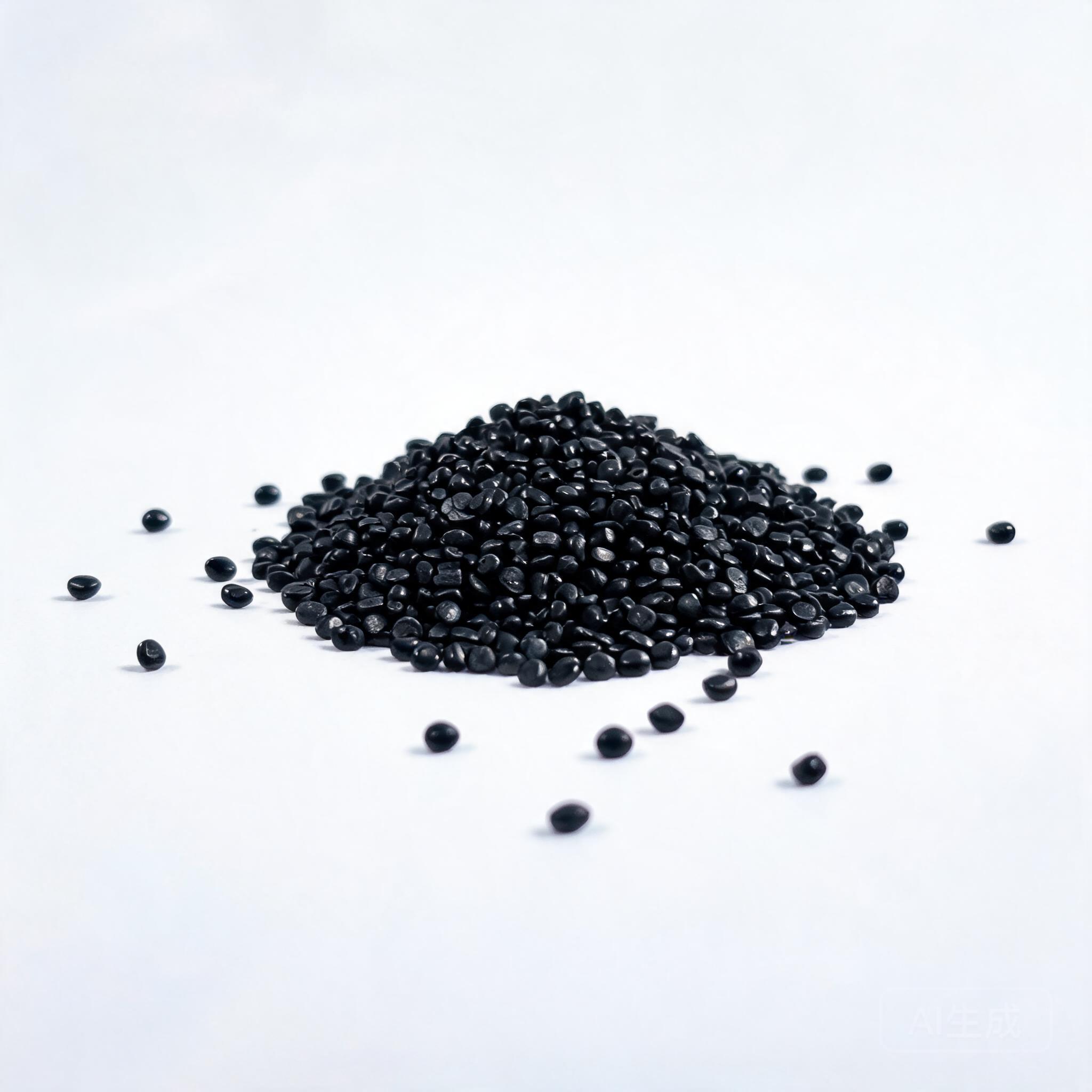
Navigate EU 10/2011 and FDA rules for food contact masterbatch, plus UV stabilization requirements for outdoor plastics. Includes a supplier evaluation checklist for European and Southeast Asian buyers.
Masterbatch Compliance
If you source color or additive masterbatch for food packaging or outdoor products, the two biggest risks are not pigment quality or dispersion. They are regulatory non-compliance and premature weathering failure. Both are expensive to discover after shipment.
This guide covers what European and Southeast Asian B2B buyers need to verify before placing an order: the specific EU and FDA rules for food-contact masterbatch, what "anti-UV" actually means in a masterbatch formulation, and the documentation a reliable supplier should provide without hesitation.
Key Takeaways
- EU 10/2011 and FDA 21 CFR set different but overlapping rules for food-contact masterbatch; verify the specific migration limits, not just a generic "food grade" claim.
- Outdoor-grade masterbatch is about UV stabilization dosage and carrier resin selection, not just adding any UV absorber.
- RoHS, REACH, and a Certificate of Analysis (COA) are minimum documentation; traceability to batch is what makes them useful.
- Use a structured supplier checklist to compare quotes on compliance, not just price.
Food Contact Masterbatch: EU 10/2011 and FDA Rules
For any masterbatch used in food packaging—bottles, trays, films, closures—the legal requirement in Europe is Regulation (EU) No 10/2011 on plastic materials and articles intended to come into contact with food. This regulation is not a suggestion. It sets the legal framework for the entire plastic article, and the masterbatch is part of that article.
Three things matter in practice:
- Overall migration limit (OML): 10 mg per dm² of food contact surface. This caps the total amount of substances that can transfer from the finished article to food.
- Specific migration limits (SML): Each authorized substance in Annex I of EU 10/2011 has its own limit. For example, some colorants and UV absorbers have SMLs in the range of 0.05–5 mg/kg food. Your supplier must know which substances are in their formulation and prove each one is within its SML at your intended use conditions.
- Declaration of Compliance (DoC): Article 15 of EU 10/2011 requires the business placing the article on the market to provide a written declaration. As a buyer, you must request the DoC from your masterbatch supplier and pass it along the chain.
For the US market, FDA food contact compliance follows 21 CFR 174.5 and the relevant sections for colorants (21 CFR 178.3297) and adjuvants (21 CFR 178.2010). Unlike the EU's positive list system, FDA relies on a combination of regulated lists and food-contact notifications (FCNs). A masterbatch that complies with EU 10/2011 does not automatically comply with FDA, and vice versa. If you ship to both regions, state that clearly in your RFQ.
Buyer tip: Ask for the specific EU 10/2011 Annex I reference numbers for each additive in the masterbatch, not just a certificate that says "compliant." A supplier who cannot name the substance numbers likely has not done the migration testing.
What "Food Grade" Means in a Masterbatch Specification
The term "food grade masterbatch" is often used loosely. A defensible specification includes:
- The carrier resin is a food-contact approved polymer (e.g., LDPE, LLDPE, PP) with a clear grade designation.
- All pigments and additives are listed in EU 10/2011 Annex I or have a valid FCN for FDA.
- The masterbatch has been tested for overall and specific migration under conditions representing your end-use (time and temperature).
- The production line is dedicated or thoroughly purged to avoid cross-contamination from non-food-grade products.
Cross-contamination is a real issue. If a supplier runs food-grade and industrial-grade masterbatch on the same line without a documented cleaning procedure, the food-grade claim is weak. Ask how they manage changeovers.
Outdoor Grade and Anti-UV Masterbatch: What to Specify
Outdoor applications—agricultural film, outdoor furniture, automotive exterior parts, building profiles, geotextiles—face a different enemy: UV radiation. Without stabilization, polymers degrade: color fades, surface chalking appears, and mechanical properties (especially impact strength and elongation) drop sharply.
An outdoor grade masterbatch, often called anti-UV masterbatch or UV stabilizer masterbatch, addresses this in two ways:
- UV absorbers (UVA): These preferentially absorb UV radiation and dissipate it as heat. Common chemistries include benzotriazoles and hydroxyphenyl-triazines (HPT).
- Hindered amine light stabilizers (HALS): These scavenge free radicals formed during photo-oxidation. HALS are often more effective in thicker sections, while UVA works well in thin films.
The critical specification is not the chemical name alone—it is the dosage. The required loading depends on:
- Polymer type (PP, PE, PVC, ABS all respond differently).
- End-use climate (tropical UV intensity is far higher than temperate).
- Part thickness and surface area.
- Required service life (e.g., 1-year agricultural film vs. 10-year building profile).
There is no universal "one dose fits all" anti-UV masterbatch. A supplier that asks about your application and climate before recommending a dosage is doing their job. A supplier that quotes a fixed percentage without questions is probably guessing.
For weathering verification, ask whether the formulation has been tested in a xenon-arc or QUV accelerated weathering chamber (ASTM G155 or ISO 4892-2). Accelerated testing correlates to outdoor exposure but does not replace it. For critical applications, consider requiring a natural outdoor exposure trial in a subtropical or desert location before full production commitment.
Compliance Documentation: RoHS, REACH, and COA
Beyond food-contact and UV performance, buyers in Europe and Southeast Asia routinely request three documents. Know what each does and does not prove.
| Document | What It Covers | What to Check |
|---|---|---|
| REACH (EU 1907/2006) | Registration, Evaluation, Authorisation and Restriction of Chemicals. Restricts substances of very high concern (SVHC) in articles. | Confirm the masterbatch is not on the SVHC candidate list above 0.1% w/w. Ask for the latest declaration, as the list updates twice a year. |
| RoHS (EU 2011/65/EU) | Restricts hazardous substances (lead, mercury, cadmium, hexavalent chromium, PBB, PBDE) in electrical and electronic equipment. | Relevant if your end product is electronic (cables, housings). RoHS is not a general chemical safety certificate; it applies to EEE. |
| COA (Certificate of Analysis) | Documents the quality of a specific production batch: color shade, melt flow index, additive content, moisture, and any specified migration test results. | The COA must reference a batch number that matches the goods you receive. A COA without a batch traceability link is just a piece of paper. |
For food-contact masterbatch, also request the Declaration of Compliance under EU 10/2011, which must accompany the product through the supply chain. For the US, request the FDA compliance letter or the relevant FCN reference.
Supplier Evaluation Checklist for Masterbatch Compliance
Use this checklist when comparing suppliers. It distinguishes a competent compounder from a trader who simply repackages material.
- Ask for the substance list. Request a full ingredient declaration for the proposed masterbatch. A reputable supplier will provide it under NDA if needed.
- Verify migration data. For food-contact grades, request the migration test report (overall and specific) for the exact formulation, not a similar one.
- Check carrier resin compatibility. The masterbatch's carrier must be compatible with your base polymer. Using a PP carrier in a PE film, for example, creates gel spots and weak points.
- Confirm UV dosage for your climate. Provide your application, part thickness, and required service life. Ask for the recommended loading in percent and the expected performance.
- Review changeover procedures. If the plant runs multiple product types, ask how they prevent cross-contamination between food-grade and industrial batches.
- Request batch-level COA. Insist that the COA references the specific batch number on the shipping documents.
- Check REACH and RoHS status. Ask for the latest declarations, dated within the last 12 months.
- Ask about testing frequency. Is migration testing done on every batch, or only during initial qualification? If only initial, what in-process controls replace it?
Sourcing from Wanzhoutong: Capabilities and Limits
Wanzhoutong produces color masterbatch, additive masterbatch, anti-UV masterbatch, and flame-retardant compounds. For buyers evaluating these products, the practical approach is to request the specific compliance documents listed above for the exact grade you intend to order.
For food-contact applications, confirm the carrier resin and additive package against EU 10/2011 or your target market's regulation. For outdoor applications, provide your climate and service-life requirement so the anti-UV dosage can be matched to the application. The company's product range includes universal white color masterbatch, which is often used as a base for both food packaging and outdoor films—but the compliance status of a white masterbatch depends on the specific pigment (titanium dioxide) grade and its coating, so verify the batch documentation.
If you are new to masterbatch specification, review the Colour Masterbatch Guide for a broader overview of how color concentrates are formulated and matched. For a specific product fact sheet, see the Universal White Color Masterbatch page.
Common Mistakes in Masterbatch Compliance
- Assuming "food grade" is universal. Compliance is jurisdiction-specific. EU 10/2011 and FDA are not interchangeable.
- Ignoring migration testing conditions. A masterbatch tested at 40°C for 10 days may fail at 70°C for 2 hours. Match the test conditions to your real filling and storage temperatures.
- Choosing anti-UV by price per kg. The cost per finished part depends on the effective dosage. A cheaper masterbatch at 5% loading may cost more than a premium one at 2%.
- Skipping the batch traceability requirement. Without batch-level COA, you cannot trace a quality problem back to the raw material. This is a recall risk.
- Forgetting the carrier resin. A UV masterbatch with a carrier that is incompatible with your base polymer will cause defects regardless of the stabilizer chemistry.
Final Advice for B2B Buyers
Masterbatch compliance is not a single certificate. It is a chain of evidence: raw material approvals, migration test reports, batch-level COA, and a clean production line. When evaluating a supplier, ask for the evidence, not the adjective.
Start with a clear specification that states your target market (EU, US, or both), your polymer, your application, and your required service life. Send that specification to two or three suppliers, including Wanzhoutong, and compare their responses on documentation as much as on price. The supplier that can name the specific EU 10/2011 substance numbers and provide a batch-level COA is the one that understands the regulation—and the one that will cause fewer problems at customs and at your customer's quality audit.