
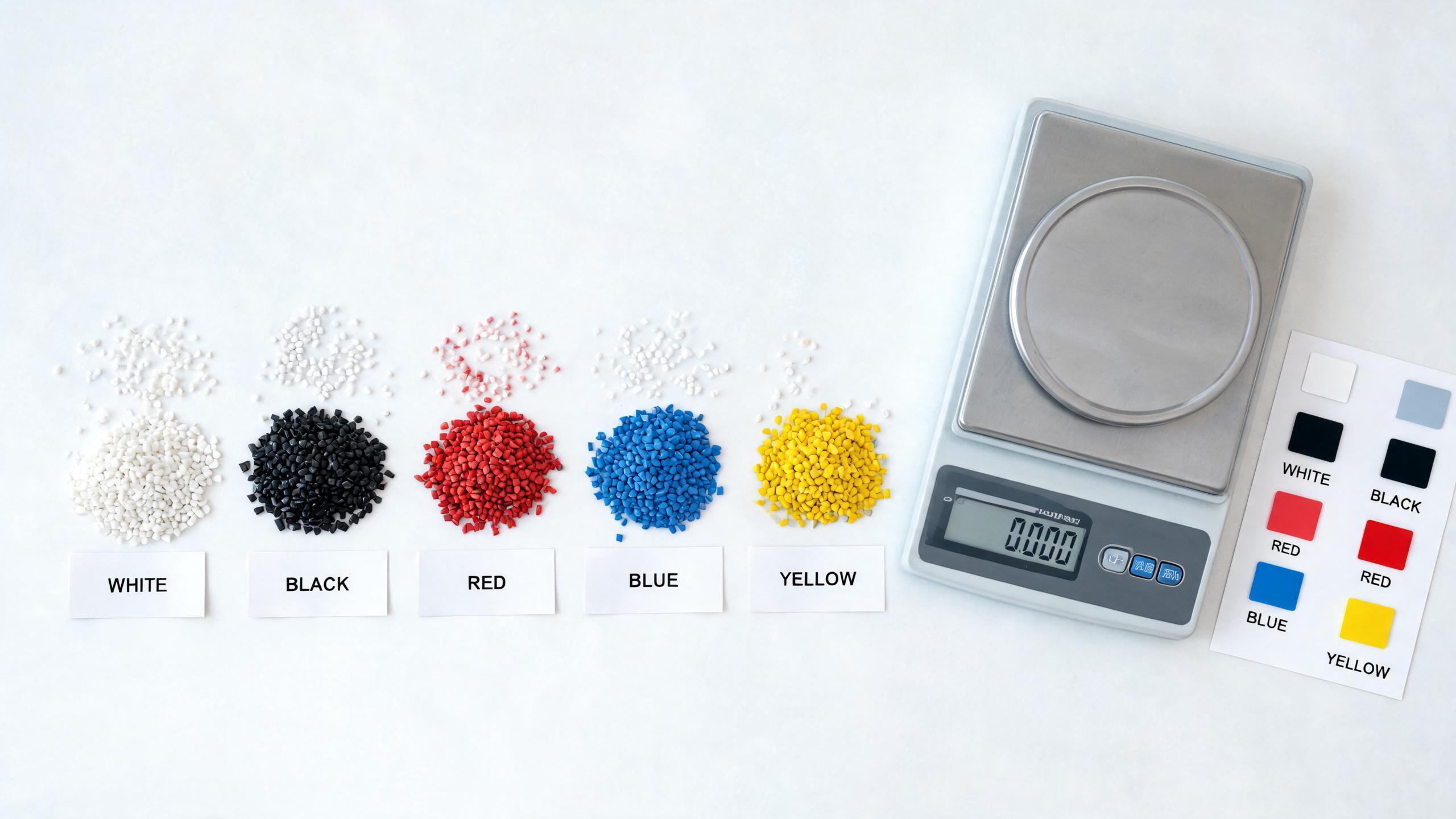
This guide covers how to source color masterbatch for plastics wholesale and bulk export, including key selection criteria, quality checks, supplier evaluation, and common pitfalls. It helps plastic manufacturers make informed decisions for OEM and large-volume orders.
BUYER GUIDE
Why This Guide Exists
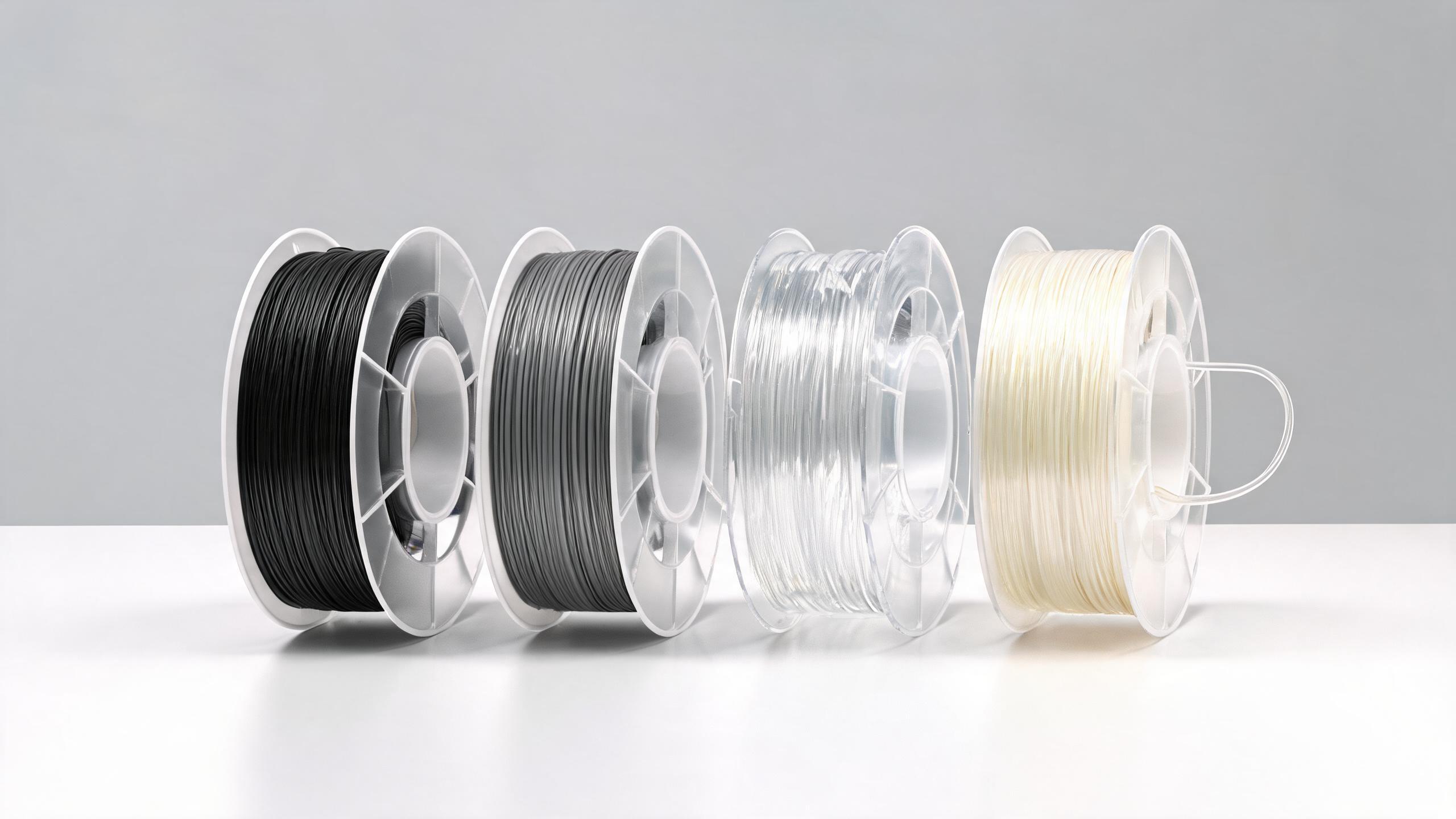
If you are a plastic manufacturer sourcing color masterbatch for plastics wholesale, you already know the basics: masterbatch is a concentrated pigment-and-additive blend that you dose into your base resin to achieve consistent color. The real challenge is not understanding what it is—it is knowing how to source it at scale without quality surprises, delivery delays, or hidden costs.
This guide answers the questions that matter when you move from sample testing to bulk export orders. It covers the technical specs you should check, the quality tests that separate reliable suppliers from traders, and the practical steps to protect your production line.
What to Check Before You Request a Quote
Before you send an inquiry for bulk export color masterbatch for plastics, you need to define your requirements clearly. A vague request leads to vague quotes, and vague quotes lead to mismatched product.
1. Carrier Resin Compatibility
The carrier resin in the masterbatch must be compatible with your base polymer. For example, a masterbatch made with a polyethylene (PE) carrier works for LDPE, HDPE, and LLDPE, but not for polypropylene (PP) or ABS. Using the wrong carrier can cause poor dispersion, surface defects, or reduced mechanical properties.
Always state your base resin and the processing method (injection molding, blow molding, extrusion, etc.). This is the single most important factor in masterbatch selection.
2. Pigment Type and Loading
Pigments fall into two broad categories: organic and inorganic. Inorganic pigments (like titanium dioxide, carbon black, iron oxides) offer better heat and light stability but lower tinting strength. Organic pigments (like phthalocyanine blue, quinacridone red) give brighter colors but can be more expensive and less stable.
Pigment loading (usually 20%–60%) affects cost and color strength. Higher loading means more pigment per kilogram, but it also means higher cost. Your supplier should recommend an optimal loading based on your application and the color strength you need.
3. Additives
Masterbatch can include UV stabilizers, antioxidants, antistatic agents, flame retardants, and more. If your end product needs these properties, specify them upfront. Adding them later is costly and can affect color consistency.
- Always specify carrier resin, base polymer, and processing method.
- Pigment type (organic vs. inorganic) affects stability, cost, and color strength.
- Additives must be defined before production, not after.
Quality Checks That Separate Good from Bad
When you receive samples or inspect a bulk shipment, there are several tests you can run to assess quality. Some require lab equipment; others can be done visually.
Visual Inspection
Check for uniform pellet size and shape. Irregular pellets can cause feeding issues in your hopper. Look for dust or fines—excess dust indicates poor manufacturing and can lead to blockages.
Dispersion Test
This is the most critical test. Mix the masterbatch at the recommended dosage, mold or extrude a thin film, and inspect for undispersed pigment specks. Poor dispersion results in visible streaks or dots in the final product.
Color Consistency
Measure the color of the molded part against a standard using a spectrophotometer. The Delta E (ΔE) value should be within your acceptable range—typically less than 1.0 for high-end applications, but many manufacturers accept up to 1.5. Ask your supplier for their typical ΔE range.
Heat Stability
Masterbatch must withstand the processing temperature of your resin. For example, ABS processes at 220–260°C, while POM needs 190–210°C. If the pigment degrades at these temperatures, you will see color shift or darkening. Request a heat stability test report from your supplier.
Moisture Content
Excess moisture in masterbatch can cause splay marks on the surface of molded parts. The moisture content should be below 0.1% (or as per your supplier's spec). You can test this with a moisture analyzer.
| Test | What It Reveals | Typical Acceptable Range |
|---|---|---|
| Dispersion | Presence of undispersed pigment specks | No visible specks in thin film |
| Color consistency (ΔE) | Deviation from standard color | < 1.0 (high-end), < 1.5 (general) |
| Heat stability | Color shift at processing temperature | No significant shift up to 260°C (varies) |
| Moisture content | Risk of splay marks | < 0.1% |
How to Evaluate a Color Masterbatch Manufacturer
Not all suppliers are the same. Some are manufacturers with full control over production; others are traders who buy from multiple factories. For bulk export orders, you want a manufacturer that can guarantee consistency across batches and has the capacity to meet your volume.
Manufacturing Capability
Ask about their production capacity in tons per month. A manufacturer that produces 500 tons per month will have more experience with large orders than one that produces 50 tons. Also ask about their equipment—twin-screw extruders are standard for masterbatch production because they provide better dispersion than single-screw.
Quality Control Processes
Inquire about their QC procedures. Do they test every batch? What tests do they run? A reliable manufacturer will have a documented QC process, including incoming raw material inspection, in-process checks, and final product testing.
Certifications
Common certifications for masterbatch manufacturers include ISO 9001 (quality management) and ISO 14001 (environmental management). If your application requires food contact or child safety, you may need FDA or REACH compliance. Ask for copies of their certificates—but note that not all suppliers will have them. If a certification is critical, verify it with the issuing body.
Experience with Export
Ask about their experience with export documentation, including packing lists, certificates of origin, and customs clearance. A supplier who regularly exports will handle these smoothly. You can also ask for references from other international buyers.
OEM Color Masterbatch for Plastics: What It Means for You
OEM (Original Equipment Manufacturer) color masterbatch for plastics is a service where the supplier develops a custom color formula to match your specific Pantone or RAL reference, or your own brand color. This is essential if you need a unique color that is not available off-the-shelf.
When you request OEM color matching, the supplier will typically:
- Ask for a physical sample or color code.
- Develop a trial formulation.
- Send you a small sample for testing.
- Adjust the formula until the color matches your standard.
- Then proceed to bulk production.
This process can take anywhere from a few days to a few weeks, depending on the complexity. Make sure you factor this lead time into your production planning.
Bulk Export: Logistics and Documentation
When you order bulk export color masterbatch for plastics, you need to consider shipping, packaging, and documentation.
Packaging
Masterbatch is typically packed in 25 kg bags, either paper-plastic composite bags or woven polypropylene bags. For bulk orders, you can also request big bags (500–1000 kg) to reduce handling. Ensure the packaging is moisture-proof and UV-protected if your product is sensitive to sunlight.
Shipping Terms
Understand the Incoterms you agree on. FOB (Free on Board) means the seller is responsible until the goods are on the vessel; CIF (Cost, Insurance, and Freight) means the seller covers insurance and freight to the destination port. Choose the term that balances risk and cost for your situation.
Documentation
Typical export documents include commercial invoice, packing list, bill of lading, certificate of origin, and sometimes a certificate of analysis (COA) for each batch. Confirm with your supplier that they can provide these.
Common Pitfalls and How to Avoid Them
- Ignoring carrier resin compatibility: Always test a small batch before committing to full production.
- Overlooking color drift between batches: Insist on a color consistency test for each batch and keep a reference sample.
- Not checking heat stability: A pigment that fails at your processing temperature will ruin your production.
- Choosing price over quality: The cheapest masterbatch may save you money upfront but cost you more in rejects and downtime.
- Not planning for lead time: OEM color matching and bulk production take time. Start early.
Cost Considerations
Pricing for color masterbatch for plastics wholesale varies widely based on pigment type, loading, additives, and order volume. Inorganic pigments are generally cheaper than organic ones. For example, a carbon black masterbatch might cost less than a bright red organic pigment masterbatch. Additives like UV stabilizers add cost.
To get an accurate quote, provide the supplier with:
- Base resin type.
- Target color (Pantone/RAL or sample).
- Required pigment loading (if you know it).
- Any additives needed.
- Estimated annual volume.
Suppliers often offer tiered pricing based on volume. The more you order, the lower the unit price. But be cautious—ordering more than you need ties up capital and storage space.
FAQ
What is the minimum order quantity (MOQ) for bulk export?
MOQs vary by supplier. Some start at 500 kg, others at 1 ton. For custom OEM colors, MOQs are often higher because of the development work involved. Always confirm the MOQ before you plan your order.
Can I get a sample before placing a bulk order?
Yes, most reputable manufacturers offer samples, usually free of charge for standard colors, but you may need to pay for shipping. For OEM color matching, there may be a sample development fee, which is often credited back if you place a bulk order.
How do I know if the color will match my product?
Request a sample molded part or film from the supplier and compare it to your standard under the same lighting conditions. Use a spectrophotometer for objective measurement. Do not rely solely on visual inspection.
What certifications should I look for?
ISO 9001 is a good baseline. For food contact applications, look for FDA or EU food-contact compliance. For toys or children's products, check for EN71 or CPSIA compliance. Ask the supplier for their certificates and verify them if possible.
Final Advice
Sourcing color masterbatch for plastics wholesale and bulk export does not have to be risky if you follow a systematic approach. Define your technical requirements clearly, test samples rigorously, evaluate suppliers on their manufacturing capability and QC processes, and plan your logistics carefully.
If you are looking for a reliable color masterbatch manufacturer that can handle OEM color matching and bulk export orders, we invite you to contact us with your specifications. We will provide a detailed quotation and samples for your evaluation.
Note: The information in this guide is based on general industry knowledge. Always confirm specific technical details and compliance requirements with your supplier.