
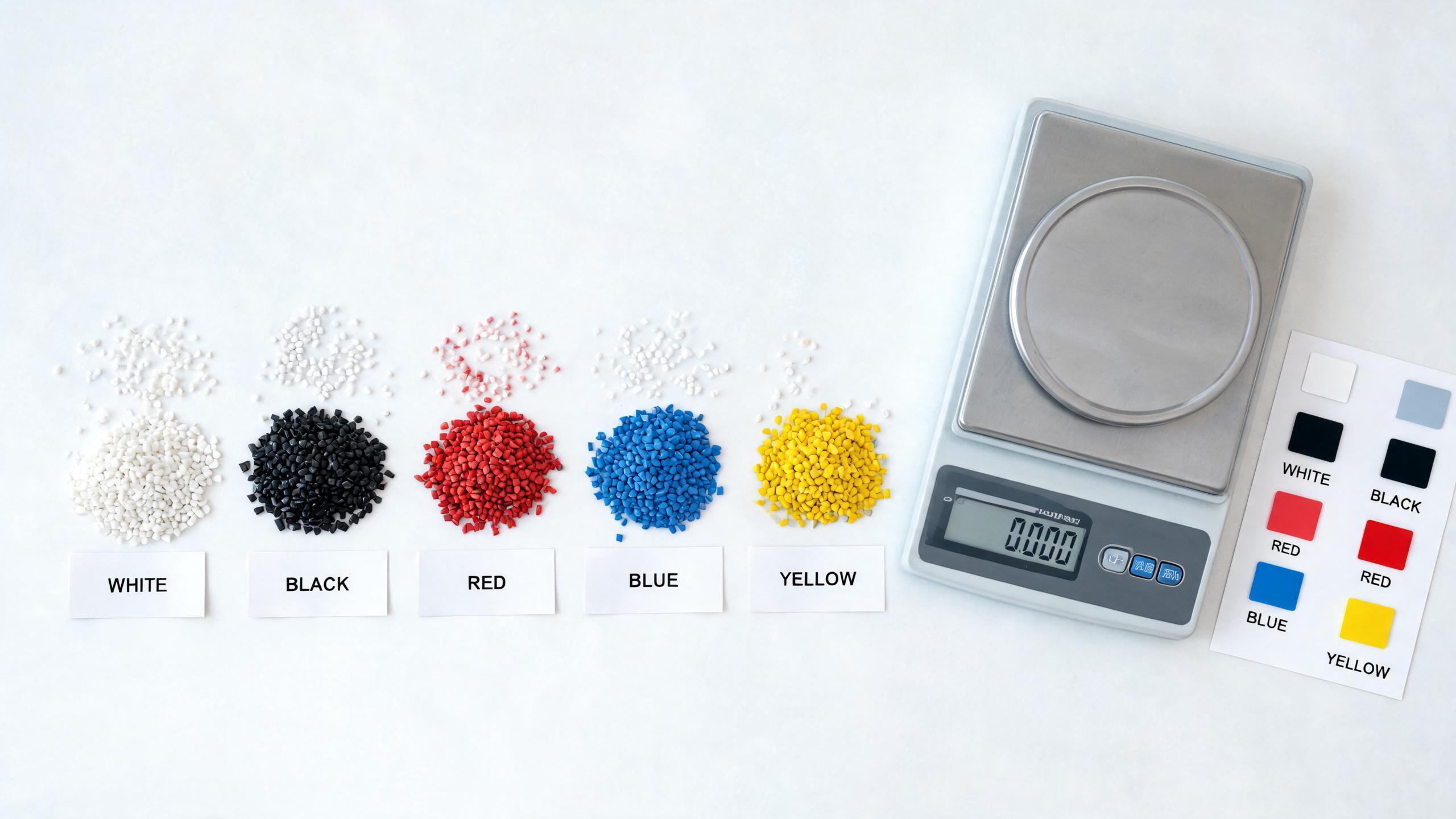
A practical guide for procurement and R&D teams on specifying color masterbatch for plastics, focusing on the critical letdown ratio. Learn how to calculate, adjust, and communicate ratios to manufacturers, avoid common specification errors, and ensure consistent color in bulk export orders.
TECHNICAL BUYER GUIDE
- The letdown ratio (LDR) is the single most important parameter in a color masterbatch specification — it determines cost, color strength, and processability.
- Standard ratios range from 1:20 to 1:100, but the correct value depends on resin type, pigment loading, wall thickness, and final opacity requirements.
- When specifying custom color masterbatch, always provide the target LDR, base resin, and a physical or digital color standard (Pantone, RAL, or a chip).
- For bulk export orders, confirm the LDR with a trial run before mass production — a mismatch can lead to rejected shipments.
- A well-written specification sheet reduces back-and-forth and helps your supplier deliver consistent color across batches.
Why the Letdown Ratio Matters in Your Color Masterbatch Specification
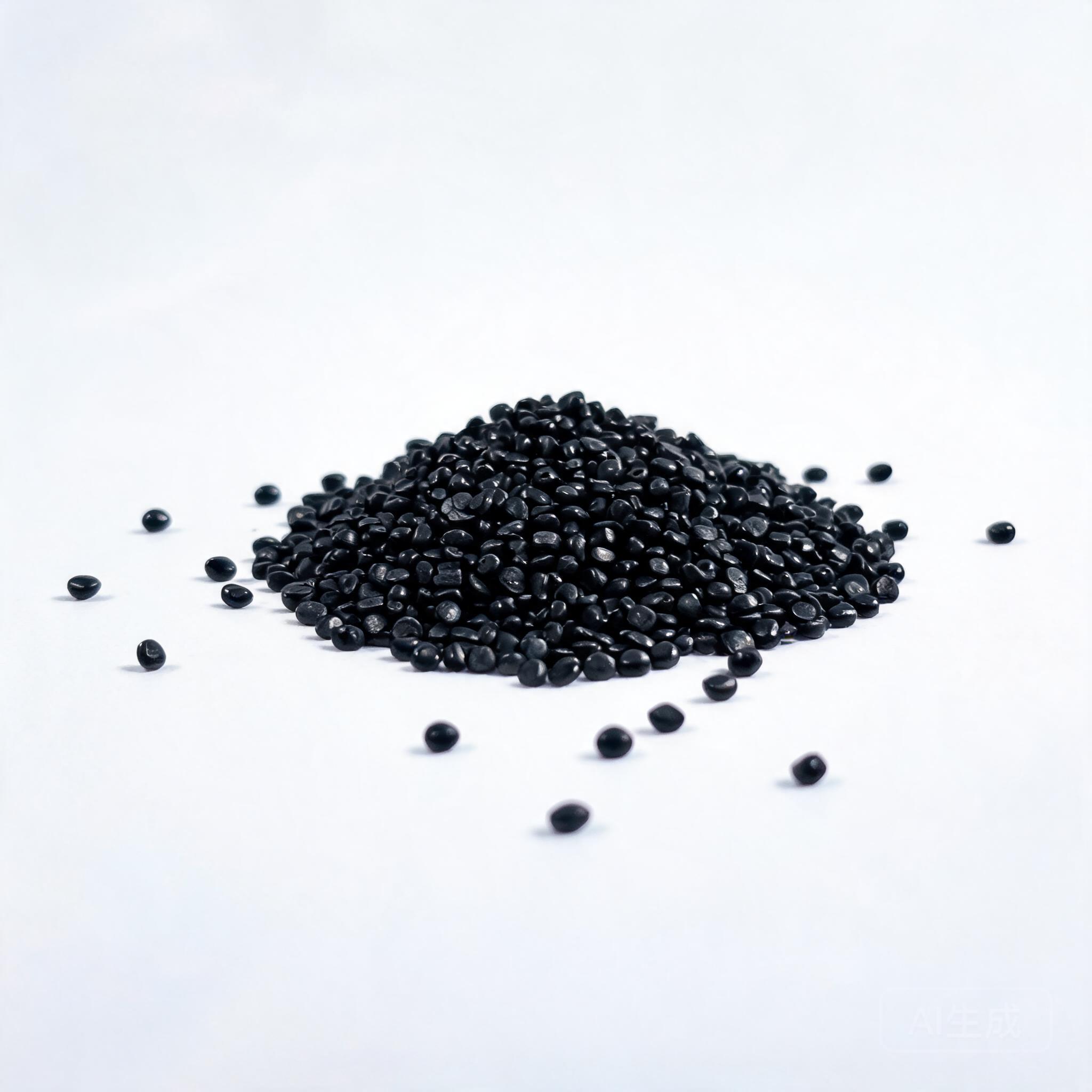
When you source color masterbatch for plastics, the first question a manufacturer will ask is: "What letdown ratio do you need?"
This ratio — often expressed as 1:20, 1:50, or 1:100 — tells the supplier how much masterbatch to mix with virgin or recycled resin to achieve the target color. Get it right, and your production runs smoothly with consistent shade and acceptable cost. Get it wrong, and you face color drift, increased scrap, or a batch that fails your customer's quality check.
This guide walks procurement and R&D teams through the practical side of color masterbatch specification, focusing on the letdown ratio. We cover what it means, how to choose the right value, how to communicate it to a color masterbatch for plastics manufacturer, and what to check during bulk export color masterbatch for plastics orders.
What Is a Color Masterbatch Letdown Ratio?
The letdown ratio (LDR) is the proportion of masterbatch to base resin in the final compound. It is usually given as a ratio of masterbatch to resin by weight.
For example:
- 1:25 means 1 kg of masterbatch is mixed with 25 kg of base resin, producing 26 kg of colored material.
- 1:50 means 1 kg of masterbatch per 50 kg of resin.
- 1:100 is a lower concentration, often used for pastel or light shades with high-pigment masterbatches.
The ratio directly affects:
- Color strength and opacity — higher ratios (more masterbatch) give deeper, more opaque colors.
- Cost per kilogram of finished product — masterbatch is more expensive than raw resin, so a higher LDR increases material cost.
- Processability — too much masterbatch can affect melt flow, dispersion, or mechanical properties in thin-wall parts.
| Letdown Ratio | Masterbatch per 100 kg Resin | Typical Application | Relative Cost Impact |
|---|---|---|---|
| 1:20 | 5 kg | High-opacity, dark colors, thin films | Higher |
| 1:25 | 4 kg | General injection molding, thick parts | Moderate |
| 1:50 | 2 kg | Standard colors, blow molding, sheets | Lower |
| 1:100 | 1 kg | Pastel shades, masterbatch with high pigment load | Lowest |
How to Choose the Right Letdown Ratio for Your Project
There is no universal "best" ratio. The correct value depends on several factors. When you approach a custom color masterbatch supplier, be prepared to discuss these points:
1. Resin Type and Pigment Compatibility
Different base resins have different processing temperatures and melt viscosities. Polyolefins (PE, PP) generally accept a wider range of pigment loadings than engineering plastics like ABS, PC, or nylon. If your resin is heat-sensitive, a high letdown ratio (more masterbatch) can introduce excessive thermal history, risking color shift or degradation. For such cases, a supplier may recommend a color masterbatch for plastics with higher pigment concentration to keep the LDR low.
2. Wall Thickness and Part Geometry
Thin-wall parts (films, caps, thin-walled containers) require more masterbatch to achieve uniform color because the light path is short. A typical LDR for thin films might be 1:20 to 1:25. Thick-walled parts (bumpers, crates, furniture) can use a lower ratio, such as 1:50 or even 1:100, because the material thickness provides more opacity.
3. Desired Opacity and Color Depth
If you need a deep, opaque black or a rich red, expect a higher LDR. Pastel or light shades can often be achieved with a lower ratio, provided the masterbatch has sufficient pigment loading. Always request a color chip or trial sample at your target LDR before committing to mass production.
4. Regulatory and Performance Requirements
For food contact, medical, or toy applications, the total pigment concentration in the final part must comply with relevant standards (FDA, EU 10/2011, EN71). A higher LDR may push pigment levels beyond allowed limits. In such cases, work with your color masterbatch for plastics manufacturer to develop a custom formulation that meets both color and compliance targets.
How to Specify Custom Color Masterbatch: The Specification Sheet
When you send an inquiry for custom color masterbatch, a clear specification sheet saves time and reduces errors. Below is a list of the essential fields your spec should include. If you lack certain data, indicate "to be confirmed" or "available upon request" — do not guess.
| Specification Field | Example Value | Why It Matters |
|---|---|---|
| Target letdown ratio | 1:25 | Defines the masterbatch concentration in the final part. |
| Base resin (carrier) | LDPE, PP, ABS, etc. | Must match or be compatible with your production resin. |
| Color standard | Pantone 186 C, RAL 3020, or a physical chip | Provides the visual target for color matching. |
| Pigment type | Organic / Inorganic / Mixed | Affects lightfastness, heat stability, and cost. |
| Processing method | Injection molding, blow molding, extrusion, film | Influences masterbatch melt flow and dispersion requirements. |
| Processing temperature range | 180°C – 220°C | Ensures the masterbatch withstands your process without degrading. |
| Opacity requirement | Opaque / Translucent / Transparent | Determines the minimum LDR needed. |
| Regulatory compliance | FDA, EU 10/2011, RoHS, REACH | Non-negotiable for certain end-use markets. |
| MOQ (minimum order quantity) | 500 kg per color | Affects lead time and pricing; confirm with supplier. |
| Packaging | 25 kg bags, 500 kg jumbo bags, or custom | Impacts logistics cost and handling. |
Common Mistakes in Letdown Ratio Specification
Based on real procurement cases, here are the most frequent errors that lead to rejected shipments or production delays:
Mistake 1: Assuming a Standard Ratio Works for All Colors
Some buyers specify a single LDR (e.g., 1:50) for all colors, regardless of shade. A dark blue and a light yellow require different pigment loadings to achieve the same visual depth. If you use the same LDR, the light color may appear washed out, while the dark one may be too intense or cause plate-out. Always ask your color masterbatch for plastics manufacturer for a recommended LDR per color.
Mistake 2: Not Providing a Physical Color Standard
Digital color codes (Pantone, RAL) are a good starting point, but they are not always accurate for plastics due to differences in surface texture, gloss, and translucency. A physical chip — a molded plaque or a film sample — is the most reliable reference. If you are sourcing color masterbatch for plastics wholesale, request a color chip at the target LDR before placing the bulk order.
Mistake 3: Ignoring Letdown Ratio When Switching Suppliers
If you change from one masterbatch brand to another, do not assume the same LDR will work. Pigment concentration and dispersion quality vary between manufacturers. A trial run at the new supplier's recommended LDR is essential. For bulk export color masterbatch for plastics orders, factor in a 2–3 week lead time for sample approval.
Mistake 4: Overlooking the Effect of Recycled Resin
If your production uses recycled content, the base resin's color and opacity can vary. You may need a higher LDR to mask the off-white or yellow tint of the recycled material. Discuss this with your supplier when specifying custom color masterbatch for sustainable packaging or industrial products.
How to Verify Letdown Ratio in Production
Once you receive a trial sample or the first production batch, verify the LDR in your own process. Here is a simple method:
- Weigh the masterbatch and resin accurately — use a calibrated scale. Do not rely on volumetric dosing, as bulk density varies.
- Produce a small run of parts or film under standard conditions.
- Compare the color to the approved chip or standard using a spectrophotometer (Delta E < 1.0 is typically acceptable) or visual inspection under D65 light.
- Check for dispersion — look for un-melted specks, streaks, or color streaks in thin sections.
- Record the exact LDR used — this becomes your baseline for future orders.
If the color is too light, increase the LDR (more masterbatch). If too dark or too costly, reduce it. Keep a log of adjustments for each color and resin combination.
Letdown Ratio and Cost: What to Expect
Masterbatch is a concentrated product. A typical color masterbatch for plastics costs 2–5 times more per kilogram than virgin resin. Therefore, the LDR directly impacts your material cost per part.
Example calculation:
- Resin price: USD 1.20/kg
- Masterbatch price: USD 4.00/kg
- Target LDR: 1:25
For 100 kg of finished material:
- Resin: 96.15 kg × USD 1.20 = USD 115.38
- Masterbatch: 3.85 kg × USD 4.00 = USD 15.40
- Total cost: USD 130.78
- Cost per kg: USD 1.31
If you reduced the LDR to 1:50, the cost per kg drops to approximately USD 1.25 — a saving of about 4.5%. For high-volume production, this adds up. However, do not sacrifice color quality for cost. A rejected shipment due to off-color costs far more than the material savings.
Working with a Color Masterbatch for Plastics Manufacturer on Custom Colors
When you need color masterbatch for plastics OEM — a color developed exclusively for your brand — the process typically follows these steps:
- Initial consultation: You provide the color standard, target LDR, resin type, and application details.
- Formulation and lab sample: The manufacturer creates a small batch (1–5 kg) at your specified LDR and sends a color chip or a small quantity of masterbatch for you to test.
- Approval: You test the sample in your own process. If the color matches, you approve the formulation. If not, adjustments are made — usually to the pigment concentration or the carrier resin.
- Scale-up trial: A larger batch (25–100 kg) is produced to confirm consistency at production scale.
- Bulk production and export: Once approved, the manufacturer runs the full order. For bulk export color masterbatch for plastics, ensure the packaging, labeling, and documentation (MSDS, COA, origin certificate) are aligned with your shipping requirements.
A reputable color masterbatch for plastics manufacturer will keep a retained sample of each approved formulation, so future orders can be matched without starting from scratch.
Frequently Asked Questions
Q: Can I use the same masterbatch for different resins?
Not always. A masterbatch formulated for PE may not disperse well in ABS or PC. Always check the carrier resin compatibility. If you need a masterbatch that works across multiple resins, specify this to your supplier — they may recommend a universal carrier or a higher pigment load to compensate.
Q: What if my target LDR is different from the supplier's standard?
Most manufacturers can adjust the pigment concentration in the masterbatch to match your desired LDR. This is a common part of custom color masterbatch service. The supplier will reformulate so that at your specified LDR, the final color matches the standard.
Q: How do I store masterbatch to maintain quality?
Store in a cool, dry place, away from direct sunlight. Keep bags sealed to prevent moisture absorption. For bulk export color masterbatch for plastics, use original packaging with desiccant if needed. Most masterbatches have a shelf life of 12–24 months under proper conditions.
Q: What is the typical MOQ for custom colors?
MOQ varies by manufacturer. For a standard color, it may be 500 kg. For a custom match, especially with special-effect pigments, the MOQ could be higher due to the cost of formulation and cleaning production lines. Confirm with your supplier before ordering.
Final Recommendations for Buyers
Specifying color masterbatch for plastics is a technical decision that affects cost, quality, and production stability. To get it right:
- Always provide a clear specification including the target letdown ratio, base resin, and a physical color standard.
- Request a trial sample at your target LDR and test it in your own process before approving mass production.
- Work with a supplier who offers custom color masterbatch services and can adjust formulations to meet your exact needs.
- For bulk export color masterbatch for plastics, confirm packaging, documentation, and lead times early in the process.
- Keep a log of approved formulations and LDRs for each color to simplify reordering.
If you are currently sourcing masterbatch and need assistance with specification or would like to discuss a custom color project, contact our team. We can provide formulation recommendations, sample chips, and color masterbatch for plastics wholesale pricing for your next order.