
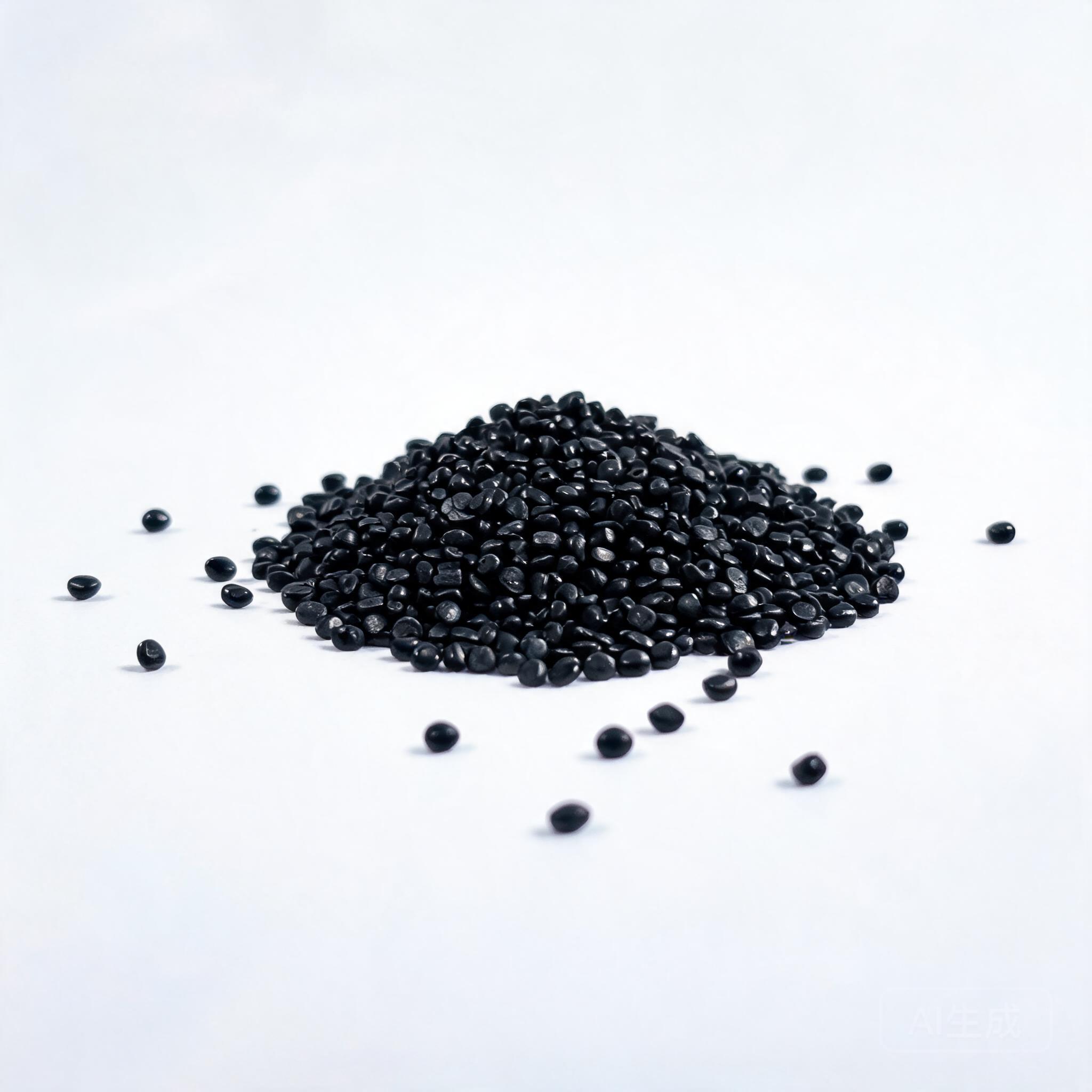
Compare color masterbatch, dry pigment and liquid colorant for PE/PP: dispersion, dosing, cost, and a process-based decision checklist.
BUYER GUIDE
Every plastics processor faces the same fork: do you color with color masterbatch, dry pigment, or liquid colorant? The answer changes depending on your resin, your process, and how much you care about dust, dosing accuracy, and color consistency. This guide compares the three on the criteria that actually affect your production cost and rejects, then gives a process-based checklist to help you decide.
- Masterbatch wins on dispersion, cleanliness, and inventory simplicity — especially for PE/PP injection molding.
- Dry pigment is cheapest per kilo but demands high-shear mixing; it’s the main source of specking and dust in most shops.
- Liquid colorant doses precisely and keeps colors intense, but adds pump maintenance and can affect melt flow.
- Your process (injection, blow, film) dictates the practical choice — see the checklist below.
What each colorant actually is
Color masterbatch is pigment pre-dispersed in a carrier resin — typically PE or PP wax. It arrives as pellets, so it blends with your base resin before the hopper. The carrier melts with the resin, releasing the pigment uniformly. That pre-dispersion is the whole point: it removes the mixing burden from your machine.
Dry pigment is raw, powdered colorant added directly to the resin. It’s the cheapest per unit of color, but it relies entirely on your screw and barrel to disperse it. In low-shear processes, you get specking, streaking, and batch-to-batch variation. It also creates airborne dust — a housekeeping and operator-safety issue.
Liquid colorant is pigment suspended in a liquid carrier, injected into the barrel or throat. It doses very accurately and can hit high pigment loads, which keeps inventory small. But you need dosing pumps, and the liquid can act as a lubricant, shifting melt flow and mechanical properties. Cleanup and pump maintenance are ongoing costs.
Head-to-head: masterbatch vs pigment vs liquid
| Criterion | Color masterbatch | Dry pigment | Liquid colorant |
|---|---|---|---|
| Dispersion quality | High (pre-dispersed) | Depends on screw shear | High, but carrier can affect flow |
| Dosing accuracy | Good (letdown ratio) | Poor to fair | Excellent (metered pumps) |
| Dust / housekeeping | Minimal | Significant | None |
| Inventory complexity | Low (one pellet per color) | Moderate (multiple powders) | Low (but pumps and tanks) |
| Cost per part | Higher material, lower waste | Lowest material, higher rejects | Medium, plus equipment upkeep |
| Best for | Injection, blow, film | High-shear extrusion only | High-volume, precise dosing |
The table is a starting point, not a verdict. The real decision comes down to your process and your tolerance for rejects.
How letdown ratio changes the math
Letdown ratio is the amount of masterbatch you add relative to natural resin. For injection molding, typical letdown is 2–4% — meaning 2 to 4 kg of masterbatch per 100 kg of resin. Film and blow molding often run lower, around 1–3%, to keep costs down and avoid affecting wall thickness.
Letdown ratio isn’t just a number; it determines color strength, cost per part, and whether you get consistent shade across batches. If you push the ratio too low to save money, you’ll see weak color. Too high, and you risk over-plasticizing the melt or exceeding additive limits.
When you buy color masterbatch, ask the supplier to coordinate the letdown ratio with your process. A reputable supplier will recommend a starting point and adjust after sample trials. For example, our universal white color masterbatch for PE/PP is designed for 2–4% letdown in injection molding, with a carrier that melts cleanly in both PE and PP.
Decision checklist by process
Use this as a practical filter. Your process is the strongest signal.
Injection molding (PE/PP parts, caps, containers)
- Choose masterbatch if you want consistent color, minimal dust, and easy inventory. The 2–4% letdown range is well proven.
- Avoid dry pigment unless you have a high-shear screw and can tolerate color variation.
- Liquid colorant can work, but the added pump maintenance often outweighs dosing precision for typical injection runs.
Blow molding (bottles, drums, hollow parts)
- Masterbatch is the usual choice because it disperses evenly without affecting parison sag.
- Liquid colorant can cause parison control issues due to lubricating effects — test carefully.
- Dry pigment is risky: low shear in blow molding leads to specking.
Film extrusion (bags, wrapping)
- Masterbatch is the standard for film because it prevents fisheyes and pin-holes from undispersed pigment.
- Liquid colorant can be used but requires precise metering to avoid gauge variation.
- Dry pigment is almost never recommended for film — the dispersion demands are too high.
If you’re still unsure, start with masterbatch. It’s the safest default for most PE/PP processes, and it’s what most suppliers know best.
Why dispersion quality matters more than price
Undispersed pigment is the most common cause of color rejects. A batch with specking, streaking, or dull shade costs you not just material but machine time and customer goodwill. Dry pigment may look cheap per kilo, but if 3% of your production is rejected, the real cost per good part climbs fast.
Masterbatch solves this by delivering pigment already wetted and dispersed in the carrier. That’s why our universal white masterbatch carries 70% TiO2 ±1% — a high load that still disperses cleanly because the carrier is a PE/PE-wax blend, not just raw resin. The result is brightness (L* 96.5 on PP plaques) and a yellow index below 2.0, batch after batch.
Supplier evaluation: what to ask before you commit
Whichever colorant you choose, your supplier’s consistency determines your uptime. Here’s what to ask:
- Letdown coordination: Will they recommend a starting ratio and adjust after sample trials?
- Sample approval: Do they provide color chips and sample plaques for approval before production?
- Quality documentation: Do they issue a COA per batch with key parameters (TiO2 content, MFI, moisture, colorimetric data)?
- Traceability: Can they trace a batch back to production if a problem appears downstream?
These are not nice-to-haves. They are the difference between a colorant that works and one that creates hidden costs.
For example, our factory in Wanzhoutong runs 12 extrusion lines and provides custom color matching, chip and plaque approval, and COA per batch with lot traceability. We export to Southeast Asia and Europe, and our lead time is 10–12 working days. That’s the kind of process you want behind your colorant.
Frequently asked questions
Is color masterbatch better than pigment?
For most PE/PP injection and blow molding, yes. Masterbatch offers superior dispersion, less dust, and easier handling. Dry pigment can be cheaper per kilo but often costs more in rejects and downtime. The choice depends on your process — see the checklist above.
What is the typical letdown ratio for color masterbatch?
For injection molding, 2–4% is common. Film and blow molding may go lower, around 1–3%. Always confirm with your supplier, because the optimal ratio depends on pigment load, resin, and part geometry.
Can I use the same masterbatch for PE and PP?
Yes, if the carrier is compatible. Our universal white masterbatch uses a PE/PE-wax carrier that works with HDPE, LDPE, LLDPE, and PP. Always verify carrier compatibility with your resin before production.
Next step: run a trial, not a guess
No article can replace a sample trial. Pick the colorant that fits your process, ask for a chip and a plaque, and run it on your own machine. Pay attention to dispersion, letdown behavior, and whether the color holds across the run.
If you’re leaning toward masterbatch, start with a product that’s proven for PE/PP. Our universal white masterbatch is a workhorse option: 70% TiO2, MFI 18–22 g/10 min, stable up to 230°C, and available in 25 kg kraft bags with PE liner, MOQ 50 kg. For custom colors, our OEM color matching service handles the rest — from color chip to COA per batch.
Still comparing? Browse our technical guides for more on colorant selection and process troubleshooting.