
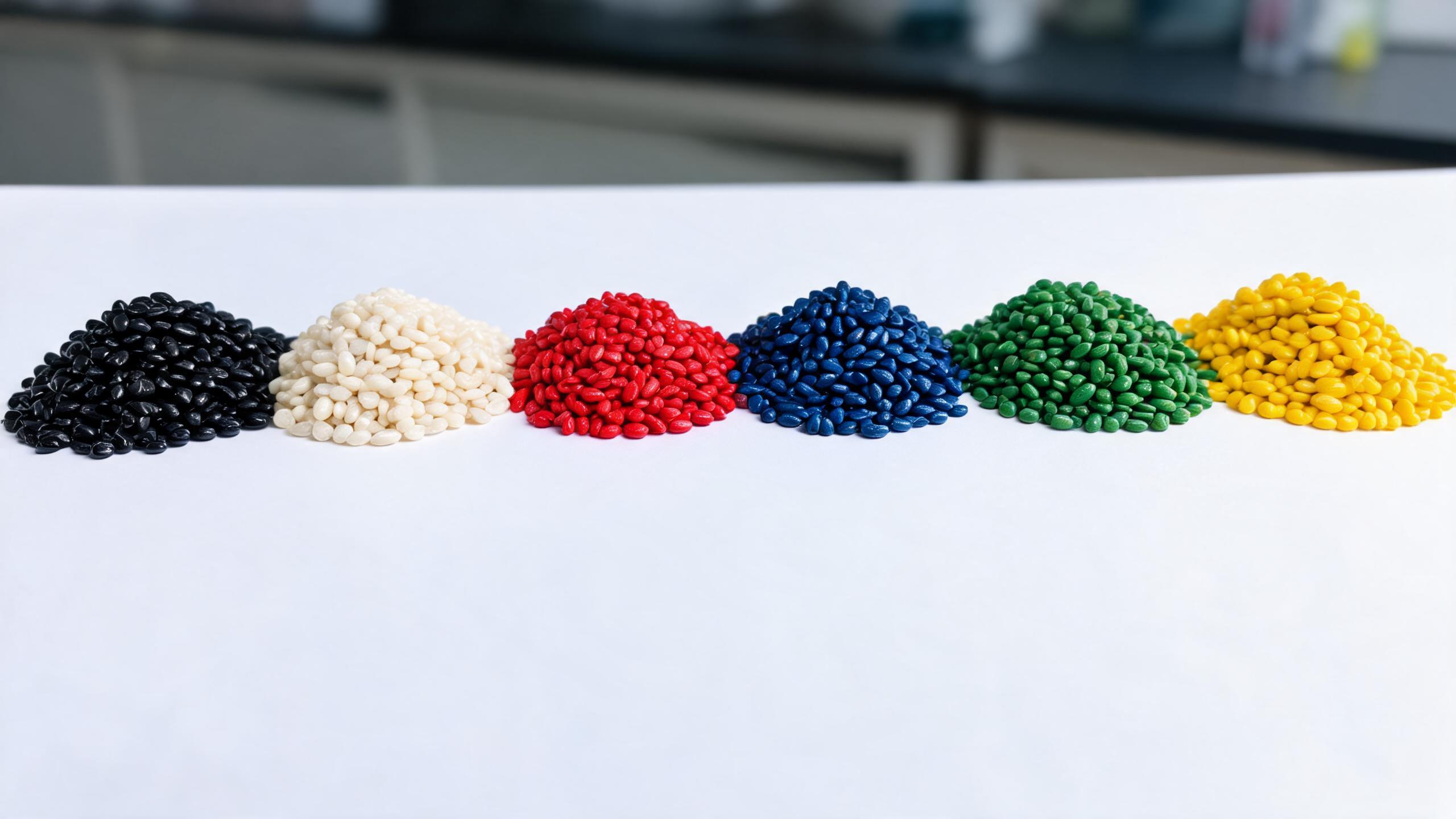
A practical guide for plastic processors on specifying black masterbatch: carbon black content, dispersion quality, carrier resin compatibility, and supplier capability checks for consistent results.
BUYER GUIDE · BLACK MASTERBATCH
Black masterbatch is one of the most commonly ordered color concentrates in plastics processing, yet it is also one of the most frequently mis-specified. Buyers often assume that a higher carbon black content automatically means a better product, or that any black masterbatch will work in any resin. Both assumptions lead to real production problems: uneven color, clogged filters, poor mechanical properties, and batches that fail your customer's inspection.
This guide is written for plastic processors and procurement teams who need to evaluate black masterbatch suppliers before placing an order. We will cover the two technical factors that determine performance — carbon black content and dispersion quality — and then walk through the supplier capability checks that separate a reliable partner from a source of recurring headaches. If you are also sourcing white masterbatch, we have a separate guide on choosing TiO2 content and grade that follows the same evaluation logic.
Why carbon black content is not the whole story
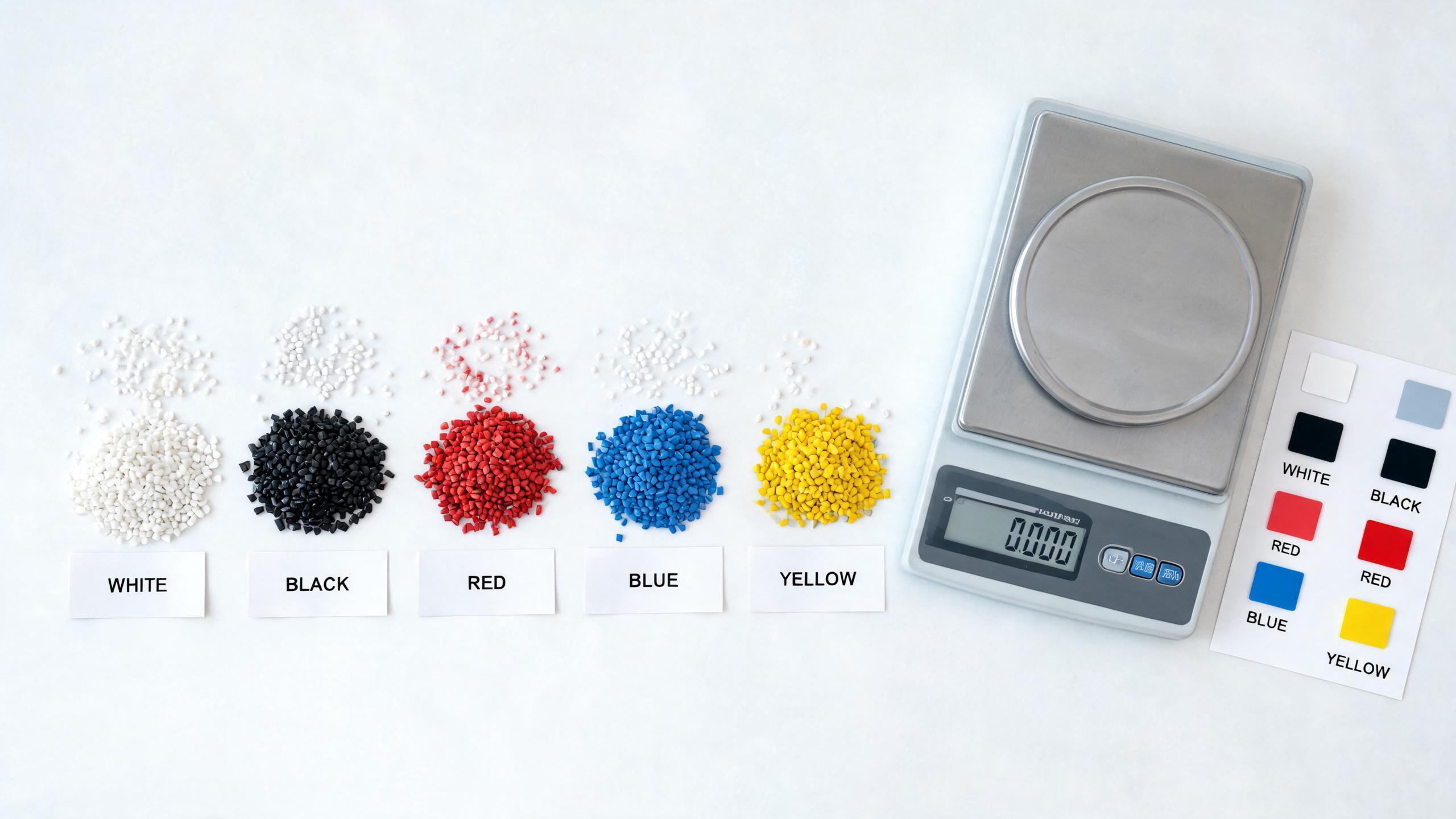
Carbon black is the pigment that gives black masterbatch its color, but it is not a single material. Carbon black comes in different grades with different particle sizes, structure, and surface chemistry. These properties affect not only the blackness (jetness) you achieve, but also the dispersion behavior in the polymer melt, the mechanical properties of the final part, and even the electrical conductivity of the product.
When a supplier quotes a carbon black content — say, 30% or 40% — that number tells you how much pigment is in the concentrate. What it does not tell you is:
- Which carbon black grade is used (e.g., furnace black, channel black, or specialty conductive grades)
- How well the carbon black is dispersed in the carrier resin
- Whether the carrier resin is compatible with your base polymer
- Whether the grade meets any regulatory requirements for your application (food contact, toys, etc.)
A masterbatch with a high carbon black content but poor dispersion can perform worse than a lower-content product with excellent dispersion. Poor dispersion shows up as visible specks or streaks in thin-wall parts, reduced impact strength, and surface defects that are costly to rework.
So when you evaluate a black masterbatch, do not just ask "what is the carbon black percentage?" Ask instead: "What carbon black grade do you use, and how do you control dispersion?"
How to evaluate carbon black grade and content for your application
The right carbon black content depends on your application, the base resin, and the level of blackness and opacity you need. There is no universal "best" percentage. Instead, work through these selection criteria:
1. Jetness and tinting strength
Jetness refers to how deep and neutral the black appears. It is influenced by the particle size of the carbon black — smaller particles generally give higher jetness but are harder to disperse. Tinting strength is the ability of the black to color the polymer at a given loading. For applications like automotive trim or consumer electronics, high jetness is often required. For industrial piping or agricultural film, a standard black may be sufficient.
Ask the supplier for the carbon black grade's typical particle size and structure data. Do not rely on a single percentage to make the decision.
2. Letdown ratio and cost efficiency
The letdown ratio — how much masterbatch you add per 100 parts of natural resin — determines both the final color depth and your cost per kilo of finished product. A higher carbon black content masterbatch can be used at a lower letdown ratio, which may reduce logistics and storage costs. However, higher content often requires more careful dispersion during compounding. For a detailed explanation of how to specify letdown ratios, see our letdown ratio guide.
In practice, most processors use black masterbatch at letdown ratios between 1% and 4%, but the exact ratio must be confirmed with the supplier based on your resin, the carbon black grade, and the required opacity. Always request a letdown ratio recommendation from the supplier before committing to full-scale production.
3. Regulatory and application-specific requirements
If your products will come into contact with food, be used in toys, or be exposed to UV radiation outdoors, the carbon black grade must meet specific regulatory and performance standards. For example:
- Food contact: The carbon black must comply with relevant food-contact regulations (e.g., EU or FDA). Not all carbon black grades are approved for food contact.
- UV resistance: For outdoor applications, carbon black is often used as a UV stabilizer. The grade and content affect the level of protection.
- Electrical conductivity: Specialty conductive carbon blacks are used for anti-static or EMI shielding applications. These are different from standard color blacks.
Always specify your application and any regulatory requirements when requesting a sample. A reputable supplier will ask these questions before recommending a grade.
Dispersion quality: the hidden variable
Dispersion refers to how uniformly the carbon black particles are distributed throughout the carrier resin. Poor dispersion leads to agglomerates — clumps of carbon black that act as stress concentrators and cause surface defects. Even at low letdown ratios, agglomerates can clog filters during injection molding or extrusion, causing downtime and scrap.
How can you evaluate dispersion quality before ordering full quantities? Here are concrete checks:
- Ask for a dispersion rating. Many masterbatch suppliers test dispersion using a filter pressure test or a film inspection method. Ask for their typical dispersion rating and what test method they use.
- Request a sample and run a trial. The most reliable way is to run a small trial on your own equipment. Look for visible specks, streaks, or surface roughness. Check the mechanical properties of a molded test piece.
- Inspect a thin film. If possible, blow a thin film or press a thin plaque and examine it against a light source. Poor dispersion shows up as dark specks.
At Wanzhoutong, we control dispersion through our compounding process across our 12 extrusion lines, and we maintain strict diameter tolerance control on our filaments. While that tolerance control applies to our 3D printing filament products, the same discipline carries into our masterbatch production. If you have specific dispersion requirements, we will work with you to confirm the grade and process parameters before production.
Carrier resin compatibility: a common source of failure
Black masterbatch is made by dispersing carbon black into a carrier resin. The carrier resin must be compatible with the base polymer you are processing. If the carrier resin is not compatible, you may see poor mixing, reduced mechanical properties, or haze in the final product.
Common carrier resins include PE (LDPE, LLDPE, HDPE), PP, PS, and ABS. For example:
| Carrier Resin | Typical Base Polymers | Notes |
|---|---|---|
| PE (LDPE/LLDPE/HDPE) | PE films, bottles, pipes, injection molded parts | Good flow, widely used for film and molding. |
| PP | PP automotive parts, packaging, textiles | Requires carrier with similar melt flow to avoid mixing issues. |
| PS | PS consumer goods, packaging | Often used for high-gloss applications. |
| ABS | ABS housings, electronics, automotive trim | Carrier must be compatible with ABS to avoid delamination. |
When you request a quote, specify the base resin you are using. A good supplier will recommend a carrier resin that matches your polymer and processing temperature. Do not assume that a "universal" black masterbatch works across all resins — compatibility is critical.
Supplier capability: what to check before ordering
Beyond the product itself, the supplier's manufacturing capability and quality control processes determine whether you get consistent batches over time. Here is a practical checklist to use when evaluating a black masterbatch supplier:
- Production capacity and equipment: Ask about the number of extrusion lines and the supplier's annual output. This gives you an idea of whether they can scale with your orders. For example, Wanzhoutong operates 12 extrusion lines, which supports both filament and masterbatch production.
- Quality control: Ask what QC checks are performed on each batch. Look for carbon black content verification, dispersion testing, and color consistency measurement. Do they provide a Certificate of Analysis (COA) with each shipment?
- Custom color matching: If you need a specific shade of black (e.g., blue-black, jet black, or grey-black), a supplier with in-house color matching capability is valuable. Wanzhoutong offers custom color matching for B2B buyers, which can help you achieve a unique brand color.
- MOQ and packaging: Clarify the minimum order quantity and available packaging (e.g., 25 kg bags, 500 kg jumbo bags, or custom). This affects your inventory and logistics planning.
- Documentation and compliance: Ask for material safety data sheets (MSDS), REACH/RoHS compliance declarations, and any food-contact or other certifications relevant to your market. Do not assume compliance — verify it.
For a broader overview of sourcing color masterbatch, including quality and supplier selection, refer to our B2B buyer's guide to colour masterbatch.
Common mistakes buyers make with black masterbatch
Over the years, we have seen the same errors repeated. Avoid these:
- Choosing the cheapest option without a trial. Price differences often reflect carbon black grade and dispersion quality. A failed batch costs far more than the savings.
- Ignoring carrier resin compatibility. Using a PE-based masterbatch in ABS can cause delamination or weak parts.
- Assuming a higher carbon black content is always better. It may lead to higher cost and potential dispersion issues if the carrier is not designed for high loading.
- Not specifying regulatory requirements. If you need food-contact compliance, say so upfront. Retroactive testing is expensive.
- Not testing before scaling. Always run a small trial on your own equipment, not just the supplier's lab.
Questions to ask your black masterbatch supplier
Use this list when you request a quotation:
- What carbon black grade do you use, and what is the typical particle size?
- What is the recommended letdown ratio for my resin and application?
- Do you provide a Certificate of Analysis for each batch?
- What dispersion test method do you use, and what is the typical result?
- Is the product compliant with relevant regulations for my market (food contact, RoHS, REACH)?
- What is your MOQ and lead time?
- Can you provide a sample for a trial run?
- Evaluate carbon black grade and dispersion, not just the percentage content.
- Always confirm carrier resin compatibility with your base polymer.
- Run a trial on your own equipment before committing to bulk orders.
- Ask for documented QC and compliance data from the supplier.
- Wanzhoutong (Shenzhen, China) is a factory-direct supplier with 12 extrusion lines, offering custom color matching and OEM/ODM support — contact us with your application details for a tailored recommendation.
Conclusion
Black masterbatch is a critical input for many plastic products, but it is not a commodity to be bought on price alone. By understanding the role of carbon black grade, dispersion quality, and carrier resin compatibility, you can specify a product that performs reliably and avoids production problems. And by checking supplier capability — production lines, QC processes, and documentation — you build a supply chain that delivers consistent results.
If you are sourcing black masterbatch for your next project, we invite you to share your resin type, application, and any regulatory requirements. Our team at Wanzhoutong, based in Shenzhen with factory-direct production, can help you select the right grade and provide samples for evaluation. We support OEM/ODM orders and export to Southeast Asia, Europe, and the Americas.