
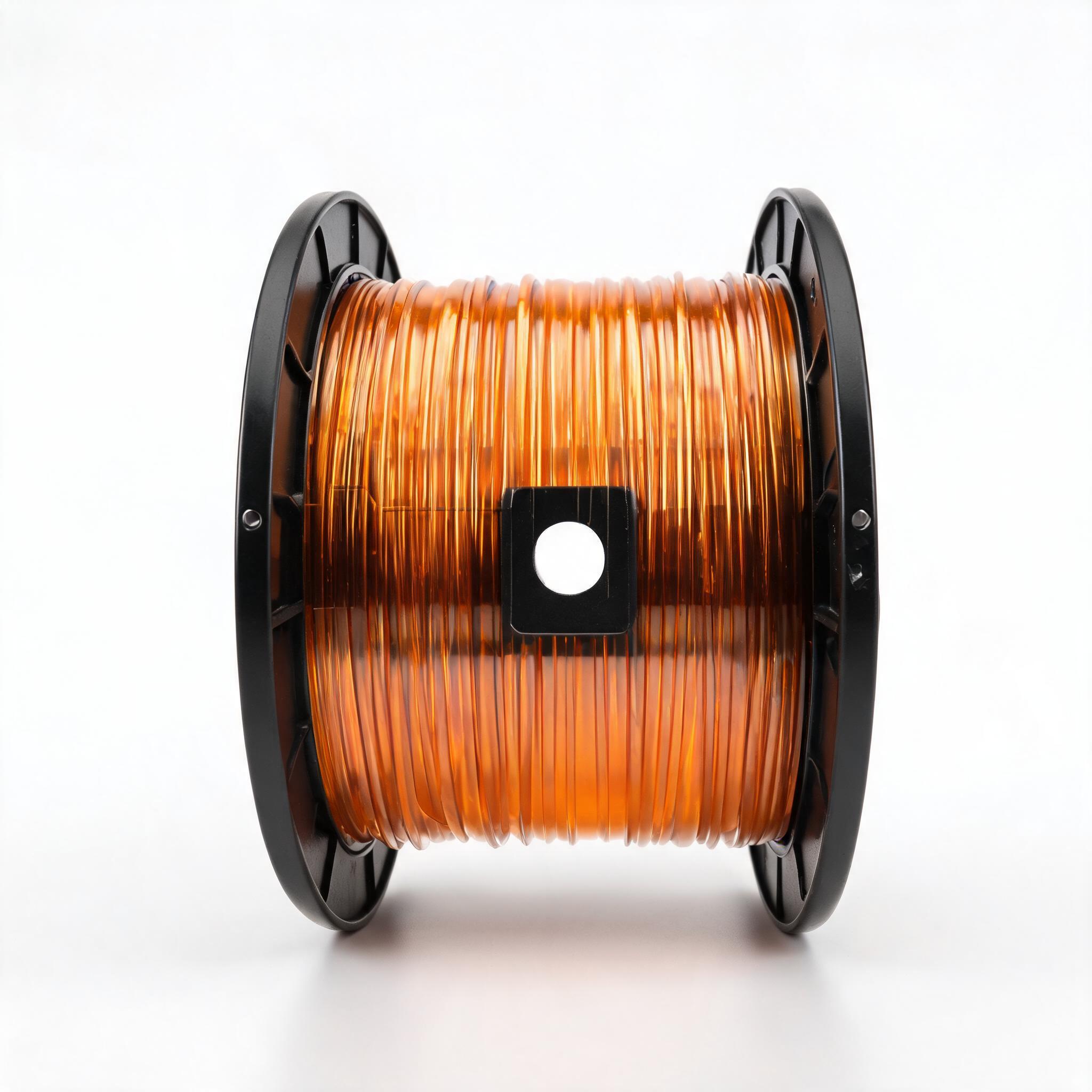
A B2B buyer's guide to choosing a reliable 3D printing filament manufacturer for bulk sourcing of PLA, PETG, ABS, and TPU — covering selection criteria, quality control, compliance, MOQs, and the questions to ask before ordering.
Sourcing 3D printing filament in bulk for B2B is a high-stakes decision. The wrong supplier can mean inconsistent diameter, tangled spools, failed prints, and compliance headaches that ripple through your entire production line. This guide walks through the key criteria, red flags, and questions to ask when evaluating a filament manufacturer — so you can pick a partner that delivers consistent quality at scale.
What to look for in a bulk B2B filament supplier
When you source PLA, PETG, ABS, or TPU in bulk, you are not just buying spools — you are buying consistency, capacity, and accountability. The most reliable suppliers are evaluated on production consistency, quality control, compliance documentation, customization capability, and technical support.
Key criteria for selecting a bulk filament supplier
Diameter tolerance: Consistent filament diameter is the single biggest factor in print reliability. Look for suppliers that hold tight tolerances (e.g., ±0.02–0.03 mm).
Production capacity: A factory with multiple extrusion lines can handle larger, more consistent bulk orders.
Quality control: Ask how the factory checks diameter, roundness, and moisture across every batch.
Compliance: For export to Europe, verify REACH/RoHS/CE documentation availability.
Customization: If you need custom colors or OEM/ODM, confirm the supplier offers it and at what MOQ.
How to evaluate a filament factory's reliability
A reliable factory is transparent about its process. Ask for specifics on extrusion line count, tolerance ranges, packaging, and how it handles moisture control. A supplier that vacuum-seals filament with desiccant, for example, is signaling it understands the real-world failure modes of hygroscopic materials.
OEM/ODM and custom color services
Many B2B buyers need custom colors or private-label packaging. Confirm whether the supplier offers custom color matching and at what minimum order. For example, custom color runs often start at a set number of spools per color.
How to compare suppliers for bulk sourcing
Compare suppliers on the same five axes: tolerance, capacity, QC process, compliance, and support. Request samples from shortlisted factories and run the same test prints on each. Keep a scorecard so the comparison is apples-to-apples.
Questions to ask before bulk sourcing
What is your diameter tolerance and how is it measured?
How many extrusion lines do you operate?
What is your MOQ and do you offer tiered pricing for larger volumes?
Can you provide REACH/RoHS/CE documentation?
Do you offer custom colors or OEM/ODM?
How do you package filament to prevent moisture absorption?
What is your typical lead time?
Can you provide samples before a bulk order?
Assessing production consistency and diameter tolerance
Diameter tolerance is the most measurable proxy for filament quality. A supplier holding ±0.02–0.03 mm across a run demonstrates real process control. Ask how often they measure and what their rejection threshold is.
What a B2B buyer should look for in quality control
Look for a documented QC process that covers diameter, roundness, and moisture content on every batch, not just spot checks. Ask whether QC data is available on request.
How to request samples before bulk sourcing
Reputable suppliers offer samples so you can validate print quality before committing to a bulk order. Request samples from your shortlist, test them on your own machines, and compare results against your tolerance and finish requirements.
Red flags when choosing a filament manufacturer
Vague answers about tolerance or QC process
No compliance documentation available
Unclear MOQ or pricing structure
No sample policy
No technical support or responsiveness
Verifying compliance (REACH/RoHS/CE) for export to Europe
For European export, ask the supplier to provide REACH/RoHS/CE documentation. Note the distinction: a supplier can provide these documents on request — it does not mean every product is pre-certified for your specific end use. Always verify compliance against your own application and market requirements.
Standard MOQs and lead times for bulk orders
MOQs vary by material. For example, TPU may start at 100 spools while PLA and PETG start at 200, with tiered pricing above 500. Lead times should be confirmed directly with the supplier for your specific order.
Finding a factory that handles PLA, PETG, ABS, and TPU in one place
A single-source supplier that handles multiple materials simplifies procurement, reduces logistics complexity, and gives you one accountable partner. Look for a factory that can produce PLA, PETG, ABS, and TPU under one roof.
Technical support from filament manufacturers
Good suppliers provide technical support — recommended print temperatures, troubleshooting, and material guidance. This matters especially when you are new to a material or scaling a new application.
Choosing between PLA, PETG, ABS, and TPU
PLA: Easy to print (190–220°C), great for prototypes and visual parts.
PETG: Stronger and more durable than PLA, with high clarity (92% light transmission at 3 mm wall) and low shrinkage (<0.3%).
ABS: Higher heat resistance (HDT >95°C) and impact strength, good for functional parts.
TPU: Flexible (Shore 95A), prints at 210–230°C, ideal for parts needing elasticity.
About Wanzhoutong
Wanzhoutong is a factory-direct 3D printing filament manufacturer founded in 2020, serving Southeast Asian and European markets. We operate 12 extrusion lines with diameter tolerances of ±0.02–0.03 mm, and offer PLA, PETG, ABS, and TPU filament plus color masterbatch. We support custom color runs (from 200 spools per color), MOQs from 100–200 spools with tiered pricing above 500, and vacuum-sealed moisture-proof packaging with desiccant. REACH/RoHS/CE documentation is available on request — send us your requirements and we will confirm.
FAQ
Q: What is the minimum order quantity for bulk filament?
A: MOQs vary by material — typically 100–200 spools (e.g., TPU from 100, PLA and PETG from 200), with tiered pricing above 500 spools.
Q: Can you provide custom colors?
A: Yes, custom color runs are available starting from 200 spools per color.
Q: Do you provide REACH/RoHS/CE documentation?
A: Yes, these documents are available on request. Send us your requirements and we will confirm what applies to your order.
Q: What diameter tolerance do you hold?
A: We hold ±0.02–0.03 mm across our extrusion lines (PETG at ±0.02 mm).
Q: How do you prevent moisture absorption during shipping?
A: We use vacuum-sealed packaging with desiccant to protect hygroscopic materials.
Q: Can I get samples before a bulk order?
A: Yes, we offer samples so you can validate quality before committing to a bulk order.
Ready to source?
If you are sourcing PLA, PETG, ABS, or TPU filament in bulk, contact Wanzhoutong to discuss your requirements, request samples, or get compliance documentation.